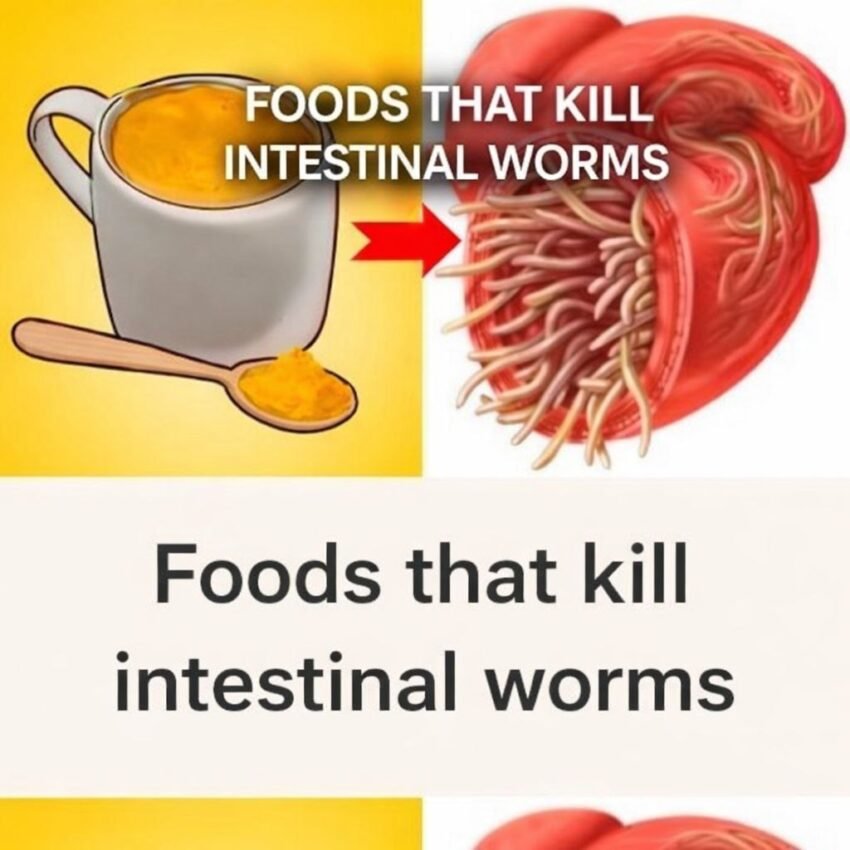
Here is a detailed look at seven foods known for their natural anthelmintic (anti-parasitic) properties, how they work, and crucial safety information.
Important Disclaimer: This information is for educational purposes only. While these foods have traditional and some scientific backing for helping the body combat intestinal parasites, they are not a substitute for professional medical diagnosis and treatment. If you suspect you have a parasitic infection, you must see a doctor for proper testing. Prescription anti-parasitic drugs are often the most effective and fastest treatment.
These foods work best as part of an overall protocol that starves parasites and aids the body’s elimination pathways. Generally, you want to avoid sugar, refined grains, and alcohol, as these can feed parasites and weaken the immune system.
Here are 7 potent anti-parasitic foods:
1. Raw Garlic
Garlic is one of the most powerful natural broad-spectrum anti-parasitic foods, backed by centuries of use.
-
Active Compounds: Allicin and ajoene are the primary sulfur-containing compounds responsible for the effects.
-
How It Works: These compounds are toxic to parasites, particularly roundworms and giardia. They are thought to disrupt the parasites’ energy production and motility, effectively paralyzing them so they lose their grip on the intestinal wall.
-
How to Use: For therapeutic effect, it’s most potent raw. Crush or chop 1-2 cloves and let it sit for 10 minutes (this activates the allicin). Mix it into a small amount of honey, guacamole, or olive oil and swallow it on an empty stomach. Cooking destroys many of the active compounds.
2. Papaya Seeds
Often thrown away, the black seeds of the papaya are a potent anti-parasitic medicine, especially effective against intestinal roundworms.
-
Active Compound: An enzyme called papain, along with the alkaloid carpaine.
-
How It Works: Carpaine has anthelmintic properties that stun and kill worms. Papain helps break down the parasites’ protective outer layer, but its primary role is to dissolve the protein-rich biofilm and waste that parasites hide behind in the gut, exposing them to the immune system and other anti-parasitic agents.
-
How to Use: The seeds have a strong, peppery, slightly bitter taste. A common method is to scoop fresh seeds from a ripe papaya, wash them, and blend a tablespoon into a smoothie with pineapple juice. You can also dry, grind, and use them as a pepper substitute. Start small to assess your digestive tolerance.
3. Pumpkin Seeds
A classic folk remedy, pumpkin seeds are gentler than many other anti-parasitics and are safe for children.
-
Active Compound: An amino acid called cucurbitacin.
-
How It Works: Pumpkin seeds don’t necessarily kill parasites outright. Instead, cucurbitacin paralyzes them, particularly tapeworms and roundworms, preventing them from holding onto the intestinal lining. This allows the body’s natural peristaltic action (muscle contractions) to sweep them out of the digestive tract with a bowel movement.
-
How to Use: They are most effective when eaten raw, unsalted, and in large quantities on an empty stomach. A traditional adult dose is up to a cup of raw, hulled seeds, ground and mixed with juice. For best results, a natural laxative (like a tablespoon of castor oil or high doses of vitamin C) is traditionally taken an hour later to ensure the paralyzed worms are expelled.
4. Cloves (and Clove Oil)
Cloves are a powerhouse that works on multiple levels, but are particularly important for destroying the eggs left behind by other parasites.
-
Active Compound: Eugenol.
-
How It Works: Eugenol is a potent anti-parasitic that dissolves the hard, protective outer casing of parasite eggs, preventing reinfection. This is crucial. Many anti-parasitics kill only adult worms, so a protocol without an agent to destroy the eggs is often incomplete. Clove oil is also effective against adult worms and protozoa.
-
How to Use: Ground cloves can be added to food or taken in capsules. Clove essential oil is extremely concentrated and should only be used under the guidance of a professional, as it can burn mucous membranes if not properly diluted. A standard herbal protocol often pairs green black walnut hull and wormwood with cloves to target the adult, larval, and egg stages simultaneously.
5. Ginger
A common kitchen spice that powerfully supports an anti-parasitic protocol by addressing the environment.
-
Active Compounds: Gingerols and shogaols, the compounds that give it its spicy kick.
-
How It Works: Ginger’s primary role is two-fold. First, it is strongly anti-inflammatory, helping to soothe the gut lining damaged by parasitic activity. Second, it improves circulation and digestion by increasing stomach acid production. Many parasites thrive in a low-acid environment; a healthy, acidic stomach is the body’s first line of defense and can kill many ingested pathogens before they take hold.
-
How to Use: Fresh ginger tea sipped throughout the day, or generous amounts of fresh grated ginger added to stir-fries, soups, and juices.
6. Black Walnut Hulls
This is a very specific remedy, using the green outer hull of the black walnut, and is a cornerstone of many herbal parasite cleanses.
-
Active Compounds: Juglone, tannins, and iodine.
-
How It Works: Juglone is a potent antiparasitic substance. The tannins and alkaloids create a hostile environment for parasites and have a natural laxative effect. Research suggests it is particularly effective against adult heartworms and intestinal helminths. It’s known to oxygenate the blood, which anaerobic parasites dislike.
-
How to Use: This is almost always taken as a tincture (alcohol extract) from the green hulls. It is the “adult worm” stage of the classic Hulda Clark parasite cleanse. Due to its potency and high tannin content, it should be used with caution and ideally under professional supervision, not as a daily food.
7. Oregano Oil
This essential oil is one of the most broad-spectrum and research-backed natural antimicrobials available.
-
Active Compounds: Carvacrol and thymol.
-
How It Works: Multiple studies have shown oregano oil can inhibit or kill a wide range of parasites, including Blastocystis hominis, Giardia lamblia, and Cryptosporidium. It works by disrupting the cell membranes of the parasites, causing them to break down and die.
-
How to Use: It must be oil of oregano essential oil, diluted with a carrier oil (like olive oil), not a cooking extract. It’s extremely hot and potent. A common method is to put 1-2 drops of pre-diluted oil under the tongue or in a veggie capsule and take it with food. It can also disrupt beneficial gut bacteria, so it’s typically used for a defined period (e.g., 2 weeks) rather than indefinitely.
A Final, Crucial Warning: Always consult a healthcare provider before self-treating for parasites. A “die-off” reaction (Herxheimer reaction), where you feel temporarily worse (flu-like symptoms, fatigue, headache) as the parasites die and release toxins, is common. A doctor can help you manage this and confirm that your protocol has been successful with follow-up testing.