
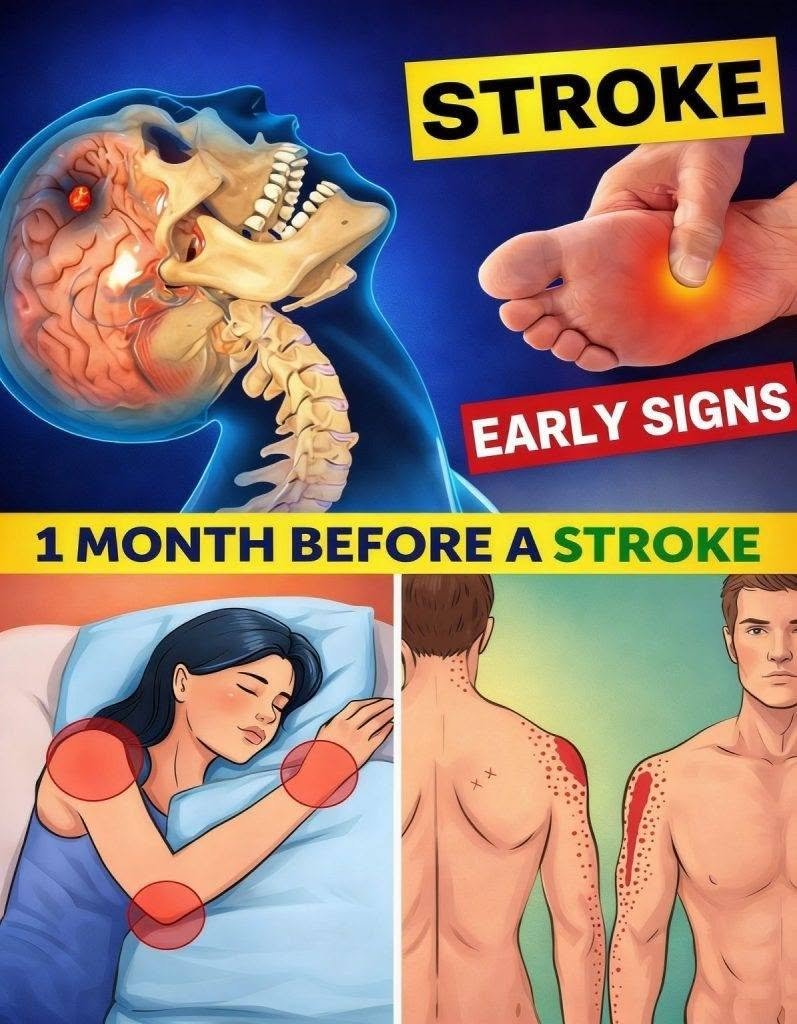
It’s important to clarify the “one month before” concept. A stroke is often an acute event, but the body can send up warning flares days or weeks in advance. The most critical of these is a Transient Ischemic Attack (TIA) , often called a “mini-stroke.” A TIA produces stroke-like symptoms that last only a few minutes to hours and cause no permanent damage, but it’s a screaming emergency and a major predictor of a massive stroke within the next 48 hours to 3 months.
Here are the 8 warning signs that may appear in the lead-up to a stroke, followed by 9 actionable prevention tips.
8 Warning Signs of a Looming Stroke
These signs can be intermittent and fleeting. Never ignore them, even if they go away completely. “Time is brain.”
1. Sudden, Severe “Thunderclap” Headache
A headache that comes on instantly with excruciating intensity, unlike any you’ve ever had, with no known cause. This can signal a sentinel bleed from a cerebral aneurysm or a hemorrhagic stroke. It’s often described as the “worst headache of my life.”
2. Unilateral (One-Sided) Numbness or Weakness
Classic TIA symptom. You might suddenly feel weakness or a complete inability to move one side of your face, an arm, or a leg. A simple test: try to raise both arms in front of you. If one arm drifts downward involuntarily, it’s a major red flag.
3. Transient Vision Problems
This could be sudden blurred or double vision, or a “curtain coming down” over one eye (Amaurosis Fugax). This is caused by a tiny clot temporarily blocking the retinal artery and is a powerful predictor of a major carotid artery blockage and future brain stroke.
4. Sudden Confusion or Aphasia
Experiencing garbled speech, being unable to find the right words (even though you know them), or suddenly not understanding what others are saying. Loved ones might mistakenly think the person is just tired or “out of it.” This can flicker on and off.
5. Unexplained Dizziness, Vertigo, or Loss of Balance
Suddenly feeling like the room is spinning violently, or a sudden inability to walk a straight line without veering to one side. While dizziness has many benign causes, a sudden onset, especially paired with nausea or trouble swallowing, is a warning sign of a brainstem stroke.
6. Facial Drooping (One Side)
An uneven smile where one side of the face is numb and droops downward. This might come and go. You can check by asking the person to smile; if it’s lopsided, call for help immediately.
7. Cognitive Wobbles (Unexplained Fatigue or Brain Fog)
In the days before a major stroke, some patients report a profound, unusual exhaustion and a deep mental fog—a feeling of not being able to process information as usual. This is a non-specific but common prodromal symptom.
8. Difficulty Swallowing (Dysphagia)
Suddenly choking on liquids or feeling that food is stuck in the throat can be an early sign of a brainstem circulation problem, especially if it’s new and happening alongside slurred speech.
Act on F.A.S.T.: Face drooping, Arm weakness, Speech difficulty = Time to call emergency services. Do not drive to the hospital; paramedics can begin life-saving treatment in the ambulance.
9 Tips to Prevent a Stroke
Prevention is overwhelmingly powerful. Up to 80% of strokes are preventable through lifestyle management and medical care.
1. Master Your Blood Pressure
Hypertension is the single most significant controllable risk factor. The gold standard is to keep it consistently below 120/80 mmHg. A reduction of just 10 mmHg systolic pressure reduces stroke risk by over 30%. Monitor it at home—don’t just wait for a doctor’s visit.
2. Screen for Atrial Fibrillation (AFib)
AFib is an irregular, often rapid heartbeat that allows blood to pool and clot in the heart. These clots can shoot straight to the brain. If you feel palpitations, a fluttering chest, or are over 60, ask your doctor about screening. AFib increases stroke risk fivefold, but anticoagulants can drastically mitigate this.
3. Slash Sodium, Boost Potassium
Excess sodium raises blood pressure. Equally crucial is potassium, which relaxes blood vessel walls and helps flush sodium out. Eat more potassium-rich foods: bananas, spinach, sweet potatoes, and avocados. The DASH diet is the most proven eating pattern for this.
4. Quit All Forms of Tobacco—No Exceptions
Smoking doubles your stroke risk by thickening blood, accelerating plaque buildup in the carotid arteries, and narrowing blood vessels. The risk starts dropping dramatically within 2 years of quitting. Vaping is not a safe alternative for cerebrovascular health.
5. Exercise With This Specific Goal
Aim for at least 150 minutes of moderate-intensity activity weekly (brisk walking where you can talk but not sing). Exercise improves endothelial function, lowers blood pressure, and raises “good” HDL cholesterol, which helps escort out excess “bad” cholesterol.
6. Manage Your Lipids and Consider LP(a)
Beyond standard LDL (“bad”) cholesterol, ask about Lipoprotein(a) . This is a genetic, stickier cholesterol variant that aggressively promotes clotting and plaque. It’s not affected by diet, but knowing you have it can prompt more aggressive global risk management.
7. Control Diabetes and Blood Sugar Spikes
High blood sugar damages blood vessels and nerves over time, making the brain’s small vessels brittle. People with diabetes have double the stroke risk. Keeping HbA1c levels in a controlled range is neuroprotective.
8. Limit Alcohol (The Stroke Link is Direct)
Recent large-scale studies show no amount of alcohol is truly “protective” against stroke. Heavy episodic drinking (binge drinking) is particularly dangerous, causing spikes in blood pressure and triggering arrhythmias even in young, healthy people (“Holiday Heart Syndrome”).
9. Address Sleep Apnea
Severe snoring, choking, or gasping at night is often sleep apnea, which starves the brain of oxygen and sends blood pressure soaring during the night. Treating sleep apnea with a CPAP machine significantly reduces nocturnal stroke risk and daytime blood pressure.
This information is for educational purposes and is not a substitute for immediate medical evaluation. If you or someone with you has any of the warning signs, even if temporary, please treat it as a medical emergency and call for emergency services immediately.