
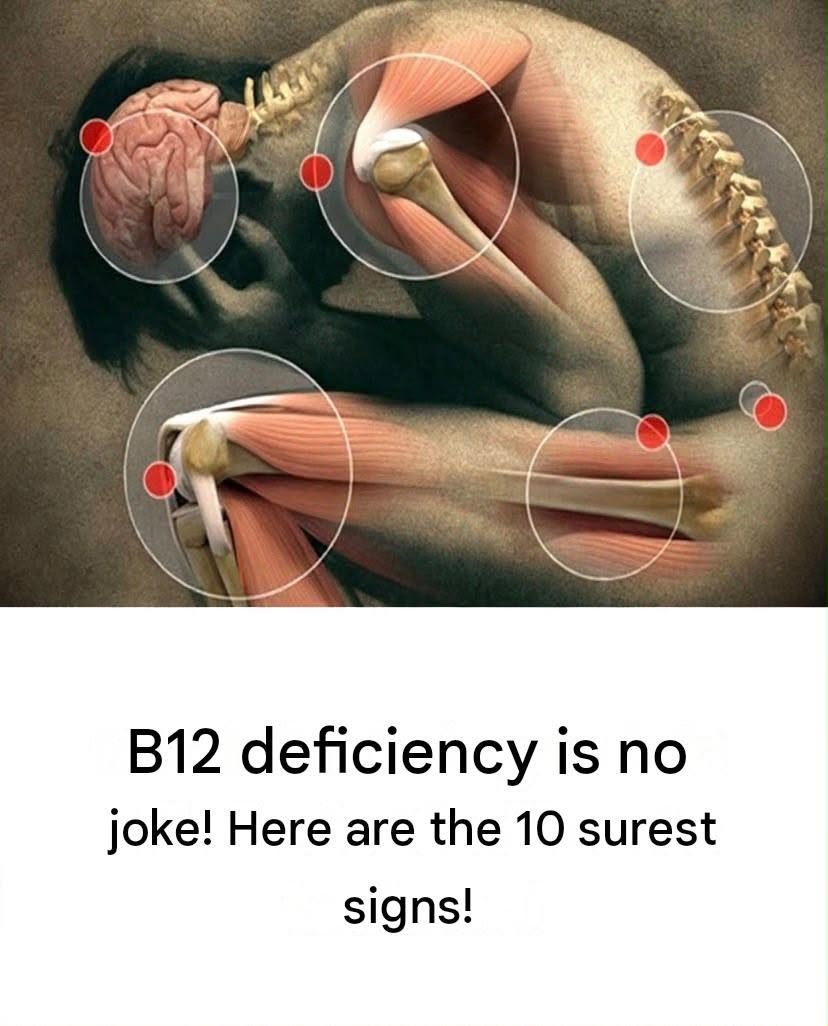
Common symptoms of B12 deficiency
-
Unusual fatigue or weakness — often one of the earliest complaints.
-
Tingling or numbness in hands and feet — from nerve involvement (peripheral neuropathy).
-
Balance problems or unsteady gait — can reflect spinal cord involvement.
-
Memory problems, confusion, or difficulty concentrating — cognitive effects can mimic dementia.
-
Mood changes — depression, irritability, or anxiety.
-
Sore, swollen, or smooth red tongue (glossitis).
-
Mouth ulcers or a burning sensation in the mouth.
-
Pale or slightly jaundiced skin — from megaloblastic anemia.
-
Shortness of breath or heart palpitations — especially with anemia.
-
Vision disturbances — blurred vision or, rarely, optic nerve damage.
Why “surest signs” is misleading
-
Many of these symptoms are nonspecific and occur in other conditions (thyroid disease, iron deficiency, diabetes, depression, neurological disorders).
-
Symptoms can develop slowly and be subtle.
-
Severe neurological damage can occur even without anemia, so normal blood counts don’t rule out deficiency.
-
Some people, especially older adults, have few or no symptoms until damage is advanced.
Who’s at higher risk
-
Vegans and strict vegetarians (B12 is naturally found mainly in animal foods)
-
Older adults (reduced absorption)
-
People with pernicious anemia, celiac disease, Crohn’s disease, or gastric surgery
-
Long-term users of metformin, PPIs, or H2 blockers
-
People with excessive alcohol use
What to do
If you suspect deficiency, don’t self-diagnose or self-treat with random supplements. See a clinician for proper testing—typically serum B12, methylmalonic acid (MMA), and homocysteine, sometimes with folate and a complete blood count. Treatment depends on the cause and severity and may involve oral supplements, sublingual or intranasal forms, or injections.