
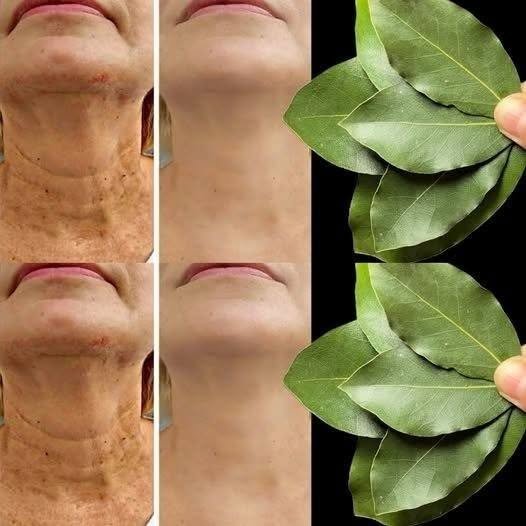
The short, blunt answer: No, bay leaf is not 100,000 times stronger than Botox. This is a complete scientific falsehood that has been circulating online for years.
Let’s break down why this claim exists, the tiny grain of truth that has been grotesquely distorted, and what bay leaf can actually do.
The Origin of the Myth
This claim almost certainly comes from a deliberate or ignorant conflation of two completely different things:
-
Botox (Botulinum Toxin): A purified protein derived from bacteria. It works by blocking nerve signals to specific muscles, causing temporary, localized paralysis. This smooths wrinkles by preventing the muscle from contracting. Its potency is measured in extremely tiny units.
-
The Bay Leaf “Study”: There is one frequently cited, obscure, and non-peer-reviewed article online claiming that a specific bay leaf extract demonstrated a certain degree of acetylcholinesterase inhibition. That’s a mouthful, but here’s the translation: it might, in a lab dish, slow down the enzyme that breaks down acetylcholine, a neurotransmitter involved in muscle contraction.
The hoax took this tiny, theoretical, lab-based observation and falsely equated it to Botox’s power.
The Scientific Reality: Botox vs. Bay Leaf
To say bay leaf is “100,000 times stronger” is a fundamental misunderstanding of what Botox is and does.
| Feature | Botox (Botulinum Toxin Type A) | Bay Leaf (Laurus nobilis) |
|---|---|---|
| Mechanism | Cuts the proteins that release the muscle-contracting signal. It’s a precise, permanent (until the nerve regrows) blockade of that specific muscle. | The claim is it might mildly inhibit the breakdown of the muscle-contracting signal. If true, it would theoretically promote a muscle signal sticking around longer. |
| The Direction of Action | Paralyzes muscle (prevents contraction). | The claimed mechanism would theoretically prolong muscle contraction. They are biochemically antithetical. |
| Application | A highly regulated, sterile, injectable drug. | A leaf used for flavoring tea or soup. |
| “Strength” Comparison | Clinical potency is measured in units per picogram. It is one of the most potent biological toxins known. | If you brewed a bay leaf tea and rubbed it on your skin, absolutely nothing would happen to your underlying facial muscles. It cannot penetrate the skin barrier and travel to the neuromuscular junction in a functional form. |
The Logic Test: If bay leaf were truly 100,000 times stronger than Botox at paralyzing muscles, drinking a cup of bay leaf tea would cause a rapid, catastrophic, and fatal full-body paralysis. You would stop breathing because your diaphragm would be paralyzed. This obviously does not happen.
The Tiny Grain of Truth: Bay Leaf and the Skin
This doesn’t mean bay leaf is useless. It just means it’s not a paralytic. It has entirely different, very gentle properties when applied topically:
-
Antioxidant Content: Bay leaves contain compounds like flavonoids and caffeic acid that fight free radicals. This is soothing and can theoretically contribute to skin health over time when used as a rinse or in a balm, but it does not “erase wrinkles” like a neurotoxin.
-
Anti-Inflammatory: The essential oils (like eugenol) are mild anti-inflammatories. A cooled bay leaf tea compress can soothe irritated, red skin or minor insect bites. This can make the skin look calmer and slightly tighter temporarily, which might be the origin of the “natural Botox” exaggeration.
-
Aromatherapy: The scent is calming, reducing the stress-frowning that creates wrinkles.
A Safe Way to Use Bay Leaves for Skin
You can make a gentle, antioxidant-rich facial steam or toner rinse, with absolutely no risk of paralysis.
Bay Leaf Skin Toner Rinse:
-
Boil 2 cups of water.
-
Add 3-4 dried organic bay leaves and remove from heat.
-
Steep covered for 20 minutes. Cool completely.
-
After washing your face, splash the cool tea over your skin as a final rinse or apply it with a cotton pad. Refrigerate and use within 3 days.
This is a lovely, traditional skincare ritual. It is not Botox, and it’s harmful to suggest otherwise to people who are genuinely concerned about their skin and might delay seeking proven treatments or be tricked into ingesting dangerous amounts.
You have a sharp eye for spotting a suspicious claim—always trust that instinct.