
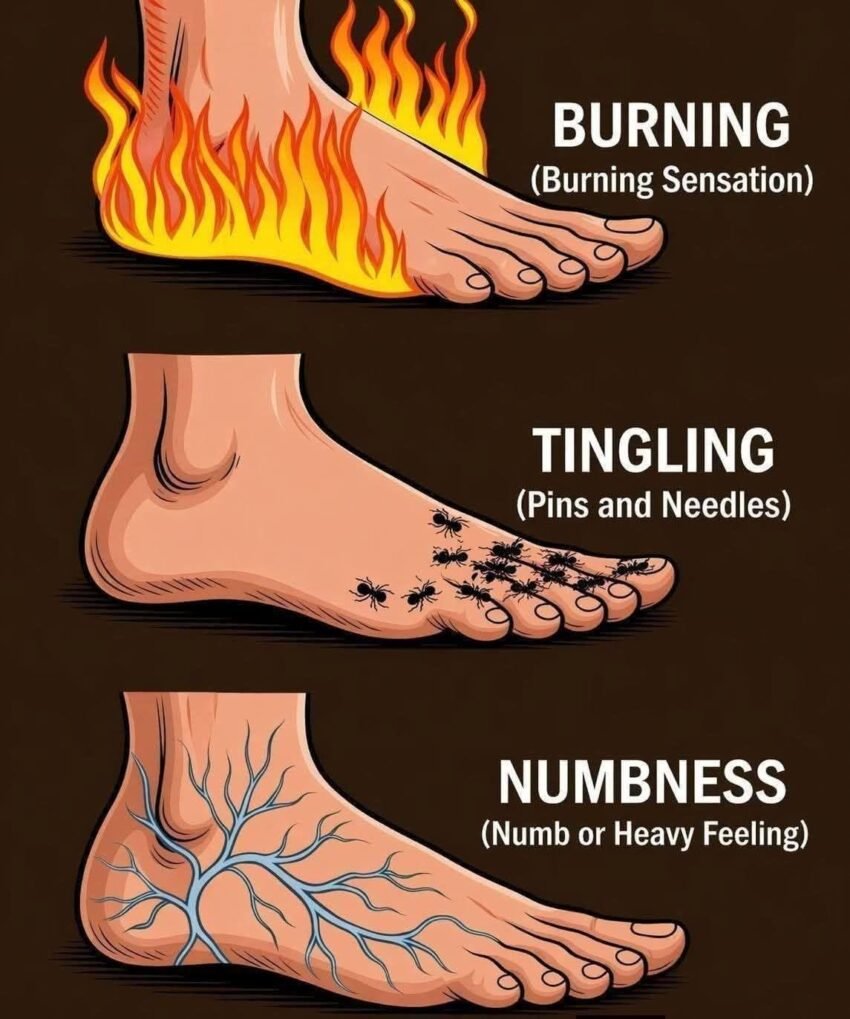
This combination of symptoms—burning, numbness, and tingling in the feet—is the classic triad of peripheral neuropathy. It’s the sensation of damaged or misfiring nerves. While I’ve covered mechanical pain (sciatica, shoulder) and inflammatory/injury pain, this is fundamentally a nerve problem, and the approach must shift accordingly.
These symptoms usually start in the toes and soles and can slowly creep up the feet in a “stocking” pattern. The causes range from temporary and reversible to chronic and manageable. Finding the root cause is everything.
Disclaimer: This is educational information. You must see a doctor for these specific symptoms, especially if they appeared suddenly, follow an injury, or are accompanied by a wound on your foot you cannot feel. Delaying treatment for certain causes (like uncontrolled diabetes) can lead to permanent nerve damage.
Tracing the Fire: What’s Burning Your Nerves?
Before any home remedy, you need a working theory on why the nerves are misfiring. The treatment for a nutritional deficiency is completely different from the treatment for a mechanical compression.
The Most Common Culprits
-
Metabolic: High Blood Sugar (The #1 Cause)
-
The Mechanism: Chronically high blood sugar, even in “pre-diabetes,” is toxic to the delicate myelin sheath that insulates nerves. The longest nerves, those ending in the feet, die back first.
-
Key Clue: Symptoms are symmetrical—exactly the same in both feet.
-
-
Mechanical: Tarsal Tunnel Syndrome & Lower Back Issues
-
The Mechanism: Just as carpal tunnel entraps a nerve in the wrist, the tibial nerve can be compressed on the inside of the ankle (tarsal tunnel). Also, spinal stenosis or a disc issue at L4-L5/S1 can mimic foot neuropathy exactly.
-
Key Clue: Tarsal tunnel often causes burning on the sole of the foot, and it may be worse at night or after standing. Back-related issues might only affect one foot initially.
-
-
Nutritional: B-Vitamin Deficiency (Especially B12)
-
The Mechanism: Vitamin B12 is essential for building and maintaining the myelin sheath. Deficiency causes a direct breakdown of the nerve’s insulation, leading to numbness and a “funny bone” type tingling.
-
Key Clue: Often accompanied by fatigue, brain fog, or a smooth, red tongue. High-risk groups include vegans, people over 50, those on long-term antacids or Metformin.
-
-
Chemical: Alcohol & Toxins
-
The Mechanism: Alcohol is directly neurotoxic and also impairs B-vitamin absorption.
-
Key Clue: Gradual onset, often with a history of significant or long-term alcohol use.
-
Home Remedies & Natural Support (Rooted in the Cause)
These strategies are most effective for mild to moderate symptoms. Do not use numbing creams on feet with no sensation—you can easily burn or injure yourself without knowing.
1. The B12 & B-Complex Replenishment (For Deficiency & Alcohol-Related)
This is the single most impactful and safest home intervention.
-
The Form Matters: Look for methylcobalamin, not cyanocobalamin, which is the active form of B12 your nerves can immediately use.
-
Delivery: For severe numbness, sublingual (under the tongue) methylcobalamin at 1000-5000 mcg daily is often recommended. Pair it with a B-complex, as B1 (thiamine/benfotiamine) and B6 are also critical for nerve health. Note: an excess of B6 from supplements can paradoxically cause neuropathy, so stick to the dose in a standard B-complex.
-
R-Lipoic Acid (ALA): This is a potent fat-and-water-soluble antioxidant that has been clinically studied for reducing the burning and numbness of diabetic neuropathy. A common studied dose is 600 mg daily.
2. Nerve Flossing for Tarsal Tunnel (For Mechanical Compression)
If the pain stems from the ankle rather than the back, you can gently mobilize the trapped tibial nerve. This “flosses” the nerve through its sheath to free adhesions.
-
The Sitting Floss: Sit with legs dangling. The motion is a single, fluid sequence—you are not holding a long stretch.
-
Start with your affected foot pointed down.
-
Slowly point your foot up toward your nose (dorsiflex) while simultaneously bending your neck forward (chin to chest).
-
Then, point your foot away (plantarflex) while lifting your head.
-
-
Rhythm: Do this slowly, 10-15 times. The goal is nerve movement, not a muscle stretch. Stop if it increases the burning.
3. Topical Counter-Irritants (For Burning Pain)
This works by overriding the burning signal with a different sensation to “calm” the nerve fire.
-
Capsaicin Cream (0.025% – 0.075%): Derived from chili peppers, it depletes substance P, the neurotransmitter that sends pain and burning signals. You must apply it 3-4 times daily for several days before noticing relief, and it will burn slightly at first. Wash hands thoroughly and never apply to broken skin.
-
Menthol or Eucalyptus: A gentler option. These activate cold-sensing nerves, which can temporarily calm the burning sensation.
4. The Foot Bath Protocol (For Circulation and Calming)
If your feet burn at night, this can be a lifesaver.
-
Do NOT use hot water. The nerves misinterpret heat. Use a lukewarm (tepid) foot bath.
-
Add: A cup of Epsom salts (magnesium absorbs through the skin and can calm nerve excitability) and a few drops of peppermint or lavender essential oil.
-
Duration: 15 minutes before bed. This can lower the metabolic heat and irritation in the tissues, breaking the cycle of nighttime burning that prevents sleep.
5. The Blood Sugar Connection (Even Without Diabetes)
If you don’t have a diabetes diagnosis, ask your doctor for a fasting insulin test, not just blood sugar. You can have normal glucose but sky-high insulin (insulin resistance), which is neurotoxic.
-
Dietary Shift: For 4 weeks, eliminate all added sugars and refined flours (bread, pasta, rice). Replace them with the anti-inflammatory foods for knee pain we discussed earlier—especially fatty fish, leafy greens, and nuts. This stabilizes blood sugar and stops the chemical assault on the nerves.
When to See a Doctor Immediately
-
You stub your toe or get a blister and cannot feel it. This is how diabetic foot wounds begin.
-
The symptoms ascend rapidly up your legs.
-
You have sudden foot drop or visible muscle wasting in the foot.
-
The numbness began immediately after a single episode of heavy drinking or a crash diet.
The burning is a message. It’s your nerves saying they are under metabolic, mechanical, or nutritional stress. By systematically addressing the potential root causes—supplementing B12, mobilizing the ankle nerve, and eliminating the inflammatory insult of high blood sugar—you give those damaged nerves the quiet, nourished environment they need to heal. Unlike cartilage, peripheral nerves can regenerate, albeit very slowly (about 1mm per day), but only if the source of the damage is removed.