
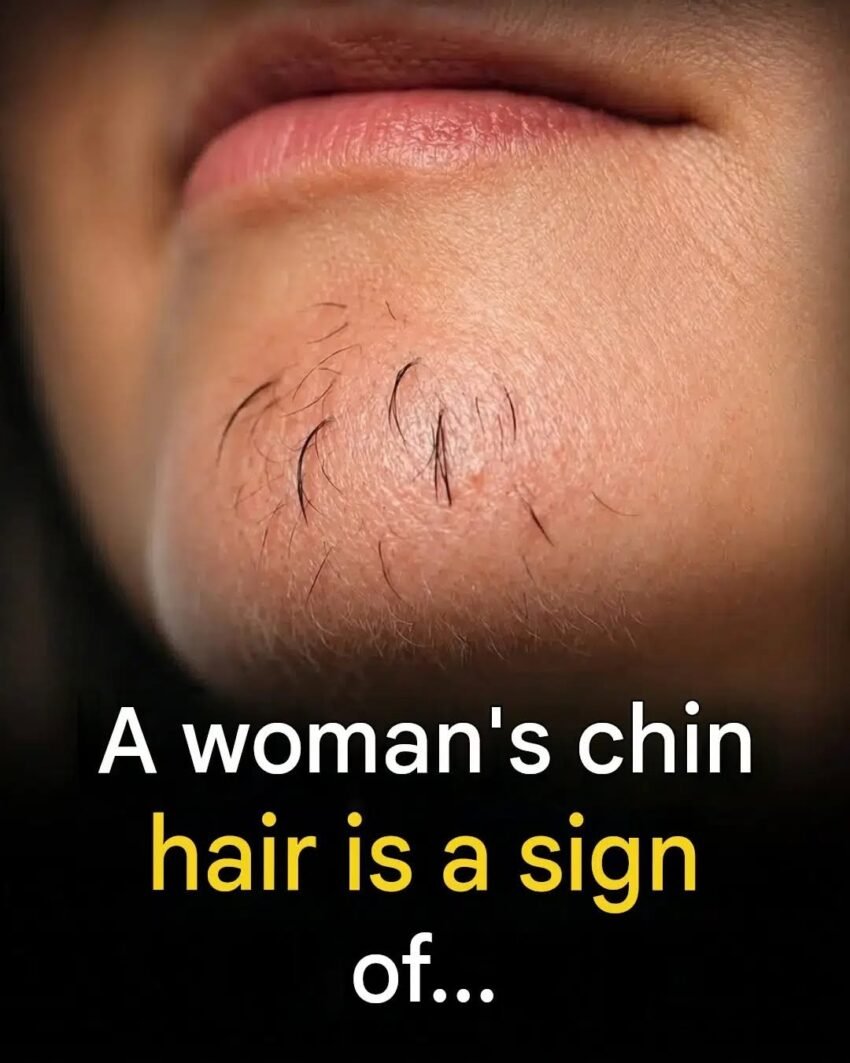
Finding a stray, coarse dark hair on your chin is an incredibly common experience for women, especially as they age. While it is often perfectly normal and simply a result of genetics or hormonal fluctuations, sometimes those wiry hairs are a message from your endocrine system (your hormones) that something is slightly out of balance.
Here is a breakdown of what your body may be trying to tell you, and when it might be time to see a doctor.
1. It’s Just Genetics and Ethnicity (The Most Common Reason)
If you are otherwise healthy, have regular periods, and only notice a few stray hairs, it is likely just your DNA.
-
Hair Follicle Sensitivity: Some families simply have hair follicles on the chin and upper lip that are genetically more sensitive to normal levels of male hormones (androgens).
-
Ethnicity: Women of Mediterranean, Middle Eastern, or South Asian descent are statistically more likely to have darker, coarser body hair compared to women of Northern European or East Asian descent.
2. The Aging Process (Menopause and Perimenopause)
As women approach their late 40s and 50s, their estrogen levels naturally decline.
-
The Ratio Shift: Women naturally produce small amounts of testosterone and other androgens. When estrogen drops, the ratio of testosterone to estrogen becomes higher. Even though you aren’t producing more testosterone, its effects become more visible.
-
The Result: This shift often causes the fine, light “peach fuzz” (vellus hair) on the chin, jawline, and upper lip to transform into thicker, darker, terminal hairs.
3. Polycystic Ovary Syndrome (PCOS)
If you are in your teens, 20s, or 30s, and you are growing more than just an occasional chin hair, the most common underlying cause is PCOS. This is a metabolic and hormonal disorder where the ovaries produce an excess of androgens.
-
What to look for: Chin hair (hirsutism) accompanied by irregular or missed periods, severe acne (especially along the jawline), weight gain concentrated around the midsection, or thinning hair on the scalp.
-
Why it happens: The hormonal imbalance prevents regular ovulation, leading to cysts on the ovaries and an overproduction of testosterone.
4. Adrenal Gland Disorders
Your adrenal glands, located on top of your kidneys, also produce androgens. If they are overworking, it can trigger chin hair growth.
-
Congenital Adrenal Hyperplasia (CAH): A genetic condition usually diagnosed at birth, but a mild, “late-onset” form can appear in adulthood with symptoms mimicking PCOS.
-
Cushing’s Syndrome: This occurs when your body is exposed to too much cortisol (the stress hormone) over a long period, either from medication or a tumor. Along with chin hair, it causes a rounded “moon” face, a fatty hump between the shoulders, and easy bruising.
-
Adrenal Tumors: Rarely, a tumor on the adrenal gland can pump out massive amounts of androgens. This usually causes sudden, rapid hair growth.
5. Insulin Resistance and Metabolic Issues
Insulin is the hormone that manages your blood sugar. When your body becomes resistant to it (often due to diet, lack of exercise, or genetics), your pancreas produces more insulin to compensate.
-
The Connection: High levels of circulating insulin stimulate the ovaries to produce more testosterone.
-
The Warning: Chin hair can sometimes be an early physical warning sign of prediabetes or Type 2 diabetes, especially if you have a family history of diabetes or carry extra weight around your stomach.
6. Medication Side Effects
Certain medications can alter your hormone balance or stimulate hair follicles:
-
Anabolic Steroids or Testosterone Therapy: Used for certain medical conditions or athletic performance.
-
Certain Anti-Seizure Medications: Such as phenytoin (Dilantin).
-
Minoxidil: Ironically, the medication used to grow hair on your head can sometimes cause hair to grow on your face if it drips down or is absorbed systemically.
-
Danazol: A steroid used to treat endometriosis.
7. Thyroid Imbalances
The thyroid gland regulates your entire metabolism. While an underactive thyroid (hypothyroidism) is usually associated with hair loss (especially the outer third of the eyebrows), it can also disrupt the delicate balance of sex hormones in the body, occasionally leading to increased facial hair.
8. Idiopathic Hirsutism
Sometimes, doctors run all the blood tests, check everything, and everything comes back completely normal. In these cases, the condition is called “idiopathic,” meaning there is no identifiable underlying medical cause. Your hair follicles are simply highly sensitive to the normal amount of androgens in your blood.
🚨 When Should You See a Doctor?
One or two stray chin hairs that you pluck every few weeks is usually not a cause for medical concern. However, you should schedule an appointment with your gynecologist, endocrinologist, or primary care doctor if you experience “Virilization.”
This is the medical term for when high androgens cause multiple masculine physical traits. See a doctor if the chin hair is accompanied by:
-
Sudden Onset: The hair appears very rapidly over weeks or months.
-
Voice Deepening: Your voice has become noticeably lower or hoarser.
-
Male-Pattern Baldness: Your hair is thinning or receding at the temples or crown of your head.
-
Increased Muscle Mass: You are building muscle easily without trying.
-
Clitoral Enlargement: (Clitoromegaly).
-
Acne and Irregular Periods: Especially if these symptoms started together.
-
Weight Gain in the Upper Body: With thinning arms and legs.
What to expect at the doctor: They will likely run a blood panel to check your levels of testosterone, DHEA-S (an adrenal androgen), 17-hydroxyprogesterone, thyroid hormones, and fasting glucose/insulin.
How to Remove It Safely
If your hormones are normal and you just want the hair gone, you have several options:
-
Plucking/Tweezing: Fast and easy, but can cause ingrown hairs or skin darkening (hyperpigmentation) if done too aggressively.
-
Shaving: Despite the old wives’ tale, shaving does not make hair grow back thicker or darker. It just creates a blunt edge.
-
Electrolysis: The only FDA-approved method for permanent hair removal. It uses a tiny needle to destroy the hair follicle root.
-
Laser Hair Removal: Great for reducing coarse, dark hair, but works best on fair skin with dark hair. It is considered “permanent reduction,” not total removal.
-
Eflornithine (Vaniqa): A prescription cream that slows down the growth of facial hair, though it doesn’t remove existing hairs.