
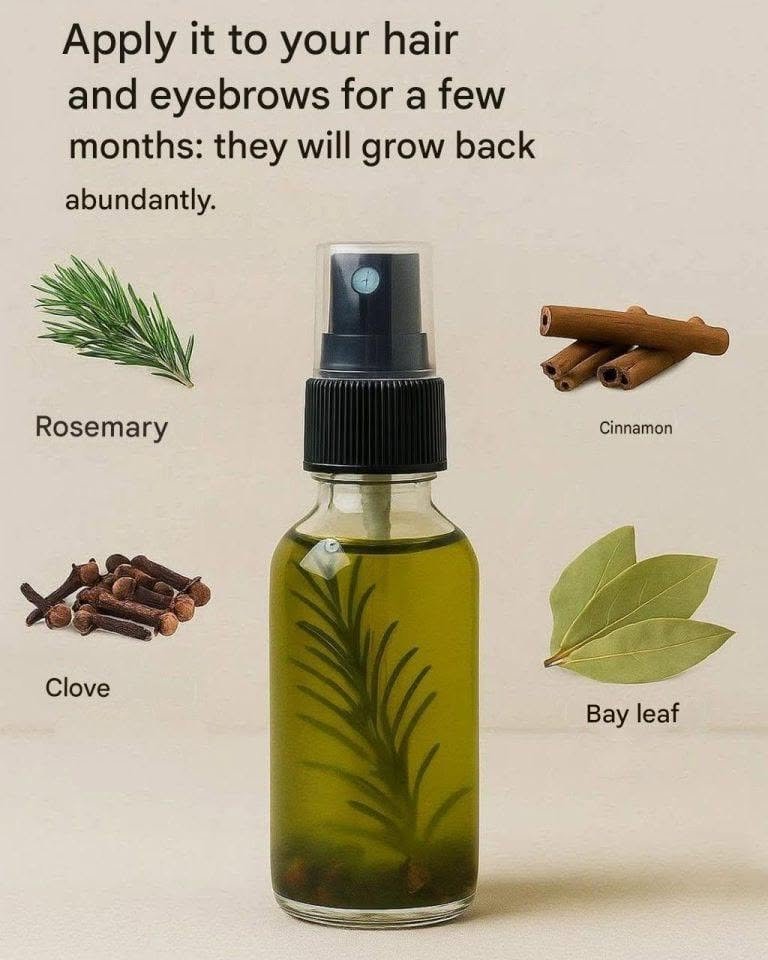
Clove and rosemary are both scientifically backed for hair health, but they work through very different mechanisms, making this infusion a powerful 1-2 punch.
Here’s how to make it correctly, why it works, and the critical safety rules you must follow.
Why This Combination Works
-
Rosemary: The star for growth. Studies have shown rosemary oil can be as effective as 2% minoxidil for androgenetic alopecia (pattern baldness) after 6 months. It works by stimulating blood microcirculation in the scalp, which delivers oxygen and nutrients to dormant follicles, and inhibits DHT, the hormone that shrinks follicles.
-
Clove: The ace for scalp health. Clove contains high levels of eugenol, a natural anesthetic and powerful antimicrobial. It tackles dandruff, itchiness, and fungal overgrowth that silently inflames follicles and weakens hair. The catch: eugenol is extremely potent and can cause chemical burns or irritation if misused.
Together, rosemary drives the regrowth signal, and clove clears the ground so follicles can receive it.
The Strengthening & Stimulating Infusion
Yield: Enough for 2–3 applications
Shelf life: Up to 1 week in the refrigerator
Ingredients
-
2 cups distilled or filtered water
-
2 tablespoons dried rosemary leaves (or 3 sprigs of fresh rosemary)
-
4–5 whole cloves (not ground; whole cloves release oil more controllably)
-
Optional: 1 teaspoon fennel seeds or fresh curry leaves, for added shine and strengthening
Instructions
1. Simmer gently, never boil.
Pour the water into a saucepan and add the rosemary and cloves. Bring to a gentle simmer over low heat. As soon as you see tiny bubbles, cover the pot and reduce the heat to the absolute lowest setting. A low, slow steep preserves the volatile oils that would evaporate in a rolling boil.
2. Steep covered for 15–20 minutes.
Remove from heat and keep the lid on. Let it steep until the liquid is a deep amber to reddish-brown. This is when the active compounds fully diffuse.
3. Strain meticulously.
Strain through a very fine-mesh sieve or a cheesecloth. Any clove particles left behind can irritate the scalp. Let the liquid cool completely.
4. Bottle and label.
Pour into a clean spray bottle or applicator bottle for easy application directly onto the scalp.
How to Use It (The Routine That Matters)
Before you start: Do a patch test. Dab a little on your inner elbow, wait 10–15 minutes. Any burning, redness, or itching means you must dilute further or skip the clove. A tingling or cooling sensation on the scalp is normal; stinging is not.
Application:
-
Use the infusion on a clean or damp scalp. Part your hair in sections.
-
Spray or dab directly onto the scalp, not just the hair shaft.
-
Massage firmly with your fingertips for 3–5 minutes. This is non-negotiable. The mechanical stimulation works in tandem with the herbs to literally pump blood into the area.
-
Leave on for a minimum of 30 minutes, or up to 2 hours. You can wrap your head in a warm towel. It can be left on overnight if well tolerated, but only if your patch test was completely clear.
-
Rinse out with lukewarm water. You don’t have to shampoo every time, but you can. Don’t let the residue sit indefinitely without rinsing.
Frequency: 2–3 times a week. Consistency over months is what signals follicles to move from resting (telogen) to growing (anagen) phase.
Critical Safety Rules
-
Do not increase the clove count. “More” is not better here. That 4–5 whole clove maximum for 2 cups is the safety limit. Doubling it can trigger contact dermatitis, even hair breakage from follicle inflammation.
-
Never apply undiluted clove oil directly to your scalp.
-
Rinse your eyes immediately with clean water if any infusion drips into them. Clove oil vapors can be intensely irritating.
-
Pregnancy/breastfeeding: Topical rosemary in food-like amounts is generally considered safe, but medicinal scalp concentrations during pregnancy are a gray area. Clove should be avoided in large topical doses. Consult your doctor.
-
Shedding phase: A small increase in shedding in the first few weeks can happen as dormant, weak hairs are pushed out to make room for new growth. This should be mild and stop within a month. If it’s heavy, discontinue use.
Maximizing the Benefits
-
Storage: Keep the bottle in the fridge and discard after 7 days. Make a fresh batch. Without preservatives, bacteria can grow, and a scalp infection is the last thing you want when aiming for hair growth.
-
The inside-out support: This infusion works best when you give your body hair-building nutrients. Make sure you’re eating enough protein (keratin is a protein), iron, and vitamin D. A handful of pumpkin seeds daily provides zinc, which is critical for the rosemary-activated pathways.
Would you like a recipe for a rosemary and clove hair oil (a longer-shelf-life maceration) instead of a water infusion, or tips on how to combine this with a gentle scalp scrub to maximize absorption?