
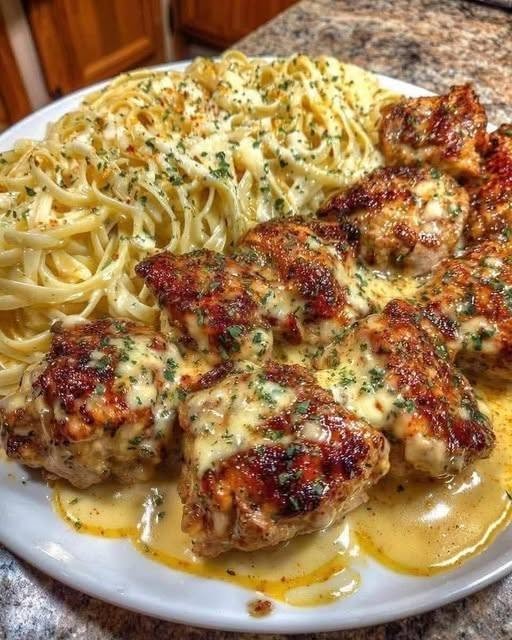
Here’s a recipe that builds deep flavor at every step, using the pan drippings from the chicken to make the Alfredo sauce extraordinary.
Creamy Garlic Butter Chicken & Linguine in Alfredo Sauce
Yield: 4 servings
Time: 30 minutes
Ingredients
For the Chicken:
-
2 boneless, skinless chicken breasts (about 1 lb), sliced in half horizontally to make thin cutlets
-
1 teaspoon kosher salt
-
1/2 teaspoon black pepper
-
1 teaspoon Italian seasoning
-
2 tablespoons olive oil
For the Alfredo Sauce & Pasta:
-
1 lb linguine (or fettuccine)
-
4 tablespoons unsalted butter
-
6 cloves garlic, minced (about 2 tablespoons)
-
2 tablespoons all-purpose flour
-
2 cups heavy cream, at room temperature
-
1 cup whole milk
-
1 1/2 cups freshly grated Parmesan cheese (do not use pre-shredded)
-
1/2 teaspoon freshly ground black pepper
-
1/4 teaspoon freshly grated nutmeg (optional, but traditional)
-
Salt to taste
-
Fresh parsley, chopped, for garnish
Method
1. Boil the Pasta Water
Bring a large pot of generously salted water to a boil. It should taste like the sea. Cook the linguine 1 minute less than the package directions for al dente. Just before draining, scoop out and reserve 1 cup of the starchy pasta water.
2. Cook the Chicken
While the water heats, pat the chicken cutlets completely dry. Season both sides with salt, pepper, and Italian seasoning.
Heat the olive oil in a large, deep skillet or Dutch oven over medium-high heat. Add the chicken and cook, without moving, for 4-5 minutes per side until deeply golden and cooked through (165°F internal). Transfer to a cutting board and tent loosely with foil.
3. Build the Garlic Butter Base
In the same skillet (do not wipe it out—those browned chicken bits are flavor), reduce the heat to medium-low. Melt the butter, then add the minced garlic. Sauté for 30-45 seconds until intensely fragrant but not browning. Browning the garlic here will make the sauce bitter.
4. Make the Roux and Béchamel
Sprinkle the flour over the garlic butter and whisk constantly for 1 minute to cook out the raw flour taste. This is your roux. Slowly pour in the heavy cream and milk, whisking vigorously to prevent lumps. Bring the mixture to a gentle simmer, where it will visibly thicken. Let it bubble softly for 2-3 minutes.
5. Melt in the Parmesan
Reduce the heat to low. Add the Parmesan cheese one handful at a time, whisking until each addition is fully melted and smooth before adding the next. Stir in the black pepper and optional nutmeg. Taste the sauce and add salt if needed, but remember Parmesan is salty.
6. Emulsify the Pasta
Add the drained linguine directly to the skillet with the sauce. Use tongs to toss and roll the pasta vigorously for 1-2 minutes. If the sauce seems too thick, add the reserved pasta water a splash at a time. The starch in the water helps the sauce cling to every strand and gives it that silky, restaurant-quality sheen.
7. Slice and Serve
Slice the rested chicken breasts against the grain into strips. Nestle them on top of a generous portion of the coated linguine. Spoon any remaining sauce from the pan over the chicken. Garnish with fresh parsley and an extra snow of Parmesan.
The Why Behind the Method
-
Room Temperature Cream: Adding cold cream to a hot roux can cause the fat to separate. Let your dairy sit out for 15 minutes.
-
Fresh Parmesan is Non-Negotiable: The green canister stuff contains cellulose and anti-caking agents that prevent it from melting into a smooth, velvety sauce. You will end up with a gritty, broken mess. Grate a block of Parmigiano-Reggiano yourself on the fine side of a box grater.
-
The Pasta Water is Liquid Gold: That starchy, salty water is the final key to a sauce that doesn’t just sit in a puddle under the pasta but actually marries with it.
Enjoy! It’s a rich one, but exactly what you want from this dish.