
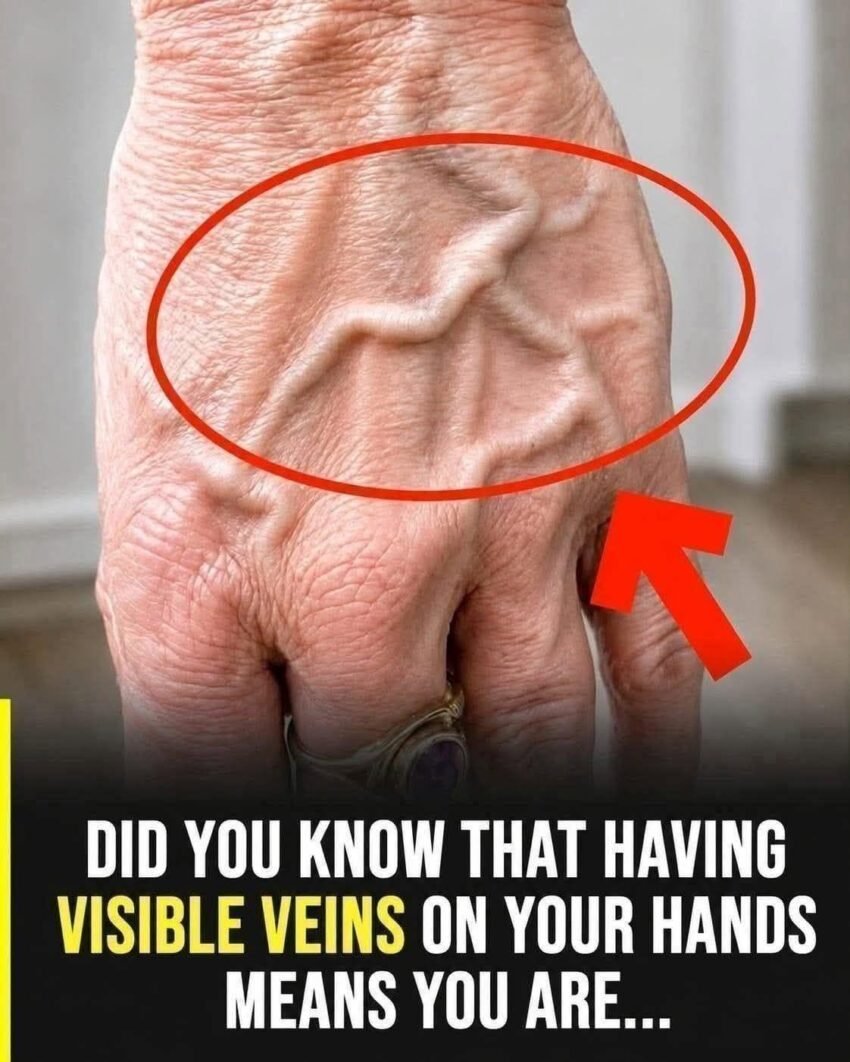
“Did you know that having visible veins means you are…”
The answer depends entirely on where the veins are, what they look like, and how they developed. It’s rarely a single, simple meaning. Here’s the breakdown, from completely normal to something to monitor.
…Fair-Skinned, Lean, or Just Fit (The Most Common Answer)
For the vast majority of people, visible veins—especially on the arms, hands, and legs—are a sign of no underlying disease at all. It means you are:
-
Genetically Predisposed: Having fair or thin skin naturally makes underlying structures more visible.
-
Low in Subcutaneous Body Fat: Fat acts as a cushion and a veil. The leaner you are, the more your veins show. This is why bodybuilders and very slim individuals have prominent veins.
-
“Fit”: During and after exercise, blood pressure rises and muscles swell, pushing veins closer to the skin’s surface. This is the sought-after “vascularity” effect. It’s a normal physiological response, not a sign of a health problem.
-
Warm: Heat dilates (widens) veins to release heat from your body, making them temporarily much more visible. It’s your body’s cooling system in action.
Verdict: If you have bluish, flat, or only slightly raised veins on your arms and legs since youth, it’s almost certainly normal anatomy.
…Physically Strong and Vascular (The Athletic Sign)
This is the continuation of the fitness point, but more specific. Pronounced, ropy veins on a muscular arm or leg are called exercise-induced vascularity. It means you have:
-
Increased Blood Volume: Regular training increases plasma volume to deliver more oxygen to working muscles.
-
High Muscle-to-Fat Ratio: The muscles literally push the veins to the surface, and there’s no layer of fat to hide them.
-
Efficient Venous Return: Your body is highly effective at getting blood back to the heart.
Verdict: In this context, it’s a sign of high cardiovascular and muscular conditioning.
…Aging (The “Crepey Skin” Sign)
If you’re noticing your hand veins becoming more prominent over time, especially if they look slightly tortuous and the skin looks thinner, this means your skin is losing collagen and elastin.
-
The Cause: This is intrinsic aging. The vessel walls themselves also weaken slightly, causing them to stretch and look more pronounced.
-
The Caveat: This is normal, but it’s the same mechanism that makes the valves in your leg veins more prone to failure, leading to varicose veins.
…At Risk of or Developing Varicose Veins (The Concern in Legs)
This is the critical distinction. Veins in the arms are almost never a health problem. Prominent veins in the legs that are bulging, rope-like, and twisting are different. This means you have venous insufficiency, where the one-way valves in your veins are failing, causing blood to pool.
-
What It Is: A genuine medical condition, not just a cosmetic issue.
-
The Danger Signs: Veins that are raised, >3mm wide, look twisted, and are accompanied by aching, heaviness, swelling, itching, or night cramps. Skin changes like darkening or hardening around the ankles are serious signs of chronic venous disease.
…A Potentially Dehydrated or Overheated Athlete (The Misleading Illusion)
Ironically, extreme vascularity in a bodybuilder on stage is a sign of dehydration. They manipulate water and sodium to get the skin impossibly thin.
-
For normal people: Sudden, new prominence of veins all over the body, especially with fatigue, could be a sign of severe dehydration or heat exhaustion. Your blood volume is low, and veins may dilate.
The Rare but Serious Answer: You Are… Developing a Vascular Blockage
A sudden, localized prominence of a vein can be a red flag.
-
In the abdomen: A sudden appearance of visible, distended veins around the belly button (a pattern called caput medusae) can signal severe liver disease with portal hypertension. This is a medical emergency.
-
A Hard, Cord-Like Vein: If a superficial vein becomes a prominent, hard, painful cord (often on the arm or chest), it’s likely superficial thrombophlebitis—a clot in a surface vein, often from an IV, trauma, or unknown cause. It’s usually benign but needs a doctor’s evaluation to ensure no deep vein involvement.
The Bottom Line: A Simple Self-Check
You can tell the difference by looking at three things:
-
Location: Arms and hands? Almost always normal. Legs? Monitor closely.
-
Symmetry: Is it on both arms/legs? Normal variations are usually symmetrical. A single prominent vein, especially in a leg, is a red flag.
-
Symptoms: Is it just visible, or is it painful, swollen, and thick? Painless and flat = cosmetic/normal. Painful, bulging, and symptomatic = see a vein specialist (phlebologist).
So, to complete the sentence accurately: “…having visible veins most likely means you are lean, fit, fair-skinned, or warm—and completely normal. In specific locations with specific symptoms, it means you should get your vascular health checked.”