
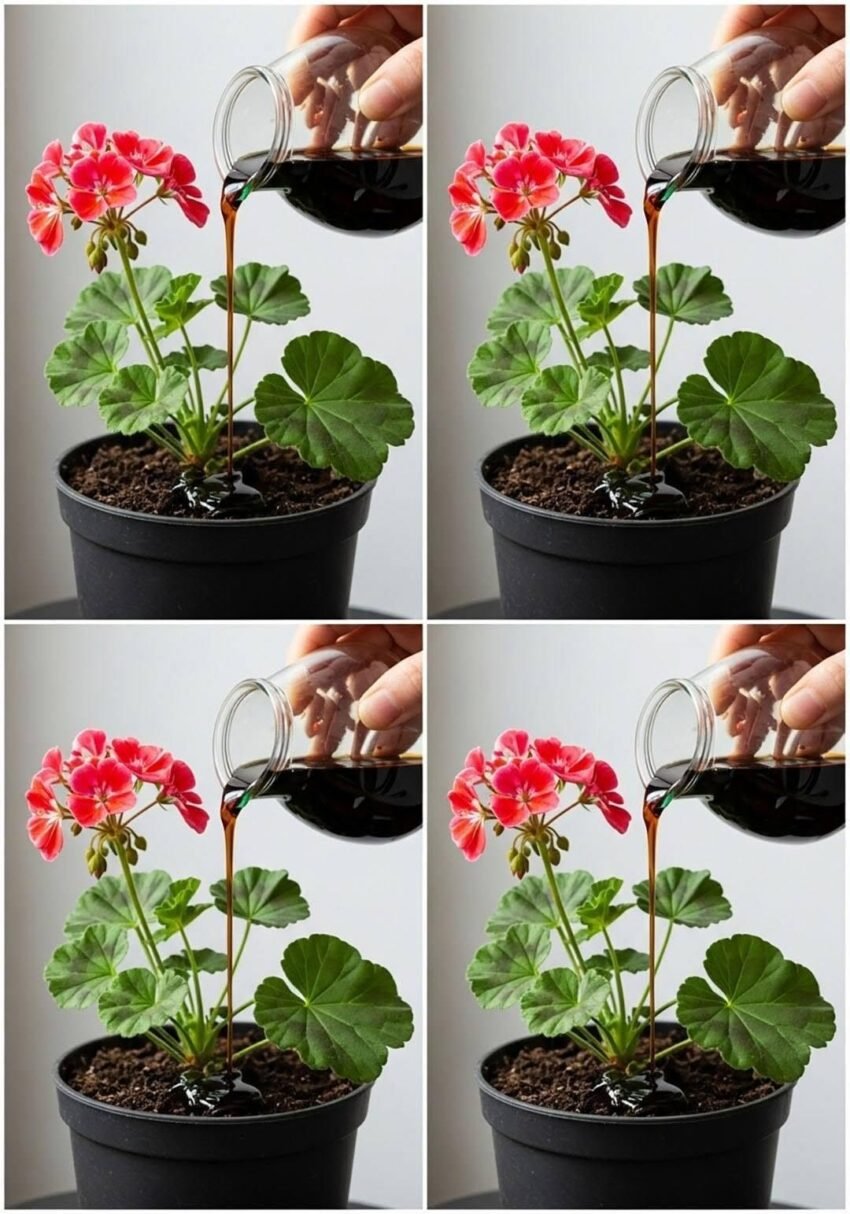
If you want geraniums to bloom almost continuously for over a year, the secret is consistent deadheading, proper feeding, correct light, and a simple pruning routine. Geraniums are heavy bloomers, but most people only get a few flushes of flowers because the plant is putting energy into seed production or leggy growth.
Here’s what to do.
1. Deadhead regularly — but do it properly
The most important step.
Don’t just pull off the dead petals. Remove the entire flower stalk as soon as the bloom fades.
How to do it:
-
Follow the flower stem down to where it joins the main plant.
-
Snap or cut it off cleanly at the base.
-
Do this every few days during the flowering season.
Why it works:
If faded flowers remain, the plant switches energy to making seeds instead of producing new blooms.
2. Pinch back leggy growth
Geraniums can become tall and straggly, especially indoors or in low light.
What to do:
-
Pinch or cut the growing tips just above a leaf node.
-
Do this every few weeks during active growth.
-
Remove any yellow or weak leaves.
Result:
A bushier plant with many more flowering stems, instead of one long stem with a few flowers at the top.
3. Give them as much bright light as possible
Geraniums need at least 6–8 hours of direct sunlight per day to bloom well.
-
Outdoors: choose a south- or west-facing spot.
-
Indoors: place them in a bright window, ideally south-facing.
-
In very hot climates, protect them from harsh midday sun in summer.
Sign of too little light:
Lots of leaves, few or no flowers, and stretched or pale growth.
4. Use the right fertiliser
Too much nitrogen gives you beautiful leaves but almost no flowers.
Best feed:
-
Use a fertiliser higher in phosphorus and potassium.
-
Look for a tomato or flowering-plant fertiliser.
-
A ratio around 10-20-10 or similar works well.
How often:
-
Feed every 2 weeks during active growth.
-
In winter, reduce feeding to once a month or stop if the plant is resting.
5. Water correctly — not too much
Geraniums flower best when they are kept slightly on the dry side.
Rule:
-
Let the top 2–3 cm of soil dry out before watering again.
-
Avoid soggy soil.
-
Water at the base, not over the flowers and leaves.
Why it matters:
Overwatering causes root problems and leafy growth at the expense of flowers.
6. Keep them warm, but not hot
Geraniums bloom most when temperatures are moderate.
Ideal range:
-
Daytime: 18–24°C
-
Nighttime: 13–18°C
They can survive hotter weather, but flowering often slows during extreme summer heat. If this happens, move them somewhere with morning sun and afternoon shade.
7. Overwinter them properly for year-round blooms
If you want geraniums to bloom for more than a year, don’t throw them away in autumn.
Option A: Bring them indoors
-
Before first frost, cut the plant back by about one-third to one-half.
-
Place it in a bright, cool room.
-
Water sparingly.
-
Stop fertilising for a few weeks, then resume lightly.
Option B: Take cuttings
-
In late summer, take 8–10 cm cuttings from healthy stems.
-
Remove lower leaves.
-
Place in moist potting mix.
-
Keep warm and bright.
-
They root in 2–4 weeks and can bloom within a few months.
8. Repot and refresh the soil
If the plant is in a pot, refresh the soil every year or so.
Do this:
-
In early spring, repot into fresh compost.
-
Remove any dead roots.
-
Add slow-release flowering plant fertiliser.
Fresh soil gives the plant new nutrients and encourages vigorous blooming.
Quick summary for continuous blooming
-
Deadhead the whole flower stem every few days.
-
Pinch back growing tips to make the plant bushier.
-
Give full sun — at least 6 hours a day.
-
Feed every 2 weeks with a phosphorus-rich fertiliser.
-
Let soil dry slightly between waterings.
-
Keep temperatures moderate.
-
Overwinter indoors or take cuttings.
-
Refresh soil in spring.
Bottom line
The single most effective thing is regular deadheading, but combined with strong light, careful feeding, and occasional pinching, your geraniums can bloom almost nonstop for well over a year — often through winter if kept indoors.