
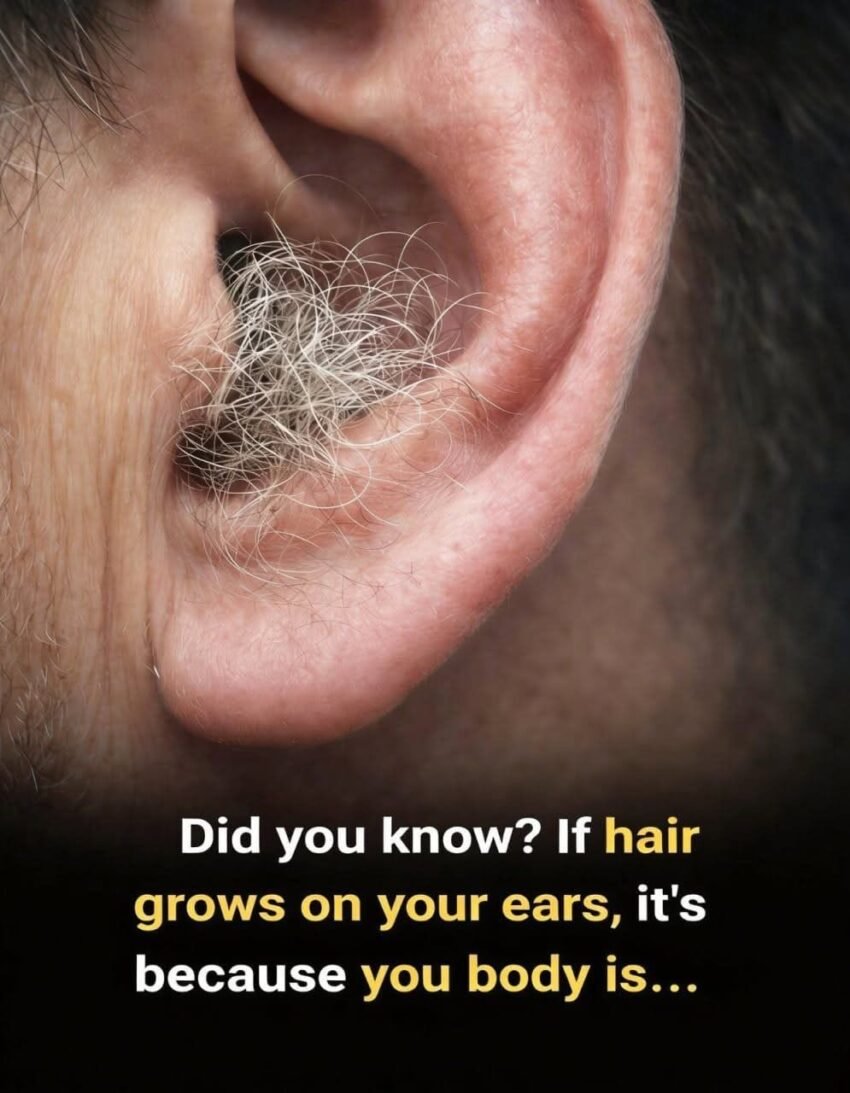
While ear hair is often treated as nothing more than an aesthetic nuisance or a punchline about getting older, doctors say it can actually be a fascinating window into your hormonal health and cardiovascular system.
Here is what medical science and doctors say about that often-overlooked bit of fuzz in your ears.
1. It is a Natural Part of Aging (But it is Hormonal)
As men age, their bodies undergo shifts in androgens—the “male” hormones like testosterone and its byproduct, DHT (dihydrotestosterone). While high DHT is often blamed for hair loss on the scalp, it does the exact opposite to the hair on the ears, nose, and eyebrows: it makes it grow longer, thicker, and darker.
-
What doctors say: If you are over 40 and suddenly notice wiry hair sprouting from your ears, it’s completely normal. However, if you are a young man in your 20s or 30s and suddenly develop very thick ear hair, it could simply mean you have a high natural sensitivity to DHT.
2. The Frank’s Sign Connection (Ear Crease and Heart Health)
Perhaps the most medically significant link between the ear and your health isn’t the hair itself, but a diagonal crease in the earlobe known as Frank’s Sign.
-
What doctors say: Studies dating back to the 1970s have noted a statistical correlation between a diagonal earlobe crease and an increased risk of coronary artery disease (CAD), heart attacks, and hardening of the arteries.
-
Does ear hair cause this? No. But doctors often notice the two together. A heavily hairy ear canal alongside a deep earlobe crease has been studied as a potential early warning sign of underlying cardiovascular issues, particularly in men under 60. If you have a deep earlobe crease (even if you don’t have ear hair), it is worth mentioning to your doctor at your next physical.
3. Protection (The Biological Reason We Have It)
Believe it or not, ear hair serves a biological purpose, especially the fine, almost invisible hair (called vellus hair) inside the ear canal, and the thicker tragi hairs around the opening.
-
What doctors say: Ear hair acts as a physical filter. It helps trap dust, debris, insects, and foreign particles, preventing them from reaching the delicate eardrum. The thick, sticky earwax you produce works in tandem with the hair to act as a sticky trap. People who aggressively remove all their ear hair may actually experience slightly more dust or debris buildup in the ear canal.
4. A Marker of Metabolic or Endocrine Changes
Occasionally, a sudden and dramatic change in body hair—including ear hair—can signal an underlying endocrine (hormonal) issue.
-
What doctors say: While rare, sudden excessive hair growth (a condition called hypertrichosis) or changes in hair texture can sometimes be linked to thyroid disorders, pituitary gland issues, or the use of certain medications (like anabolic steroids or testosterone therapy).
5. Increased Risk of Folliculitis (If Groomed Incorrectly)
If you choose to remove your ear hair, doctors warn that the ear canal is highly sensitive and prone to infection.
-
What doctors say: Plucking hairs out of your ears with tweezers creates tiny open wounds. This can easily lead to folliculitis (inflammation of the hair follicle) or otitis externa (swimmer’s ear / outer ear infection). Because the ear canal is warm, dark, and moist, bacteria thrive there. Doctors recommend using an electric ear/nose trimmer that cuts the hair just above the skin rather than pulling it out by the root.
How Should You Manage Ear Hair?
Doctors generally advise a “less is more” approach:
-
Leave it alone: If it doesn’t bother you, the hair inside the canal is doing its job.
-
Trim, don’t pluck: Use a dedicated electric trimmer with a guard to safely trim the hair at the entrance of the ear and on the outer lobe.
-
Avoid laser on the inside: Laser hair removal is safe for the outer ear (the pinna), but it is generally not recommended for the inside of the ear canal due to the risk of burning the sensitive skin.
-
See a professional: If you use hearing aids, you may have more ear hair growth due to the device rubbing the ear. If the hair is causing impacted wax or discomfort, have a doctor or ENT (ear, nose, and throat specialist) remove it safely.
The bottom line from doctors: Ear hair is usually just a harmless, testosterone-driven badge of getting older. But don’t ignore the earlobe itself—if you see a deep crease, get your heart health checked.