
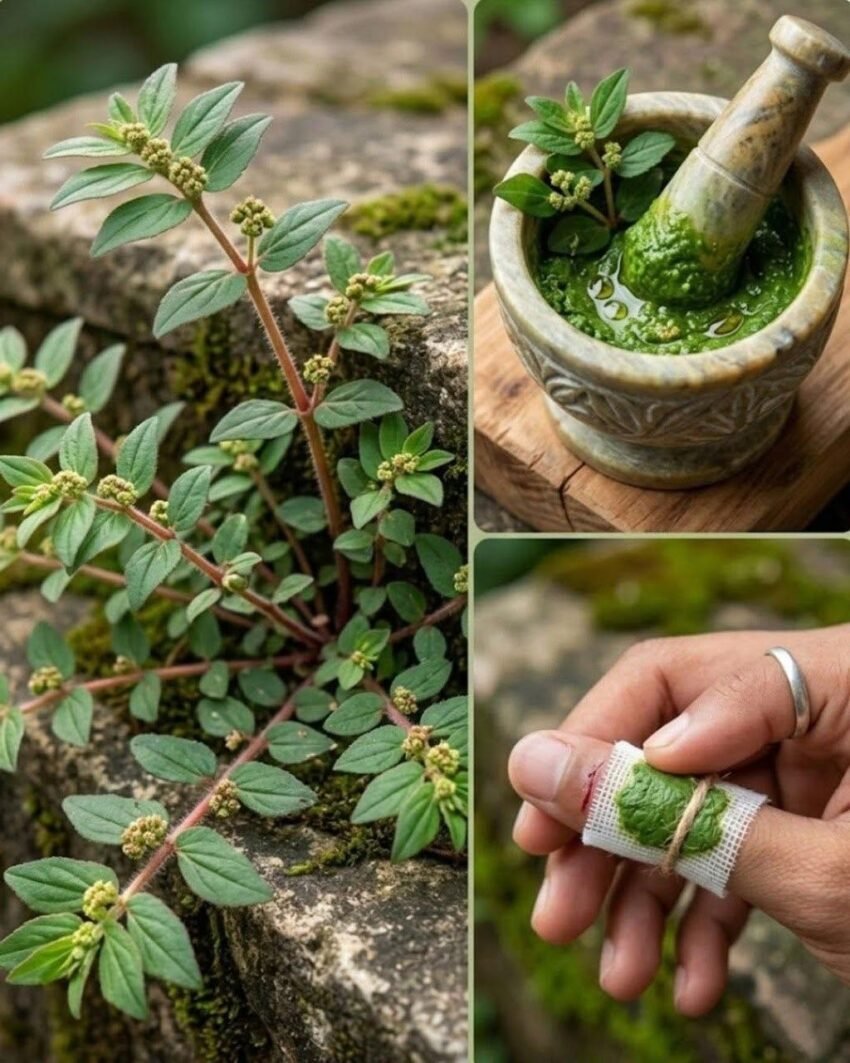
Euphorbia hirta, commonly known as the asthma plant, snakeweed, or pill-bearing spurge, is a masterclass in how a humble “weed” can be a complete pharmacy. It belongs to the same Euphorbia genus I warned you about with the purslane look-alike, so correct identification is absolutely critical. It is a world away from the toxic spurge, but its power demands respect.
This plant has been so widely used in traditional medicine across tropical Africa, Asia, and Australia that the World Health Organization (WHO) has taken note of it. Modern research is now validating its ancient uses. Here’s what the science and traditional knowledge tell us about its key health benefits, moving from its most famous use to its lesser-known systemic effects.
The Pharmacological Profile: Why It Works
Before the list of benefits, understand that Euphorbia hirta is packed with bioactive compounds: flavonoids (like quercetin), alkaloids, tannins, sterols, and triterpenes. This chemical cocktail gives it potent antimicrobial, anti-inflammatory, antispasmodic, and mild sedative/anxiolytic properties. It acts on the respiratory system, the gut, and the skin with targeted precision.
9 Key Health Benefits & Their Authentic Uses
1. Powerful Relief for Respiratory Conditions (The “Asthma Plant”)
This is its primary and most celebrated use. Euphorbia hirta has a profound relaxing effect on the bronchial smooth muscle. It works as a natural bronchodilator and antispasmodic, easing the tight, constricted feeling in asthma and bronchitis.
-
Traditional Use: A tea made from the dried leaves is sipped to stop severe coughing fits and wheezing. It doesn’t just suppress the cough; it relaxes the airway causing it.
2. Cures Acute & Chronic Diarrhea, Including Amoebic Dysentery
This is where E. hirta outshines many other remedies. The tannins in the plant are astringent, which means they bind to the mucous membrane of the gut, reducing inflammation and fluid secretion. Crucially, it has demonstrated direct anti-amoebic activity against Entamoeba histolytica, the parasite causing severe dysentery.
-
Traditional Use: Drinking the cooled, filtered decoction is a frontline treatment for loose motions in many traditional systems. It soothes an irritated gut and combats the infection simultaneously.
3. Anti-Anxiety and Calming Effect (Natural CNS Sedative)
Emerging scientific studies have documented the anxiolytic (anti-anxiety) properties of Euphorbia hirta extracts. In rodent studies, it significantly reduced anxious behavior. This is not merely a relaxing tea; it’s a genuine central nervous system depressant with a calming effect, which directly connects to our previous discussions on calming an overactive nervous system.
-
Traditional Use: Consumed as a mild sedative for insomnia or restlessness, often at night.
4. Galactagogue: Promoting Healthy Breast Milk Flow
In nursing mothers with low milk supply, Euphorbia hirta is a well-known galactagogue. It stimulates the production and flow of breast milk.
-
Traditional Use: New mothers drink a warm infusion of the whole plant to boost lactation. (This must be done under guidance, as dosage is critical during breastfeeding).
5. Topical Treatment for Wounds, Sores, and Fungal Infections
The milky sap, which is its signature feature, is both its medicine and a point of caution. The fresh latex is dabbed directly on wounds, boils, warts, and fungal skin infections like athlete’s foot. It contains potent antimicrobial and wound-healing compounds that disinfect and dry out the lesion.
-
Traditional Use: A drop of the fresh, milky sap is applied precisely to a boil or wart to dry it up. The crushed leaves are used as a poultice over wounds to speed up healing.
6. Anti-Venom for Snake Bites and Insect Stings
This is an emergency use born from deep traditional knowledge. The plant’s alkaloids and anti-inflammatory compounds work to neutralize certain venom toxins and dramatically reduce local swelling and pain.
-
Traditional Use: The fresh whole plant is quickly crushed into a paste and applied directly to the bite wound while the patient is taken for medical care. (This is a first-aid measure, not a replacement for antivenom).
7. Anti-Malarial and General Fever Reducer
In regions where malaria is endemic, a decoction of the leaves and roots has been used as an antimalarial and to bring down high fevers. The flavonoids possess antipyretic (fever-reducing) properties and have shown some activity against the Plasmodium parasite.
8. Soothing Eye Wash for Conjunctivitis (Pink Eye)
A very diluted, meticulously strained, and cooled decoction of the leaves (never the latex directly) is traditionally used as a soothing eyewash for red, inflamed eyes and sticky eyelids from conjunctivitis. Its antimicrobial and anti-inflammatory action targets the infection directly.
-
Extreme Caution: The sap in the eyes is blindingly painful and dangerous. Only a very weak, carefully filtered tea cooled to room temperature is used, and even then, this is best done under the guidance of an experienced practitioner.
9. Promoting Kidney Health and Treating UTIs
As a mild diuretic and antimicrobial, the tea helps flush the urinary tract. For burning urination and mild infections, its soothing anti-inflammatory action on mucous membranes, combined with its ability to increase urine flow, helps cleanse the system.
How to Prepare the Traditional Respiratory/Diarrhea Tea
-
The Tincture (for Asthma): Due to its potency, the traditional preparation for acute respiratory distress is often a tincture (an alcohol-based extract), as it extracts the maximum bronchodilating compounds and allows for precise drop-by-drop dosing.
-
The Water Infusion (for Diarrhea & Anxiety):
-
Take 1 teaspoon of dried Euphorbia hirta whole plant (or 3-4 fresh leaves).
-
Pour 1 cup of just-boiled water over the herb.
-
Cover and steep for exactly 10-15 minutes. Do not overcook it.
-
Strain through a fine cloth. The taste is mildly bitter and astringent.
-
Drink in small sips throughout the day.
-
🛑 CRITICAL SAFETY WARNINGS 🛑
This is the most important part. “Natural” does not mean “harmless.” Euphorbia hirta is a powerful medicine and must be treated as such.
-
CORRECT IDENTIFICATION IS NON-NEGOTIABLE: You absolutely must know that this is Euphorbia hirta and not a related, toxic spurge. E. hirta has hairy stems and leaves, and the cyathia (tiny flower-like structures) are densely clustered, reddish-green balls. The toxic creeping spurges are hairless and have a flat, spreading habit. If you are not 100% certain, do not use it.
-
THE SAP IS CAUSTIC: The milky white latex can cause severe irritation, redness, and allergic reactions on sensitive skin. Never, ever get it in your eyes. It can cause intense pain, corneal inflammation, and temporary blindness. Wash your hands thoroughly after touching any broken part of the plant.
-
STRICTLY CONTRAINDICATED IN PREGNANCY: This plant has uterine stimulant and abortifacient properties. It must be completely avoided by pregnant women.
-
INTERNAL USE REQUIRES MODERATION: Ingesting large amounts of the undiluted latex or overly strong decoctions can cause nausea, vomiting, and severe gastric irritation. The tannins, in excess, are hard on the liver. Start with a very weak tea and a small dose to test your body’s reaction. It is a short-term, acute remedy, not a daily tonic.
This plant, like the purslane we discussed, is a gift of traditional medicine, growing freely and offering solutions for some of the most acute and distressing conditions: an asthma attack, a dysentery flare, a venomous bite. Its power is real, but it demands knowledge, precision, and respect. It is the perfect example of why identifying the right “weed” is one of the most valuable skills you can cultivate.