
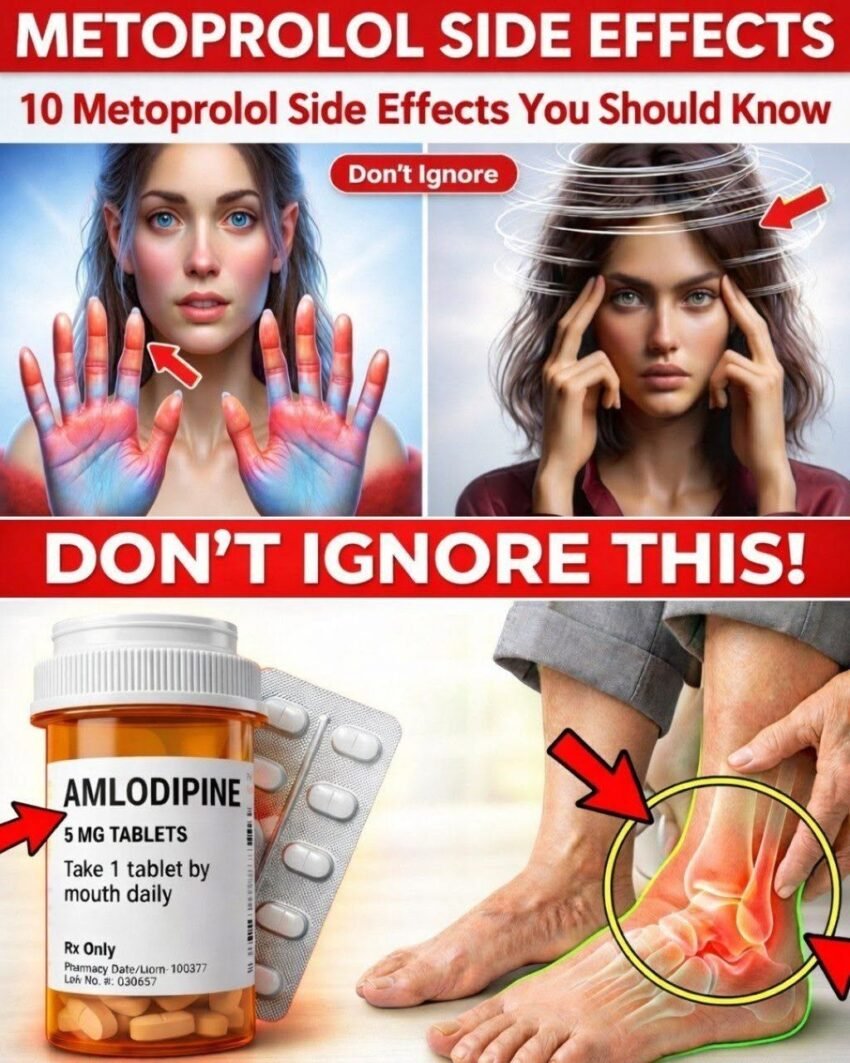
Metoprolol is a widely prescribed beta-blocker, and while many people know it can cause fatigue or slow heart rate, there’s a constellation of other side effects that are rarely discussed. Because metoprolol works by blocking the effects of adrenaline (epinephrine) throughout your entire body, its effects can be surprisingly wide-ranging and strange.
Here are 10 overlooked metoprolol side effects, broken down by why they happen.
The Metabolic Masquerade
1. Weight Gain and a “Thick” Middle
This is one of the most distressing and least-warned-about side effects. It’s not just a few pounds of water. Metoprolol can reduce your resting metabolic rate (the calories you burn at rest) by 5-10% and can make fat burning during exercise less efficient. Patients often report a stubborn, unexplained increase in belly fat despite no change in diet or activity.
2. Masked Low Blood Sugar Symptoms (Hypoglycemia Unawareness)
For diabetics, this is a critical, overlooked danger. Normally, when your blood sugar crashes, your body releases adrenaline, causing you to feel shaky, sweaty, and have a racing heart—your warning system. Metoprolol blocks these adrenaline receptors. You can plummet into a dangerously low blood sugar without feeling the typical warning signs, with the main clue being sudden, profuse sweating.
3. Cholesterol and Triglyceride Changes
Beta-blockers like metoprolol can subtly shift your lipid profile. They don’t usually raise “bad” LDL cholesterol but can significantly lower your “good” HDL cholesterol and raise triglycerides. A doctor might focus on your blood pressure numbers improving, overlooking this metabolic trade-off on a lab report.
The Neurological and Psychological Ghosts
4. Vivid, Bizarre, and Disturbing Nightmares
Because metoprolol is fat-soluble, it crosses the blood-brain barrier. It suppresses melatonin secretion and interferes with REM sleep architecture. The result isn’t just “weird dreams”; for many, it’s a nightly cinema of intensely realistic, violent, or anxiety-ridden nightmares that disrupt restorative sleep.
5. Short-Term Memory Loss and “Brain Fog”
This is a subtle cognitive toxicity often dismissed as aging. Patients describe a frustrating inability to retrieve words, a spotty short-term memory, or a feeling of being mentally “cloudy.” It stems from the drug dampening the central nervous system’s sympathetic drive, which modulates alertness and memory encoding.
6. Depression That Feels “Flat”
This isn’t always a profound, crying depression. More often, it’s anhedonia—the inability to feel pleasure. Because the brain’s reward pathways are linked to noradrenergic activity, blocking these signals can make hobbies feel dull, reduce motivation, and create an emotional “blunting” that a patient might not connect to their heart pill.
The Peripheral Oddities
7. Ice-Cold Hands and Feet
This goes beyond normal cold sensitivity. Metoprolol blocks beta-2 receptors in the blood vessels of your extremities, preventing them from dilating. The result is vasoconstriction. Your fingers and toes can turn a corpse-like white or blue (Raynaud’s phenomenon), feeling numb and painfully cold even in a warm room.
8. Strange Joint and Muscle Pain
A surprising number of patients report a fibromyalgia-like syndrome: a dull, diffuse aching in the shoulders, knees, or back without any swelling or injury. It’s believed to be linked to reduced cardiac output to muscle beds and is a common reason people stop taking the drug, though they rarely associate it with the medication.
9. Hair Thinning or Texture Changes
Telogen effluvium is a type of stress-induced hair shedding, and beta-blockers are a known trigger. Patients may notice a handful of hair in the shower drain or a change in hair quality, often because the drug prematurely pushes hair follicles into a resting phase.
The One Nobody Talks About
10. Sexual Dysfunction Beyond Just “Libido”
This is drastically underreported because it’s multi-faceted and embarrassing. It’s not just a lack of desire. In men, it can manifest as severe erectile dysfunction or Peyronie’s disease (a curvature caused by scar tissue). In both men and women, it causes a complete inability to achieve orgasm (anorgasmia). The mechanism is a direct blockade of the relaxation signals needed for genital blood flow, and this effect is often dose-dependent.
A Critical Safety Note: These side effects, while impactful, are not a reason to suddenly stop taking metoprolol. Abruptly stopping a beta-blocker can cause a life-threatening “rebound” phenomenon: a sudden surge of adrenaline can trigger a hypertensive crisis, severe chest pain, or a heart attack. If you recognize these symptoms and want to address them, speak to your doctor about a slow, tapered withdrawal or a switch to a different, less CNS-penetrating medication.