
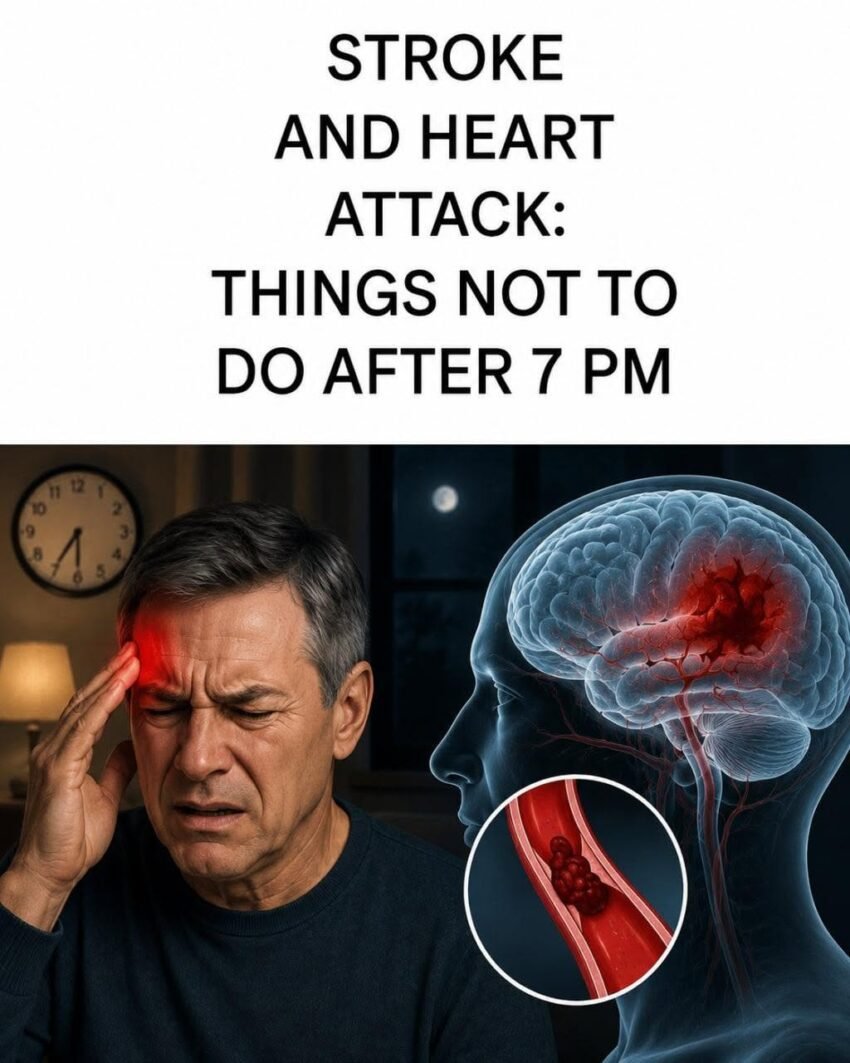
The timing of your habits—especially after 7 p.m.—can indeed have a measurable impact on your cardiovascular system, setting the stage for high blood pressure, arterial stiffness, and clotting risk while you sleep.
Here’s a breakdown of the evening habits most strongly linked by research to an increased risk of stroke and heart attack, and why they matter.
1. Eating a Heavy, Late Dinner
This is one of the riskiest habits. Your body isn’t designed to process a large caloric load right before it powers down.
-
The Mechanism: Late eating causes a prolonged spike in blood sugar and insulin. It diverts blood flow to the gut for digestion when it should be focused on cellular repair in the heart and brain. It also activates the sympathetic (“fight or flight”) nervous system, keeping your heart rate and blood pressure elevated overnight instead of allowing the natural 10-20% dip that healthy hearts experience during sleep.
-
The Risk: A study from the American Heart Association found that women who consumed a higher proportion of their daily calories after 6 p.m. had a significantly higher risk of cardiovascular disease. For every 1% increase in calories eaten after 6 p.m., there was a measurable decline in heart health markers like blood pressure and BMI.
2. Intense Exercise Too Close to Bed
While regular exercise is vital, timing matters. A late-night high-intensity workout (HIIT, heavy weightlifting, intense cardio) can backfire.
-
The Mechanism: Vigorous exercise floods your body with adrenaline and cortisol. It takes several hours for your heart rate variability (HRV) to return to a restful state and for your core temperature to drop—a necessary signal for sleep. Going to bed in a physiologically aroused state prevents the deep, restorative sleep stages where blood pressure reaches its lowest point, a critical recovery period for the vascular system.
-
Better Move: If you must exercise after 7 p.m., stick to gentle yoga, stretching, or a relaxed walk.
3. Blue Light and “Doomscrolling”
The habit of scrolling on your phone or tablet in a dark room isn’t just bad for sleep; it’s a direct cardiovascular stressor.
-
The Mechanism: Blue light from screens powerfully suppresses melatonin, the hormone that regulates sleep. But more directly, consuming stressful or emotionally charged content (news, work emails, social media arguments) triggers a low-grade stress response, releasing cortisol and keeping your vascular system tense. This prevents the nocturnal blood pressure drop.
-
The Risk: Chronic suppression of the nighttime blood pressure dip is a well-established independent predictor of stroke and heart attack, regardless of your daytime blood pressure readings.
4. Drinking Alcohol as a “Nightcap”
It’s a common myth that a drink helps you sleep. While alcohol may help you lose consciousness faster, it devastates sleep quality and strains the heart.
-
The Mechanism: Alcohol is metabolized hours into the sleep cycle, causing a rebound effect. As your body processes it, your sympathetic nervous system is reactivated, causing heart rate and blood pressure to spike in the second half of the night. It also fragments REM sleep. A 2023 study in Hypertension found that even one alcoholic drink per day was linked to a measurable rise in systolic blood pressure.
-
The Risk: Binge drinking, in particular, is a known trigger for “Holiday Heart Syndrome” (atrial fibrillation), a chaotic heart rhythm that dramatically increases the risk of a clot-induced stroke.
5. Inconsistent Sleep Timing
A “social jet lag” pattern—staying up late on weekends and shifting your schedule—is harder on your heart than a consistently short sleep schedule.
-
The Mechanism: Your cardiovascular system runs on a powerful 24-hour clock. Shifting your bedtime by more than an hour messes with the rhythmic expression of genes that regulate clotting, inflammation, and blood vessel repair. Irregular sleep patterns have been linked to higher levels of arterial plaque and inflammatory markers like C-reactive protein.
The “7 p.m. Rule” for a Heart-Safe Evening
If you want to protect your cardiovascular system, think of the hours after 7 p.m. as a transition zone:
-
Front-load your calories: Eat a lighter dinner, ideally before 7 p.m.
-
Create a tech curfew: Ditch the screens 60-90 minutes before bed, or use intense red-shifted blue-light blocking glasses.
-
Use a wind-down ritual: Reading a physical book, gentle conversation, or a warm shower can help trigger the parasympathetic “rest and digest” response, bringing your heart rate and blood pressure down safely for the night.
This aligns interestingly with the earlier topic of muscle cramps; disturbances in electrolyte balance and blood flow from these same evening habits can also contribute to nocturnal cramping. Did a specific health concern prompt your questions today? I can help refine any of this to your situation.