
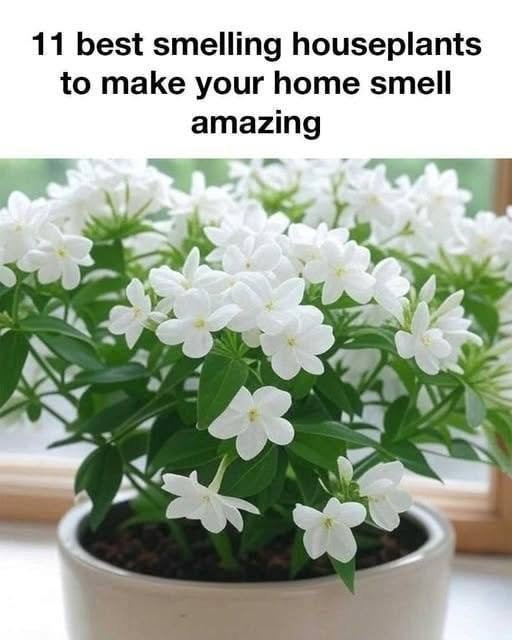
Here are the best houseplants that will make your home smell incredible, chosen for their proven ability to thrive indoors and their distinct, delightful fragrances.
The Heavy Hitters (Fragrant Flowers)
1. Arabian Jasmine (Jasminum sambac)
This is the plant that scents jasmine tea. Its small, white, pinwheel-shaped flowers produce an intensely sweet, exotic, and narcotic perfume, especially in the evening. A single plant blooming on a sunny windowsill can fill a small room with its scent.
-
How to Grow: Give it as much direct sun as possible (south-facing window) and consistent watering. It loves humidity.
-
Scent Profile: Rich, sweet, warm, and intoxicatingly floral.
2. Hoya (Wax Plant)
Many Hoya species, especially Hoya carnosa, produce large, globe-shaped clusters of starry flowers that look like perfect pink and white marzipan confections. The scent varies wildly by species but is often strongest in the evening.
-
How to Grow: Bright, indirect light. Let it dry out between waterings. The secret to blooms is keeping it pot-bound. Do not cut off the leafless spur where flowers emerged; it will rebloom from the same spot.
-
Scent Profile: Depending on the variety, you might smell chocolate, vanilla, honey, butter, or even a floral citrus.
3. Gardenia (Gardenia jasminoides)
The undisputed queen of fragrant houseplants. Its creamy white, rose-like blooms emit a heavy, velvety, lush perfume that is the definition of “luxurious.” However, a warning: this is a diva. It demands high humidity, bright light, and consistently moist, acidic soil, and it will drop its buds if you look at it wrong.
-
How to Grow: Bright, indirect light and steady warmth. Place on a pebble tray filled with water for humidity. Use rainwater or distilled water.
-
Scent Profile: Creamy, heady, opulent white floral.
The Citrus & Herbaceous Scents
4. Lemon Balm (Melissa officinalis)
A member of the mint family, lemon balm is an easy-to-grow herb that releases a clean, bright, lemony-mint scent whenever its crinkled green leaves are touched. It doesn’t need to flower to be fragrant; simply brushing past it is enough.
-
How to Grow: Grows happily on a sunny kitchen windowsill. Cut it back frequently to keep it bushy. It’s forgiving and fast-growing.
-
Scent Profile: Fresh, clean lemon peel with a hint of sweet mint.
5. Scented Geraniums (Pelargonium)
Don’t confuse these with the common zonal geraniums with the big red flower heads. Scented geraniums are grown for their leaves, which come in an astonishing array of fragrances. The fragrance oils are in tiny glands on the fuzzy leaves, released when you touch them.
-
How to Grow: They demand full, direct sun to develop their scent. Let the soil dry out between waterings. Pinch back to keep them compact.
-
Scent Profile: You can find varieties that smell exactly like rose, lemon, lime, apple, nutmeg, chocolate mint, or even a cola soda.
The Seasonal Aromatherapy Powerhouse
6. Eucalyptus (Eucalyptus globulus or E. cinerea)
While it’s a fast-growing tree outdoors, the silvery-blue, round leaves of a potted juvenile eucalyptus are a scent experience all their own. The leaves are packed with the essential oil eucalyptol. The scent isn’t overwhelming when the plant is undisturbed, but brushing the leaves or crushing one in your hand releases an intense, cooling, spa-like vapor.
-
How to Grow: It needs the absolute sunniest spot you have. It’s a bit challenging long-term as a houseplant because it craves sun, but it’s wonderful for a season, and you can hang cut stems in the shower for a permanent eucalyptus steam room.
-
Scent Profile: Sharp, clean, cooling, piney-camphoraceous. Smells like a high-end spa.
The Unconventional Choice
7. Sweet Bay Laurel (Laurus nobilis)
This is the same bay leaf you cook with. A small potted bay tree on a sunny windowsill is a beautiful, evergreen, classic topiary. The deep, aromatic scent is in the leathery leaves and is released slowly into the air when the sun warms the pot, or immediately if you pluck a leaf and crumple it.
-
How to Grow: Full sun is crucial. It prefers to be on the cooler side and needs good airflow to prevent scale insects. It’s a slow grower but a long-lived companion.
-
Scent Profile: Warm, savory, herbal, slightly balsamic with a hint of clove.
The Best Practice for a Naturally Scented Room
The key is to group your fragrant plants together in a warm, sunny spot with a bit of humidity. The sun releases the volatile oils in the leaves and flowers. Gently brushing your hands through the leaves of lemon balm, scented geranium, or eucalyptus before you sit down is an instant, living aromatherapy ritual.
Start with a Lemon Balm or a Scented Geranium—they’re the most forgiving and immediately rewarding. Which scent profile appeals to you most?