
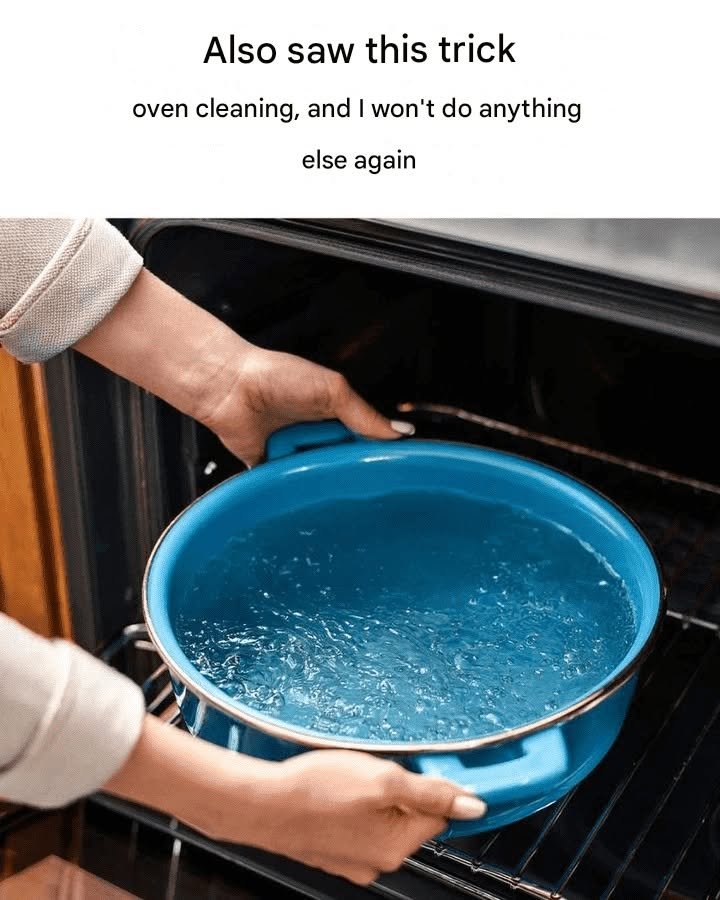
Here’s exactly how it works, and why you’ll never go back to the scrubbing-and-fume misery.
The Ultimate Oven Steam-Cleaning Method
This works for both built-in and countertop ovens. If your oven has a “Steam Clean” setting, even better—but this manual trick works just as well on older models.
What You Need
-
A large, deep, oven-safe dish (Pyrex or metal roasting pan works best)
-
Boiling water (about 2–3 cups)
-
1 cup white vinegar (optional but highly effective for cutting through greasy film)
-
1 lemon, sliced (optional, for a fresh scent and extra degreasing power)
-
A spray bottle with clean water
-
Microfiber cloths or non-scratch sponges
-
A plastic scraper or old spatula (for any stubborn bits)
Step-by-Step Instructions
1. Remove Loose Debris
Take out the oven racks and set them aside. Wipe out any loose crumbs or burnt food bits from the bottom of the oven cavity with a dry cloth or brush. Don’t skip this—you don’t want to steam-bake loose debris into a hardened crust.
2. Prepare the Steam Bath
Fill your oven-safe dish with the boiling water, the vinegar, and the lemon slices. The vinegar reacts with the steam and helps emulsify stubborn grease; the lemon just makes the whole kitchen smell wonderful.
3. Place the Dish and Heat
-
For a “Steam Clean” oven: Place the dish on the bottom rack, close the door, and run the dedicated Steam Clean cycle (usually about 20–30 minutes).
-
For a standard oven: Place the dish on the lowest rack. Set the oven to a low temperature—around 230°F (110°C) . Let it run for 30–45 minutes. You don’t want it so hot that the water boils away immediately; you want sustained steam to condense on the walls and ceiling.
4. Let the Steam Work (The Magic Step)
This is the trick. When the time is up, turn the oven off but DO NOT open the door. Let it sit closed for another 20–30 minutes. The trapped steam will continue to condense on all the baked-on grease, softening it to a gel-like state. It literally hydrates the burnt-on fat.
5. Wipe Down While Still Warm
Open the door carefully (the steam will billow out—keep your face back). While the interior is still warm and damp, use a microfiber cloth or non-scratch sponge to wipe down every surface. The grime should slide off like magic with almost zero effort.
6. Tackle Any Stubborn Spots
For any patches that don’t immediately lift, dampen them with a spray bottle of plain water, sprinkle with a tiny bit of baking soda, and gently agitate with a plastic scraper. The baking soda provides the mildest possible abrasive without scratching the enamel.
7. Final Wipe and Rinse
Give the whole interior one last wipe with a clean, damp cloth to remove any residual vinegar smell or baking soda grit. Dry with a towel.
Why This Works So Well (and Why You’ll Never Go Back)
It’s not just the heat—it’s the latent heat of condensation. When steam touches the cooler oven walls, it condenses back into liquid water, and that phase change releases a massive amount of energy directly into the greasy film. That energy literally melts and rehydrates polymerized fat (the hard, plastic-like brown stuff) back into a wipeable emulsion. No chemical solvent can do that as gently or as completely.
A Note of Caution
-
Don’t pour water directly on the floor of a hot electric oven, especially if the heating element is exposed and on. Always use the pan method unless the manual specifically says otherwise—you can crack the enamel.
-
No steam on cold glass: If your oven door glass is room temperature, a sudden blast of steam can theoretically stress it. As long as the door warms up with the oven, you’re safe.
Once you see what this simple steam does, you really won’t bother with the heavy-duty chemical oven cleaners again. It turns a dreaded chore into something you can do while you go do something else for half an hour.