
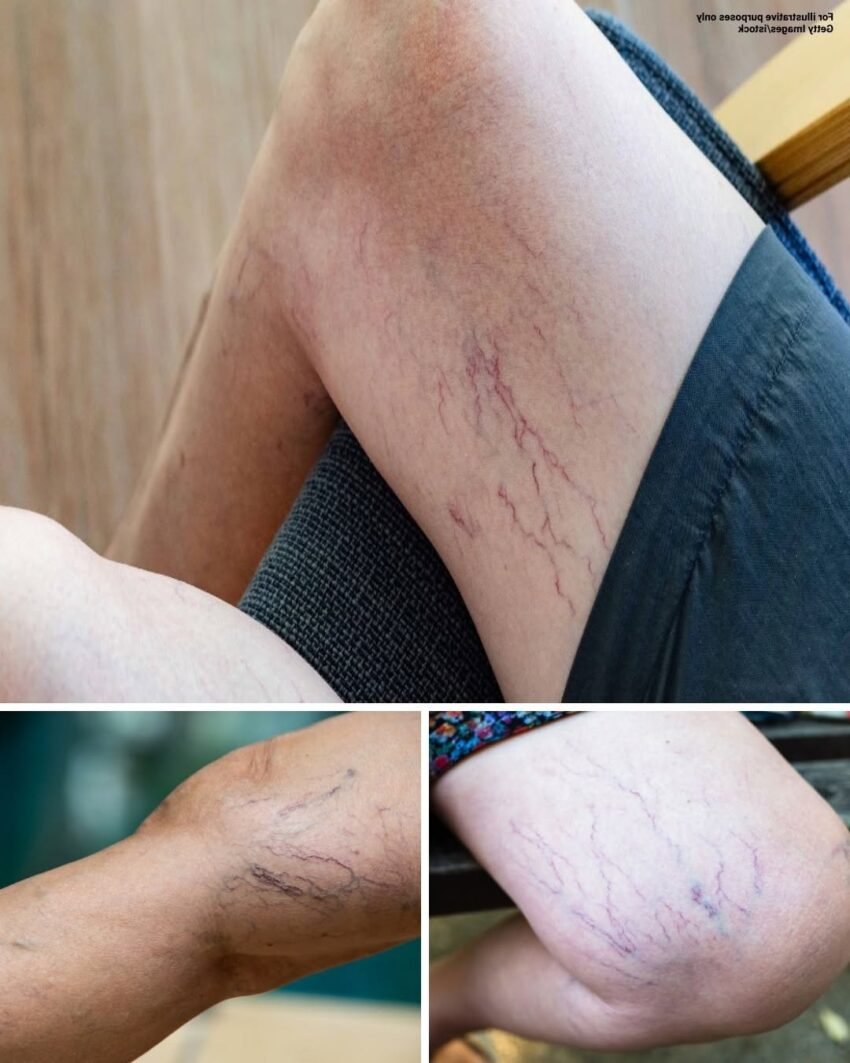
If you have purple veins on your legs, it means you are likely experiencing venous insufficiency—a condition where the tiny valves inside your veins are struggling to pump blood back up to your heart against gravity.
While sometimes it is purely a cosmetic concern, purple veins are often an early warning sign from your circulatory system. Here is a breakdown of what it means, what causes it, and what you should look out for.
What It Means: The Two Main Types
Purple veins on the legs generally fall into two categories:
-
Spider Veins (Telangiectasia): These are thin, flat, web-like clusters of purple, red, or blue veins that sit close to the surface of the skin. They look like tree branches or spider webs.
-
What it means: The tiny capillary vessels have become dilated and filled with deoxygenated blood. It usually means there is mild back-pressure in your venous system, often caused by genetics, hormones (like estrogen from birth control or pregnancy), or prolonged standing/sitting.
-
-
Varicose Veins: These are larger, raised, and often rope-like or bulging veins that appear dark purple or blue.
-
What it means: The one-way valves inside the vein are damaged or weakened. Blood flows backward down the leg (reflux) and pools in the vein, causing it to stretch and twist. This is a more advanced form of venous insufficiency.
-
Why Are They Purple?
Blood is naturally red when it is full of oxygen (traveling through arteries away from the heart). Once the oxygen is delivered to your tissues, the blood turns a dark bluish-purple color as it travels back to the heart through your veins.
When veins are healthy, they are deep enough or small enough that you don’t notice this color. When veins become enlarged or move close to the surface of the skin, you see that dark, deoxygenated blood pooling inside them, giving them their distinct purple hue.
Contributing Factors (Why You?)
You are more likely to develop purple veins if you:
-
Have a family history of vein issues (genetics is the #1 factor).
-
Are female (female hormones relax vein walls).
-
Are pregnant (increased blood volume and pressure from the uterus).
-
Stand or sit for long periods (blood struggles to fight gravity without muscle movement).
-
Are overweight (extra weight puts pressure on leg veins).
-
Are getting older (veins naturally lose elasticity over time).
When It Is Just Cosmetic vs. When to See a Doctor
For many people, purple veins are completely harmless and do not cause any physical discomfort. However, because they indicate that blood is pooling in your legs, you should monitor them.
See a doctor (usually a vascular specialist or phlebologist) if you experience:
-
Aching, throbbing, or heaviness in the legs, especially after standing for a long time.
-
Swelling in the ankles or feet at the end of the day.
-
Itching or burning directly over the visible veins.
-
Skin changes: The skin around your ankles becoming hard, dry, or turning a reddish-brown color.
-
Bleeding: The veins are so close to the skin that a minor bump causes them to bleed significantly.
What You Can Do About It
If you have purple veins, you are not necessarily stuck with them, and you can prevent them from getting worse:
-
Compression Stockings: This is the number one medical treatment for managing symptoms. They squeeze the legs, helping the veins push blood back up to the heart.
-
Movement: Avoid sitting or standing for more than 30 minutes at a time. Flexing your calf muscles acts as a “second heart,” pumping blood out of your legs.
-
Elevation: When resting, elevate your legs above the level of your heart for 15 minutes a few times a day to help drain the pooled blood.
-
Medical Procedures: If they are painful or you dislike how they look, doctors can easily treat them with sclerotherapy (injecting a solution to collapse the vein) or laser therapy.