
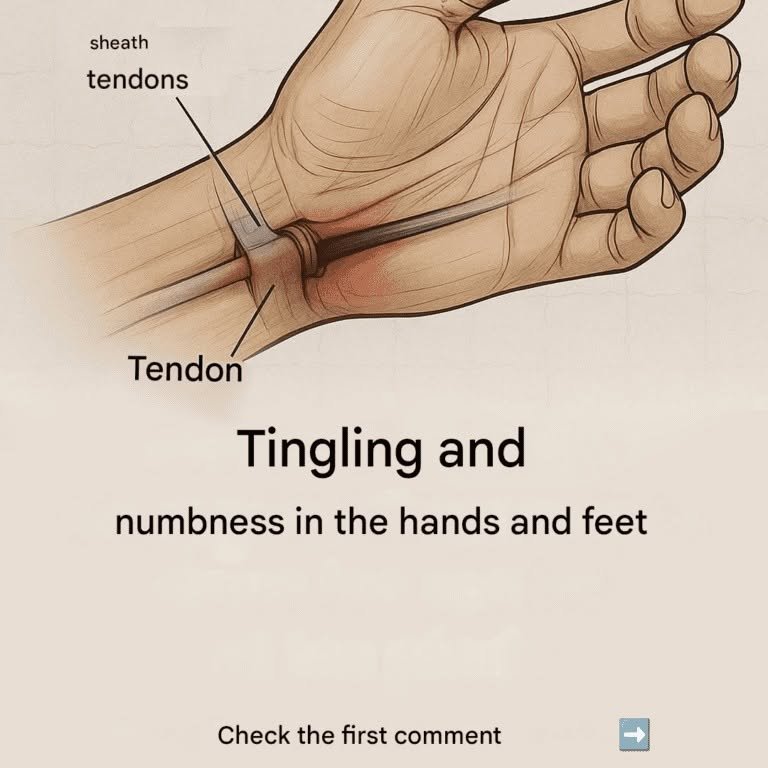
Waking up with a numb hand or experiencing that uncomfortable “pins and needles” tingling can be alarming. Medically known as paresthesia, hand numbness is usually harmless if it happens occasionally (like when you sleep on your arm wrong). However, if it happens frequently, lasts a long time, or is accompanied by other symptoms, it is your body’s way of signaling that a nerve is being compressed, damaged, or starved of blood.
Here is a breakdown of what it means if your hands are going numb, organized from the most common everyday causes to the more serious medical conditions.
1. Sleeping Position (“Saturday Night Palsy”)
Sometimes, it is simply mechanical. Lying on your arm, bending your wrist sharply under your pillow, or sleeping with your arm draped over a partner can temporarily compress a nerve or restrict blood flow.
-
What it means: The nerve signals are literally being physically squashed.
-
The fix: Shake your hand out, change positions, and normal sensation should return within a minute or two. If you wake up with a completely limp “floppy” hand that takes hours or days to recover, you may have temporarily bruised a nerve, but this usually heals on its own.
2. Carpal Tunnel Syndrome
If your numbness is mostly in your thumb, index finger, middle finger, and half of your ring finger, it is very likely Carpal Tunnel Syndrome. This happens when the median nerve is squeezed as it travels through a narrow passageway in your wrist.
-
What it means: Repetitive motions (typing, using a mouse, assembly line work, using vibrating tools) or fluid retention have caused swelling in the wrist that compresses the nerve.
-
The tell-tale sign: The numbness is often worse at night, and you wake up needing to “flick” or shake your hands to get the feeling back. Over time, it can lead to weakness in your grip and dropping objects.
3. Cubital Tunnel Syndrome (Ulnar Nerve)
If the numbness is mostly in your ring finger and pinky finger, the culprit is usually the ulnar nerve, which runs from your neck, down the inside of your elbow, and into your hand.
-
What it means: You are compressing the nerve at your elbow. This is very common for people who sleep with their elbows tightly bent, rest their elbows on a hard desk all day, or talk on the phone holding it up for hours.
-
The tell-tale sign: You hit your “funny bone,” but instead of a quick zap, the tingling lingers and your last two fingers stay numb.
4. Peripheral Neuropathy (Often from Diabetes)
If both hands (and usually both feet) are numb with a “glove and stocking” distribution, it points to a systemic issue with the nerves themselves rather than a physical pinch. Diabetes is the number one cause of this.
-
What it means: Chronic high blood sugar damages the tiny blood vessels that feed the nerves in your extremities. It can also be caused by alcoholism, vitamin deficiencies (especially B12), or thyroid issues.
-
The tell-tale sign: A gradual, worsening numbness or burning sensation in the fingers and toes that spreads upward. You might feel like you are wearing invisible thin gloves or walking on cotton balls.
5. Cervical Radiculopathy (A Pinched Nerve in the Neck)
If the numbness radiates from your shoulder or neck down into your hand, the problem may not be in your hand at all—it’s in your spine.
-
What it means: A herniated disc, bone spur, or arthritis in your neck (cervical spine) is pinching a nerve root as it exits the spinal cord.
-
The tell-tale sign: Turning your head in a certain direction makes the tingling or shooting pain in your arm worse. It is often accompanied by a dull ache in the neck or shoulder blade.
6. Raynaud’s Phenomenon
If your hands go numb, turn white or blue, and feel freezing cold (usually triggered by cold weather or stress), this is Raynaud’s.
-
What it means: The small blood vessels in your hands are overreacting to cold or stress, spasming, and cutting off blood flow.
-
The tell-tale sign: After the numbness, as blood returns, your fingers turn bright red and throb or burn. It is rarely dangerous but can be deeply uncomfortable.
7. Vitamin Deficiency or Toxicity
Nerves need specific nutrients to maintain their protective coating (myelin sheath).
-
What it means: A severe lack of Vitamin B12 is notorious for causing numbness and tingling in the hands and feet. Conversely, getting too much Vitamin B6 (often from over-supplementation) can actually poison the nerves and cause the exact same symptoms.
-
The tell-tale sign: Numbness that exists on both sides of the body, often paired with severe fatigue, memory issues, or a swollen, red tongue (in the case of B12 deficiency).
8. Thoracic Outlet Syndrome
This is a less common but frequently missed cause of numbness, especially in young, active people.
-
What it means: The nerves and blood vessels running from your neck to your armpit are being compressed by your collarbone, tight neck muscles, or a cervical rib.
-
The tell-tale sign: Your hands and arms go numb when you hold them above your head (like blow-drying your hair, painting, or hanging curtains).
9. Warning Signs of a Stroke or Mini-Stroke (TIA)
This is the most urgent and dangerous cause of hand numbness. If blood flow to a part of the brain is blocked, it affects the nerves controlling the body.
-
What it means: Sudden numbness, especially if it is only on one side of the body and happens out of nowhere, is a medical emergency.
-
The tell-tale sign (Remember FAST):
-
Face: Does one side of the face droop?
-
Arms: Is one arm/hand numb, weak, or unable to raise?
-
Speech: Is speech slurred or confused?
-
Time: If you see ANY of these, call an ambulance immediately. A “mini-stroke” (TIA) can cause temporary hand numbness that goes away after a few minutes, but it is a massive warning sign that a major stroke is coming.
-
When to See a Doctor
It is time to make an appointment with your doctor if:
-
The numbness is constant or keeps coming back.
-
It is accompanied by weakness, muscle wasting (your hand looks bonier), or you keep dropping things.
-
It is affecting your sleep or your ability to type/write.
-
You have a known history of diabetes, thyroid issues, or autoimmune diseases.
Seek emergency medical care immediately if the numbness comes on suddenly, is accompanied by confusion, difficulty speaking, facial drooping, paralysis, or severe dizziness.