
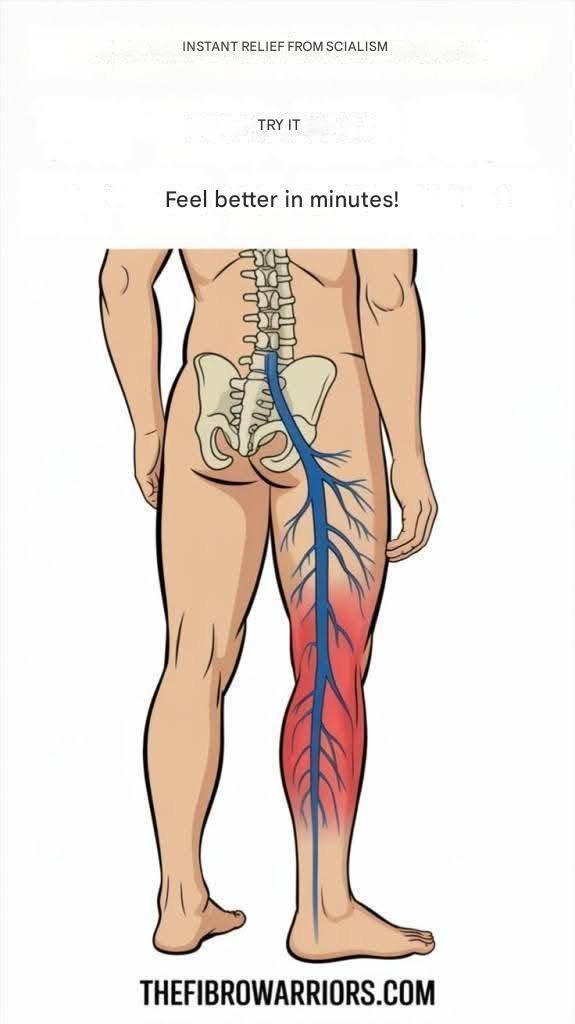
Sciatica is a symptom, not a diagnosis. It means the sciatic nerve is being compressed, usually by a bulging disc, a tight muscle (piriformis), or inflammation. The goal of instant relief is to move the pressure away from the nerve.
Here are the best techniques, moving from the gentlest to more active positions. Stop any movement that makes pain worse or sends it further down your leg.
The 60-Second “Emergency” Reset: Prone Decompression
If your pain is from a disc issue (pain when sitting, bending forward, coughing), this is your starting point. It uses gravity to gently pull the vertebrae apart, giving the squished disc space to retract from the nerve.
-
Lie flat on your stomach on a firm surface (a yoga mat or carpeted floor).
-
Place both fists stacked under your forehead, or turn your head to one side (switch sides halfway).
-
Let your whole body sink into the floor. Your back and buttocks should be completely passive, not clenched.
-
Breathe deeply into your belly, not your chest. With each exhale, imagine your lower back muscles melting away from your spine.
-
Stay here for 2-3 minutes. The goal is to let the weight of your legs gently traction your low back. Afterward, carefully roll onto your side to get up.
The #1 Position for Sitting Relief: Open the Hip Angle
Sitting in a 90-degree chair is often the worst position for sciatica because it jams the hip flexors, tilts the pelvis, and closes the space where the nerve exits. To fix this instantly:
-
Slump is your enemy, arch is your friend. Slide your hips all the way back in the chair.
-
Place a rolled-up towel or a small cushion horizontally across your lower back to maintain the natural inward curve (lumbar lordosis).
-
Open the hip angle to more than 90 degrees. Recline slightly or spread your knees apart and lean forward with a straight spine to create space.
Pain on One Side Only? The Standing Side-Glide
If your pain is worse on one side and you feel like you’re listing to the opposite side, the disc may have migrated laterally. You can try to “slide” it back toward center.
-
Stand sideways, about a foot away from a wall, with your painful leg closest to the wall.
-
Place your hand on the wall at shoulder height.
-
While keeping your shoulders level and hips facing forward, lean your hip into the wall, shifting your pelvis sideways. You’ll feel a subtle stretch on the side of your torso.
-
Perform 10 slow, rhythmic glides. You’re not holding the position, you’re pulsing into it. Then re-assess your pain. If it centralizes (moves up from the leg into the back), it’s a green light. If it worsens or goes further down the leg, stop immediately.
The Nerve Flossing Technique
If the pain is sharp but not from a major disc injury, the nerve may be “stuck” and irritated. You can gently floss it through its sheath without stretching it aggressively.
-
Sit tall on a table or high chair.
-
Find your pain-free end range. Tilt your head back and look up.
-
Slowly straighten the leg on your painful side until you feel the first tiny whisper of a stretch or nerve sensation. Do not push into pain.
-
Now, add the floss: As you slowly lower your head (chin to chest), point your toes. As you lift your head back up (looking up), flex your foot (pull toes toward your shin).
-
Alternate this slow, coordinated dance for 10-15 reps. The movement of the head and foot should slide the nerve back and forth without tugging.
Instant Relief for Piriformis Syndrome (The “Glute” Cause)
If you have deep, toothache-like pain in one buttock that shoots down, and it feels better when you walk but worse when you sit, the piriformis muscle under your glutes may be clamping down on the nerve.
-
The Seated Figure-4 Lean: Sit on a stable chair. Cross the painful side’s ankle over the opposite knee. Keeping a straight, tall spine, gently hinge forward from your hips until you feel a stretch in the painful buttock. Breathe for 30 seconds. Do not round your back.
What to Do Right Now vs. What to Avoid
-
Do: Ice the very lowest part of your back (the sacrum) for 15 minutes to reduce neural inflammation.
-
Don’t: Sit on a soft couch with your feet up. This reverses the curve in your lower back and compresses the nerve further.
-
Don’t: Ignore “red flags.” If you have sudden loss of bowel/bladder control, numbness in your “saddle” area (inner thighs, groin), or progressive leg weakness, these are signs of cauda equina syndrome. Skip the home remedies and call emergency services immediately.
These are techniques for temporary relief; they don’t cure the underlying cause. Please see a physical therapist or doctor for an accurate assessment. Which of these positions felt closest to the area of your pain? I can help refine it further.