
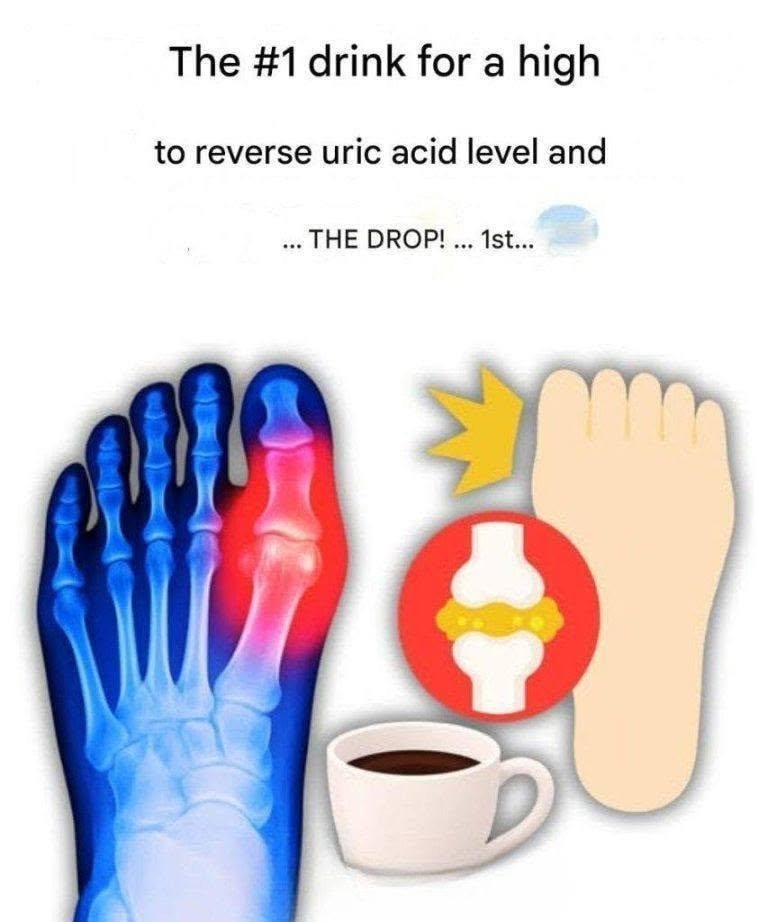
That “big toe on fire” sensation is unmistakable. It’s a classic sign of a gout flare, where razor-sharp monosodium urate crystals have formed in the joint due to high uric acid levels (hyperuricemia). The pain is so severe that even the weight of a bedsheet can feel unbearable.
Now, before we get to the drinks, the most important medical disclaimer we’ve ever had: These drinks are for long-term management and prevention. They are not a substitute for acute medication. If you are currently in an active, red-hot flare, drinking cherry juice will not put out that fire quickly. You need prescription anti-inflammatories (colchicine, NSAIDs, or steroids). Stopping a flare fast prevents permanent joint damage.
With that critical point made, let’s look at the five drinks that science suggests can help lower uric acid naturally and prevent the next “attack.”
1. The Gold Standard: Water (But Dosed Correctly)
This is so obvious it’s overlooked, but the volume is the medicine. Uric acid is cleared almost entirely by the kidneys, and dehydration is the number one trigger for an acute flare.
-
The Mechanism: Water increases blood volume, which increases the filtration rate in the kidneys. This physically flushes out uric acid before it can form crystals. Dehydration concentrates the urine, making the uric acid more likely to crystallize right in the kidney tubules (causing stones) or in the joints.
-
The “Medicinal” Dose: You can’t just sip. The therapeutic target is 2-3 liters of water per day. A good rule of thumb for gout patients is to drink enough that your urine is almost clear. A large glass right before bed is crucial, as nocturnal dehydration is a major flare trigger.
2. The Real Deal: Tart Cherry Juice
This isn’t folklore. There’s solid data on cherries for gout, specifically tart (Montmorency) cherries.
-
The Mechanism: Cherries contain high levels of anthocyanins, the pigments that make them red. These are powerful anti-inflammatories that specifically inhibit the COX-2 enzyme (the same enzyme targeted by some prescription drugs). More importantly, studies show cherry consumption can significantly lower blood uric acid levels by increasing the kidney’s uric acid excretion rate.
-
How to Use It: Look for unsweetened, 100% tart cherry concentrate or juice. Sweetened cherry juice is essentially sugar water, and fructose is a known uric acid trigger. Dilute 2 ounces of concentrate into your water daily. The whole fruit or frozen cherries work even better due to the fiber and intact phytonutrients.
3. The Alkalizer: Fresh Lemon Water
This is a chemical engineering trick. The goal isn’t to change your blood pH (your body tightly regulates that), but to change the pH of your urine.
-
The Mechanism: Uric acid is a weak acid. It is far more soluble in an alkaline (basic) fluid than an acidic one. Lemon juice, despite being acidic, is metabolized into bicarbonate (a base) after digestion. This makes your urine more alkaline, which prevents uric acid from crystallizing into stones and encourages it to stay dissolved so you can pee it out.
-
How to Use It: The juice of half to one full fresh lemon in a large glass of warm water, first thing in the morning. Bottled lemon juice is a poor substitute; the vital enzymes and flavonoids degrade.
4. The Milky Shield: Low-Fat Skim Milk
This flips the dietary script. People with gout are often told to avoid purine-rich animal proteins. But dairy protein works differently.
-
The Mechanism: The proteins casein and lactalbumin in skim milk have a unique uricosuric effect—they tell the kidneys to dump uric acid. Large population studies show a strong inverse relationship between low-fat dairy intake and uric acid levels. Furthermore, dairy contains orotic acid, which blocks the reabsorption of uric acid in the kidney tubules.
-
A Critical Warning: This works only for low-fat or skim. Full-fat dairy has saturated fats that blunt the kidney’s ability to excrete uric acid. Yogurt and kefir also seem to work well, likely adding a probiotic benefit for gut-purine metabolism.
5. The Decaf Coffee Powerhouse
Regular coffee is strongly protective against gout. Decaf works too, pointing to a mechanism beyond just caffeine.
-
The Mechanism: Coffee is rich in chlorogenic acid, a polyphenol and powerful antioxidant. It acts similarly to allopurinol (a common gout drug) by weakly inhibiting xanthine oxidase—the enzyme your body uses to create uric acid. Less production means less buildup. Studies show that 4+ cups a day are associated with a drastically lower risk of gout.
-
The Sugar Trap: This is coffee, black. Adding sugar, sweetened syrups, or whipped cream introduces fructose, which revs up uric acid production and completely negates the benefit. If you must sweeten, use a dash of stevia or monk fruit.
The Three Sips of Doom (What to Avoid Absolutely)
To make these 5 drinks work, you must eliminate the two drinks that are directly metabolized into uric acid:
-
Beer: This is the worst offender for gout. It contains alcohol (which dehydrates) AND high levels of purines (specifically guanosine) from the brewer’s yeast, which are directly metabolized into uric acid. It’s a double hit.
-
Sugary Sodas (Fructose): High-fructose corn syrup is the only sugar that actually generates uric acid as a byproduct of its metabolism. Fructose uses up ATP in the liver, and the breakdown of spent ATP generates a massive pulse of uric acid within minutes.
If you swap the nightly beer or soda for a glass of tart cherry juice mixed with sparkling water, you’ve made a pharmacological-level change in your body’s uric acid load.