
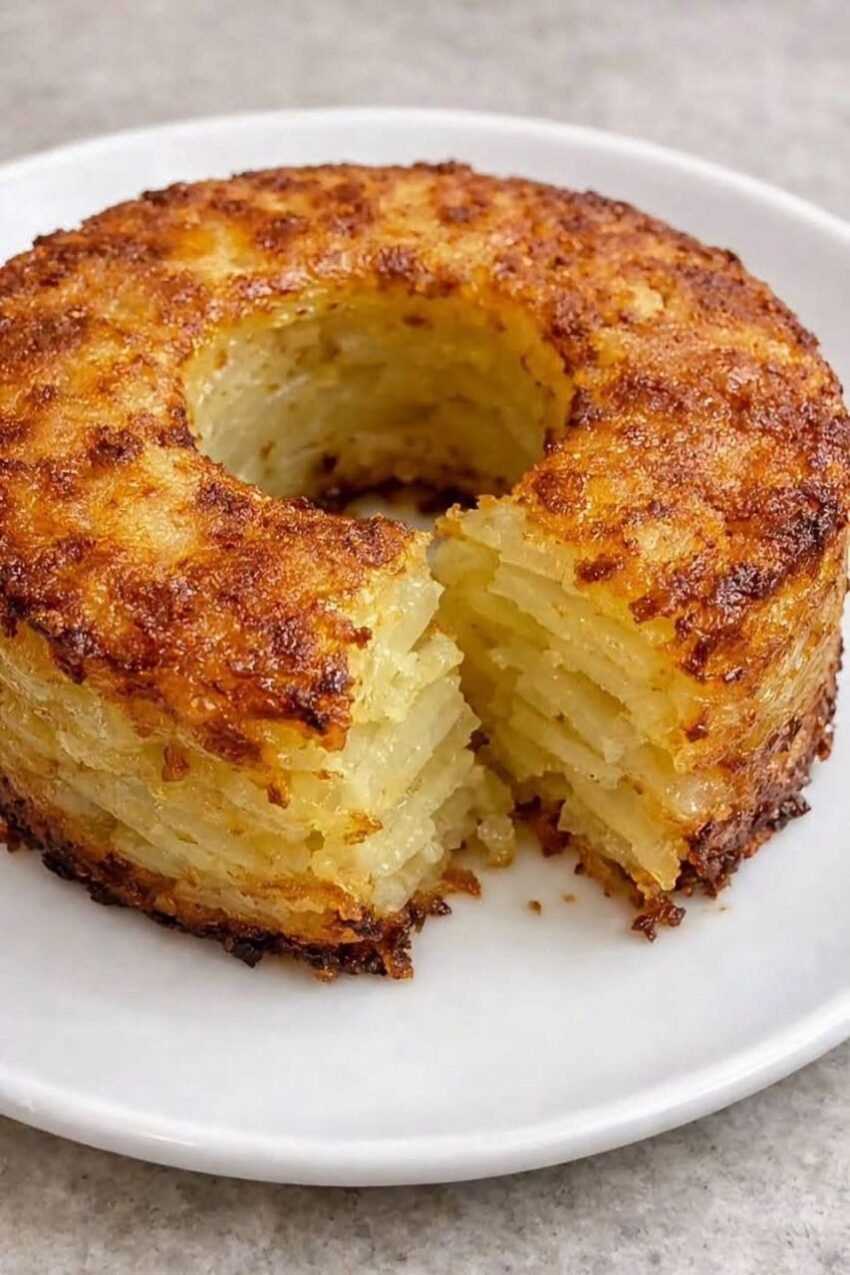
This is one of those deceptively simple dishes that delivers a showstopping presentation with almost no effort. The 3-ingredient potato ring is essentially a molded, oven-baked ring of seasoned mashed potatoes that emerges golden and crusty on the outside, creamy on the inside, and serves as an edible serving vessel for whatever you choose to fill the center with.
It’s a vintage technique that deserves a comeback.
Oven-Baked 3-Ingredient Potato Ring
*Serves 6-8 as a side*
The 3 Ingredients:
-
3 lbs (about 6-7 medium) russet or Yukon Gold potatoes, peeled and quartered
-
6 tablespoons butter, plus more for greasing the pan
-
1 ½ teaspoons salt, plus more for the potato water
-
*Optional freebies that don’t break the 3-ingredient rule: black pepper, a pinch of nutmeg*
Method
1. Cook the Potatoes:
Place the peeled, quartered potatoes in a large pot and cover with cold water by an inch. Salt the water generously—it should taste like the sea. Bring to a boil and cook until the potatoes are fork-tender and break apart easily when pierced, about 15-20 minutes. Drain thoroughly and return the potatoes to the hot pot over low heat for 1-2 minutes, shaking gently, to steam off any excess moisture. Dry potatoes make a fluffier, more structured ring.
2. Mash with Butter:
Add the butter and salt to the hot potatoes. Mash by hand with a potato masher or ricer until completely smooth and free of lumps. Do not use a food processor; it will turn the potatoes into a gluey paste. Taste and adjust seasoning. The mash should be stiff and thick enough to hold a peak—not loose or creamy. If it feels too soft, let it cool for 10 minutes; it will firm up.
3. Pipe the Ring:
Preheat the oven to 425°F (220°C). Generously butter a 9-inch ring mold or a bundt pan (if using a bundt pan, the fluted shape actually creates a beautiful, dramatic effect). Spoon the warm mashed potatoes into a large piping bag fitted with a large star tip. Pipe the potatoes into the buttered ring mold in a swirling, overlapping pattern, building up height. If you don’t have a piping bag, spoon the potatoes into the mold and use the tines of a fork to create decorative swirls and peaks on the surface. The peaks will brown and crisp beautifully.
4. Bake to Golden Perfection:
Place the mold on a baking sheet to catch any butter drips. Bake for 35-45 minutes, until the surface is deeply golden brown with darker, crisp peaks. The ring should feel firm and set when gently pressed, and the edges should pull away slightly from the sides of the mold.
5. Rest and Unmold:
Remove from the oven and let the potato ring rest in the mold for 10 full minutes. This is critical; it allows the structure to set and contract enough to release cleanly. Run a thin, flexible knife or offset spatula around both the inner and outer edges. Place a large, flat serving platter or board over the mold. Wearing oven mitts, hold the plate and mold tightly together and invert in one confident motion. Lift the mold off. The potato ring should release beautifully, revealing a golden, sculpted, edible centerpiece.
6. Fill and Serve:
The center cavity is designed to be filled. Spoon in something colorful and saucy. Classic fillings include creamed spinach, buttered peas and carrots, sautéed mushrooms, or a glossy beef or lentil ragu. The ring can also simply be sliced and served alongside a roast, with gravy poured over each slice and pooling in the center.
Why This Works
The technique relies on the potatoes’ own starch as the binding agent. There are no eggs, no flour, no breadcrumbs—just the natural structure of well-cooked, well-dried potato held together with butter. The high oven heat dehydrates the surface, creating a crisp, almost fried shell that encases the soft, buttery interior. The ring shape is not just for drama; it dramatically increases the surface area that gets browned and crispy compared to a flat casserole.
A Variation Worth Knowing
If you have a little extra time and want to push this into a true one-dish meal, line the buttered mold with the mashed potatoes, fill the center cavity with a mixture of cooked ground beef, peas, and gravy (essentially a shepherd’s pie filling), then pipe an additional layer of potato over the top to seal it before baking. You now have a potato ring with a savory, saucy core that reveals itself when sliced.
This dish is a relic of a time when presentation mattered and simple ingredients were treated with a bit of ceremony. It’s inexpensive, gluten-free by nature, and far more impressive than the sum of its parts. Let me know what you’d fill the center with.