
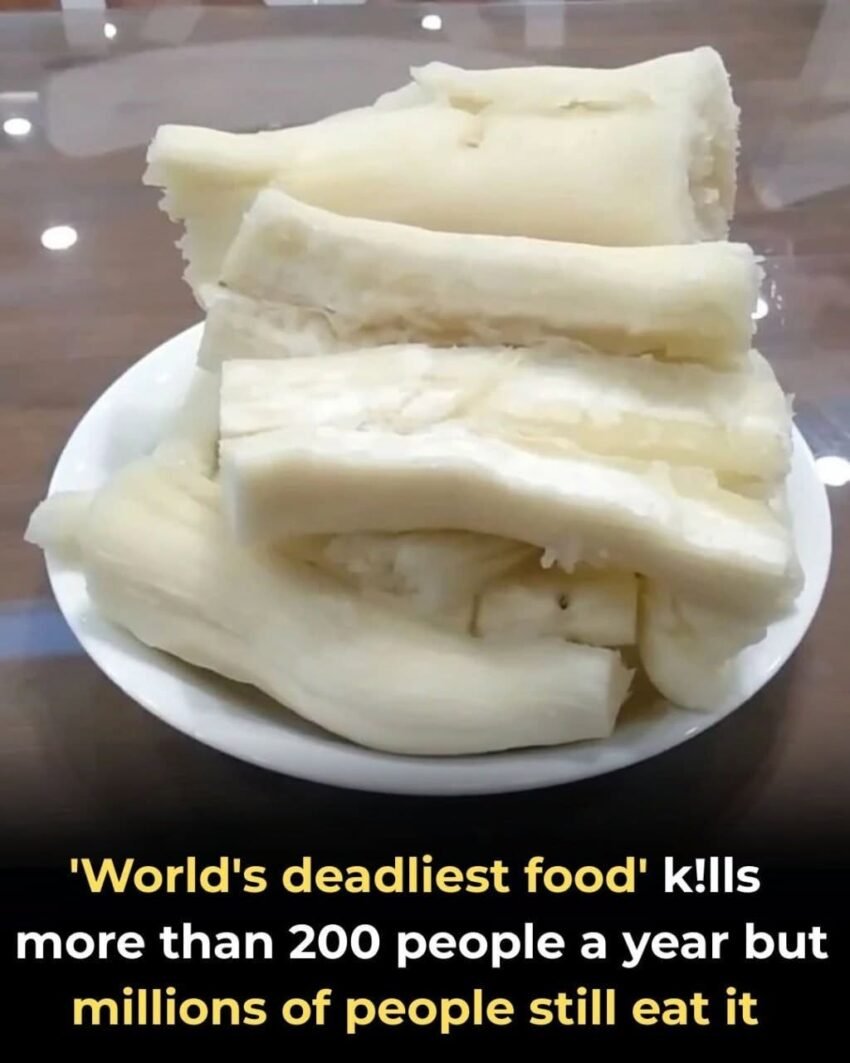
The “world’s deadliest food” claim usually refers to cassava, also called yuca or manioc.
It’s true that cassava can be dangerous — even deadly — but only when it is eaten raw, improperly processed, or prepared incorrectly. Yet it remains a vital staple food for nearly half a billion people, especially in Africa, South America, and parts of Asia.
Why Cassava Can Be Deadly
Cassava contains naturally occurring compounds called cyanogenic glycosides.
When cassava is damaged, eaten raw, or processed incorrectly, these compounds release cyanide.
The danger comes from:
-
Eating bitter cassava raw
-
Not peeling it properly
-
Not soaking, fermenting, or cooking it thoroughly
-
Eating it during famine when people are desperate and cut corners
-
Long-term exposure to poorly processed cassava
This can cause:
-
Acute cyanide poisoning
-
Goitre and thyroid damage
-
A paralytic disease called konzo
-
In severe cases, death
That’s why the numbers sound so alarming. It is technically linked to over 200 deaths per year.
But Here’s Why 500 Million People Still Eat It
Cassava is not a killer when handled correctly. In fact, it is one of the most important survival crops on Earth.
Why people rely on it:
1. It grows where other crops fail
Cassava grows in poor soil, with low rainfall, and survives drought better than maize, rice, or wheat.
2. It provides a huge amount of calories
It is rich in starch and carbohydrates, making it an essential energy food in food-insecure regions.
3. It is cheap and filling
For millions of people, cassava is the most affordable staple food available.
4. It stores well in the ground
Farmers can leave it in the soil and harvest it when needed.
5. It is extremely versatile
Cassava is used to make:
-
Fufu
-
Tapioca
-
Farinha
-
Garri
-
Cassava bread
-
Chips and flour
-
Bubble tea pearls
How Cassava Is Made Safe to Eat
Traditional processing methods remove most of the cyanide.
Safe preparation involves:
-
Peeling the root completely
-
Grating or cutting it
-
Soaking it in water for several hours or days
-
Fermenting it
-
Drying it
-
Cooking it thoroughly by boiling, roasting, or baking
Important rule:
Cassava must never be eaten raw.
Sweet cassava varieties are lower in cyanide, but even they need proper cooking. Bitter cassava must be processed carefully before eating.
A Similar Claim: Fugu
Occasionally, the “world’s deadliest food” label is also applied to fugu, the Japanese pufferfish.
Why fugu is dangerous:
-
It contains tetrodotoxin, a poison far more lethal than cyanide.
-
There is no antidote.
-
It is usually served by licensed chefs who remove the toxic organs.
But fugu kills very few people compared with cassava because far fewer people eat it, and preparation is tightly controlled.
Bottom Line
The real story is more nuanced than the headline suggests.
Cassava is dangerous only when it is eaten raw or processed incorrectly. For nearly 500 million people, it is not a deadly gamble — it is a daily staple that has been safely prepared for centuries.
The danger is not the food itself, but poverty, lack of knowledge, food shortages, and improper processing. With correct preparation, cassava is safe, nutritious, and life-sustaining.