
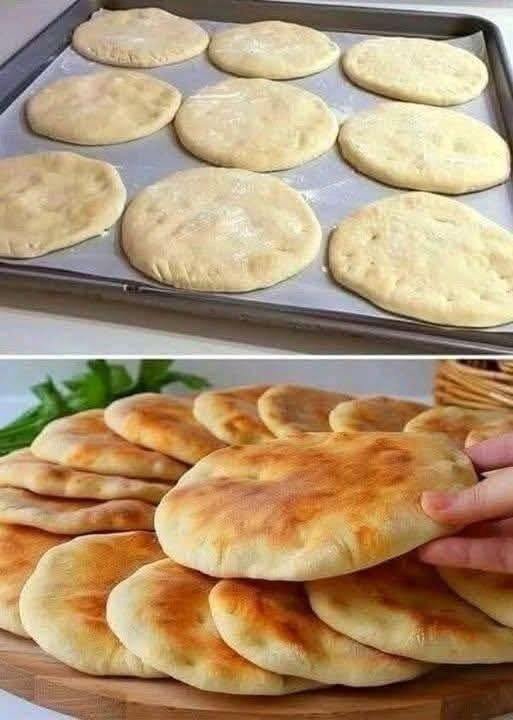
This is one of the most satisfying things to bake. That moment when the flatbread balloons into a perfect hollow sphere on the skillet feels like pure kitchen magic. Here is a foolproof recipe for soft, pliable pocket flatbreads (pita-style) that are pillowy, not cracker-like.
Soft Pocket Flatbread
Makes 8 flatbreads
Why This Recipe Works
The dough is wetter than standard bread dough (high hydration), which creates the steam that inflates the pocket and keeps the crumb unbelievably soft, even after cooling.
Ingredients
-
500g (4 cups) strong white bread flour, plus extra for dusting
-
7g (2 ¼ tsp) instant yeast (one standard sachet)
-
1 tsp fine salt
-
1 tsp sugar or honey (feeds the yeast, aids browning)
-
2 tbsp olive oil, plus extra for the bowl
-
330ml (1 ⅓ cups) warm water – not hot, just comfortably warm to the wrist
The Method
1. Build the Dough
In a large bowl or stand mixer, combine the flour, yeast, salt, and sugar. Whisk the oil into the warm water, then pour into the dry ingredients. Mix until you have a ragged, shaggy dough. It will be quite sticky—resist the urge to add more flour. That stickiness is your guarantee of softness. If using a stand mixer, knead with the dough hook for 6-7 minutes on medium-low. By hand, tip it onto a very lightly floured surface and knead for 8-10 minutes, using a bench scraper to manage it, until the dough is smooth and bounces back when poked.
2. The First Rise (Bulk Fermentation)
Clean the bowl, slick it with a little olive oil, and place the dough inside, turning it to coat. Cover tightly with cling film or a damp tea towel. Leave somewhere warm and draught-free for 1-1.5 hours, or until genuinely doubled in size.
3. The Crucial Divide & Rest
Punch the dough down gently to deflate. Tip it out onto a clean, very lightly floured surface. Divide into 8 equal pieces (use a scale for uniformity; about 100g each). Roll each piece into a tight, smooth ball. Place them on a floured tray, cover loosely with oiled cling film, and leave to rest for a full 20 minutes. Do not skip this. It relaxes the gluten, allowing the dough to roll thinly without springing back, which is essential for the pocket.
4. Shape & Second Rise
Using a rolling pin, roll each ball gently into a disc about 5-6mm thick (¼ inch) and 15cm (6 inches) wide. Thinner won’t puff reliably; thicker becomes bread rather than a pocket. Place the discs on lightly floured sheets of baking parchment, cover loosely again, and rise for 30-45 minutes until slightly puffy. They won’t double, but you’ll see a light airiness.
5. The Bake – Where the Pocket Magic Happens
You need high, dry heat. Place a heavy cast-iron skillet, griddle, or baking stone in the centre of your oven and preheat to 260°C (500°F)—the absolute maximum your oven will go. You want the cooking surface screaming hot.
No stone? A heavy upturned baking sheet works perfectly.
-
Carefully transfer 1 or 2 dough discs at a time directly onto the hot skillet.
-
Bake for 3-4 minutes. Watch through the glass: within the first 60-90 seconds, the flatbread will balloon like a paper lantern. Let it puff completely and just begin to pick up pale gold spots on the bottom. Do not open the oven door during the first 2 minutes.
-
Remove with tongs and immediately wrap the baked breads in a clean, dry tea towel. This trapped steam is the final softening step.
6. The Cool-Down
Let the stack rest in the towel for at least 10 minutes before serving. This mandatory rest ensures a bread that’s soft and foldable, not crusty.
Why Didn’t They All Puff?
The pocket is steam-powered. Three things guarantee a perfect balloon:
-
High oven heat (steam needs instant, intense heat).
-
The 20-minute dough rest (relaxed gluten stretches without tearing).
-
Sealed edges. If you see cracks in your rolled disc, the steam has an escape route. Keep the unbaked discs covered and don’t let them dry out.
The Softness Trick for Days After
The real enemy is the fridge. These freeze beautifully, sealed in a bag the day they’re made. To revive, run a frozen flatbread quickly under a cold tap, shake off the excess, and place it in a hot, dry skillet for 30 seconds per side. The water turns to steam, and it emerges as if freshly baked, impossibly soft and pliable.
Use these as pockets for falafel and pickled turnips, stuff them with spiced lamb and tzatziki, or simply tear and scoop through a smoky baba ganoush.