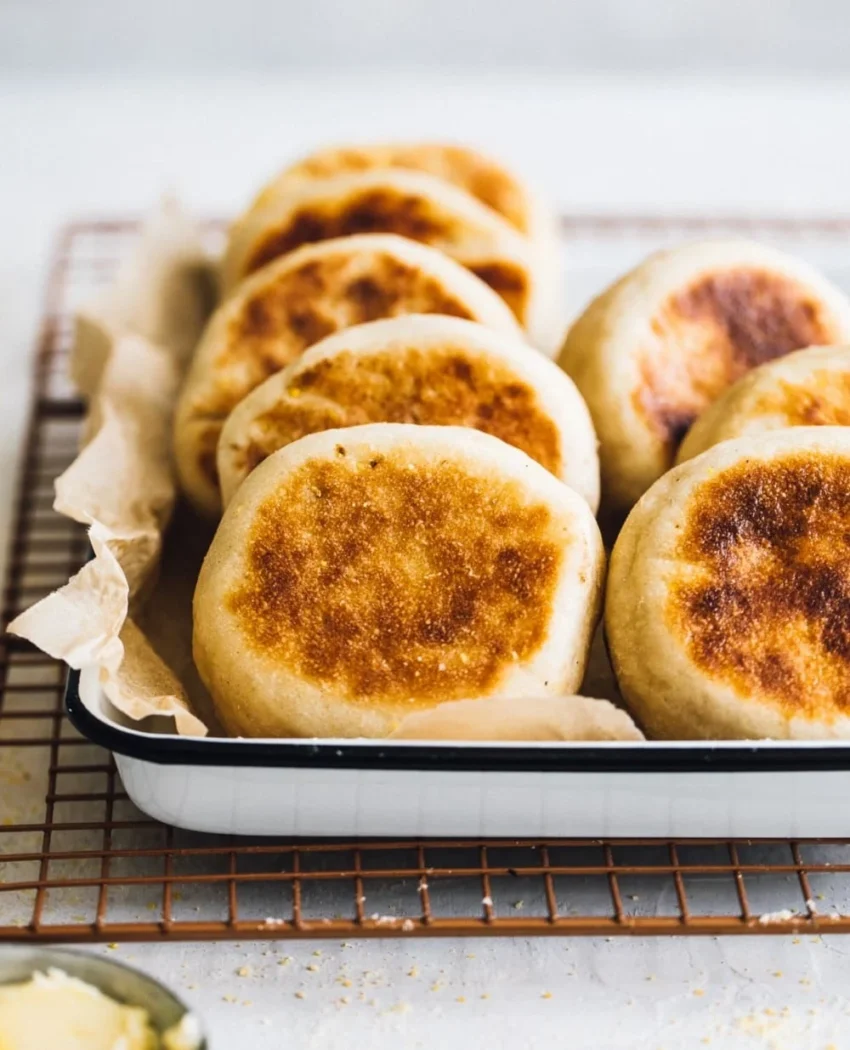
Sourdough English Muffins
Makes about 8–10 muffins
The Night Before (Sponge)
-
½ cup active sourdough starter (bubbly, fed within the last 12 hours)
-
1 cup warm milk (dairy or non-dairy, around 85°F)
-
2 cups all-purpose flour (240g)
The Next Morning (Dough)
-
The sponge (all of it)
-
2 tablespoons honey or sugar
-
1 large egg, room temperature
-
2 tablespoons melted butter, cooled
-
1 teaspoon salt
-
½ teaspoon baking soda (this reacts with the sourdough tang and boosts that classic English muffin flavor)
-
1 to 1¼ cups additional all-purpose flour (120–150g), as needed
-
Cornmeal, for dusting
Method
1. Make the Sponge
The night before, stir together the active starter, warm milk, and 2 cups flour in a large bowl. It will be a thick, shaggy batter. Cover with plastic wrap or a damp towel and leave at room temperature overnight (8–12 hours). In the morning it should be bubbly, puffy, and smell pleasantly sour.
2. Make the Dough
To the sponge, add the honey, egg, melted butter, salt, and baking soda. Stir well. Gradually add the additional flour, ¼ cup at a time, mixing with a wooden spoon or dough whisk until a soft, slightly sticky dough forms. Turn out onto a lightly floured surface and knead for 5–8 minutes, adding as little flour as possible, until the dough is smooth, supple, and just barely tacky. (It should feel like an earlobe.)
3. First Rise
Place the dough in a greased bowl, cover, and let rise until doubled. With sourdough, this can take anywhere from 2 to 4 hours depending on your starter strength and kitchen temperature. You want it visibly puffy and leaving a slow spring-back when poked.
4. Shape the Muffins
Line two baking sheets with parchment paper and dust generously with cornmeal. Turn the dough out onto a very lightly floured surface, pat or roll it to about ½-inch thickness. Use a 3-inch round cutter (or a clean tuna can with both ends removed) to cut out muffins. Press straight down—don’t twist—to preserve those open edges that create nooks and crannies. Gently reroll scraps and cut again.
Place each round onto the cornmeal-dusted sheets, then sprinkle the tops with more cornmeal. Cover loosely and let rise again until notably puffy, about 1 to 2 hours.
5. Cook on the Skillet (The Magic Part)
Preheat a large cast-iron skillet or griddle over medium-low heat. You want a gentle, steady heat—too hot and the outside burns before the inside cooks through. Do not grease the pan; the cornmeal acts as a dry lubricant.
Carefully transfer muffins to the dry skillet, a few at a time. Cook for about 5–7 minutes on the first side, until deeply golden brown. Flip and cook 5–7 minutes more. The sides should feel firm and spring back when pressed, not squishy. (If they’re browning too fast, lower the heat; they need time to cook through.) An instant-read thermometer should read about 200°F in the center.
6. Cool and Fork-Split
Let them cool completely on a wire rack. Never slice with a knife—to get those iconic craggy peaks, pierce the sides all around with a fork and gently pull apart. Toast until golden, then butter, jam, or turn into the breakfast sandwich of your dreams.
Why These Hit Different
-
Overnight sourdough ferment gives a depth of flavor commercial yeast can’t replicate—tangy, complex, slightly nutty.
-
Skillet cooking creates that crisp, cornmeal-crusted exterior and a tender, chewy crumb inside.
-
Fork-splitting exposes all those irregular nooks and crannies, which means more crispy surface area when toasted, holding pools of melted butter.
They freeze beautifully, too—split them first, then freeze in a zip-top bag. Pop straight into the toaster from frozen. Enjoy!