
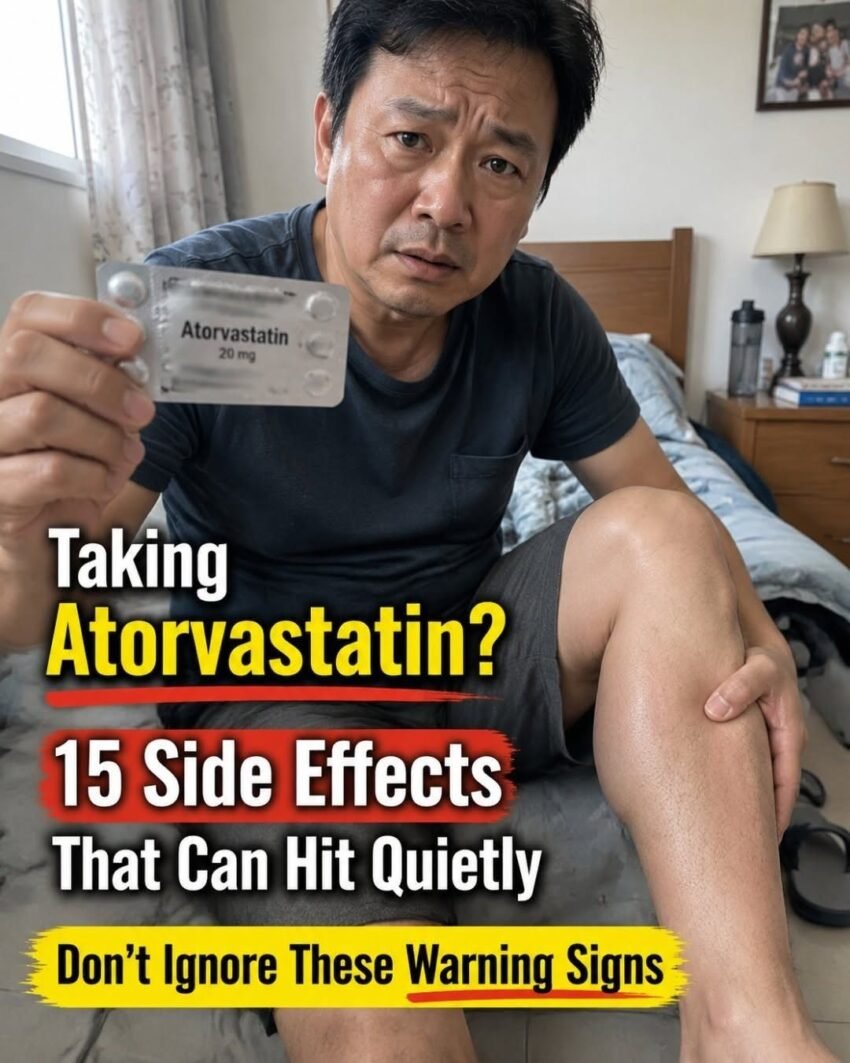
Because statins like atorvastatin (Lipitor) are among the most widely prescribed medications in the world, many people assume they are entirely benign. While most people tolerate them very well, atorvastatin works systemically, meaning it can affect more than just your cholesterol levels.
Often, the side effects people experience are not dramatic or sudden; they are subtle, creeping in so gradually that they are easily attributed to aging, stress, or “just being out of shape.”
If you take atorvastatin, here are 15 subtle side effects that could be affecting your quality of life without you realizing the connection:
The Classic & Muscular Subtleties
1. Mild, Unexplained Muscle Aches (Myalgia)
You don’t have to experience severe muscle breakdown (rhabdomyolysis) to be affected. Many people report a dull, persistent achiness in their shoulders, thighs, or lower back. It often feels like you slept wrong or had a mild workout, but it never quite goes away.
2. General Fatigue and Decreased Stamina
Statins can reduce the body’s production of Coenzyme Q10 (CoQ10), a nutrient vital for cellular energy production. If you find yourself feeling winded after climbing a flight of stairs you used to conquer easily, or feeling too drained to exercise, it could be related to the medication.
3. Exercise Intolerance
This is connected to fatigue. You might find that your muscles “burn” much faster during physical activity than they used to. If your workouts have suddenly become miserable and recovery takes days instead of hours, atorvastatin might be the culprit.
4. Muscle Twitching or Cramping
Subtle, involuntary muscle twitches (fasciculations) in the legs, calves, or even the eyelids, or nighttime leg cramps, can sometimes be linked to statin use and electrolyte shifts.
The Cognitive & Neurological “Brain Fog”
5. Mild Memory Lapses
You might walk into a room and forget why, or struggle to recall a familiar name or word. This “brain fog” is a recognized phenomenon for some statin users. The brain needs cholesterol to build synapses and facilitate cell communication; lowering it too much can occasionally dull cognitive sharpness.
6. Difficulty Concentrating
Tasks that used to require mild focus—like reading a book, doing taxes, or completing a spreadsheet—might suddenly feel mentally exhausting. You may find your attention drifting more easily than it used to.
7. Irritability or Mood Swings
Because the brain relies on cholesterol for neurotransmitter function, some users report feeling “blue,” unusually short-tempered, or experiencing a general flattening of mood. It’s often dismissed as a bad week, but if it started after beginning the medication, it’s worth noting.
8. Insomnia or Disturbed Sleep
Some people find it hard to fall asleep, while others wake up frequently during the night. Because poor sleep also causes brain fog and fatigue, this can create a vicious cycle.
The Digestive & Metabolic Shifts
9. Slight Nausea or Loss of Appetite
While usually mild, a low-grade queasiness or a feeling of early fullness after eating a small meal can occur. You might not feel hungry for breakfast anymore, or food might just not taste as appealing.
10. Changes in Bowel Habits
Constipation or, conversely, loose stools can occur. Because gut motility is affected by the nervous system and cellular energy, some people notice their digestion just isn’t as “regular” as it was before.
11. Unexplained Weight Fluctuations
Atorvastatin can sometimes cause a slight weight gain due to fluid retention or a shift in metabolism. Conversely, the nausea or loss of appetite mentioned above could cause a slight, unintentional weight loss.
12. Mild Bloating or Gas
Gastrointestinal upset is one of the most common initial side effects of statins. It often resolves after a few weeks, but for some, a lingering sense of being “gassy” or bloated persists.
The Subtle Internal/Physical Changes
13. Mild Dizziness
Because atorvastatin lowers blood lipids and can slightly affect blood pressure regulation, you might experience occasional lightheadedness when standing up too quickly (orthostatic hypotension).
14. Tingling or Numbness (Peripheral Neuropathy)
Though less common, some patients report a subtle “pins and needles” sensation in their hands or feet. It is not painful, just a mild buzzing or numbness that comes and goes.
15. Slight Hair Thinning
While rare, some people notice more hair in their hairbrush or shower drain. Statins can occasionally interrupt the natural hair growth cycle, leading to a diffuse thinning rather than bald patches.
What Should You Do If You Notice These Symptoms?
1. Do Not Stop Cold Turkey
If you have been prescribed atorvastatin, stopping it suddenly without a replacement plan can cause a dangerous spike in your cholesterol and increase your risk of a cardiovascular event. Always talk to your doctor first.
2. Track Your Symptoms
Before your next appointment, keep a journal. Note what the symptom is, when it occurs, and its severity on a scale of 1 to 10. This helps your doctor determine if it is truly the medication or something else (like thyroid issues or a vitamin deficiency).
3. Ask About Alternatives
If you and your doctor confirm atorvastatin is the issue, there are many options. These include:
-
Switching Statins: Some people tolerate rosuvastatin (Crestor) or pravastatin better than atorvastatin.
-
Dosing Adjustments: Sometimes simply lowering the dose or taking it every other day (under medical supervision) resolves issues.
-
CoQ10 Supplementation: Many physicians recommend trying a CoQ10 supplement (typically 100-200mg daily) to combat muscle aches and fatigue.