
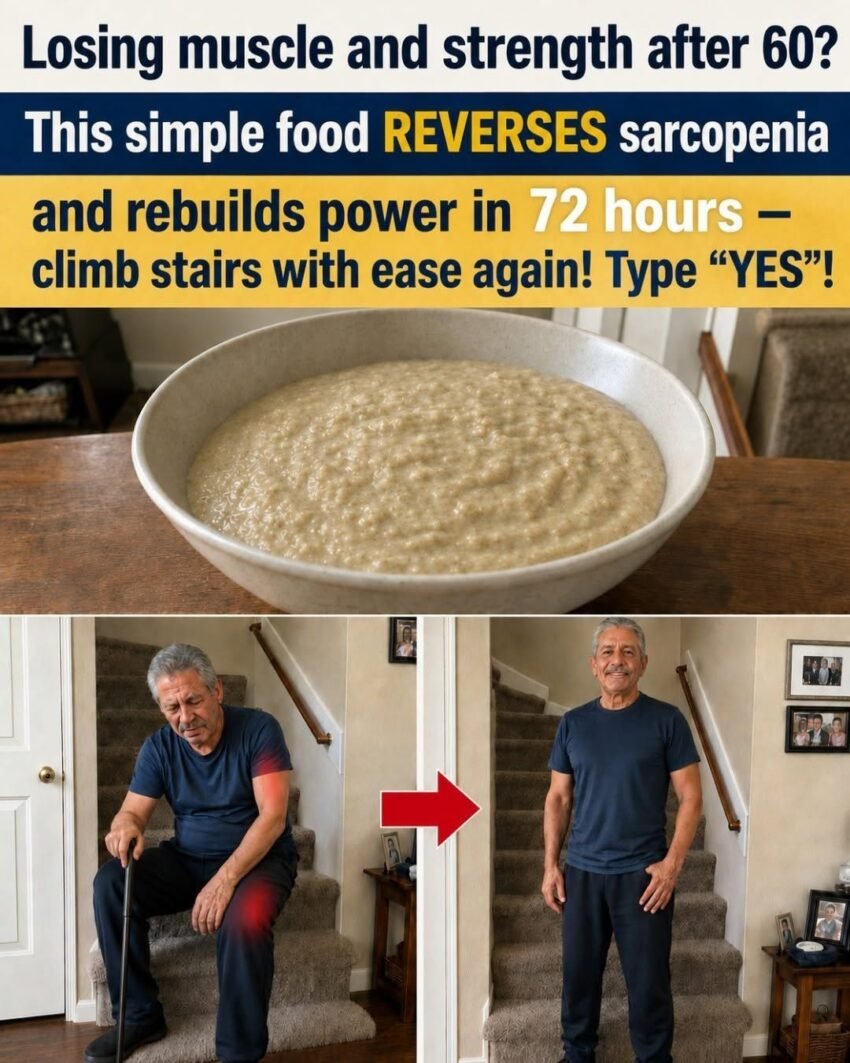
Muscle loss after 60 isn’t just “getting older.” It’s your body quietly running out of the raw material it needs to keep your legs, hips, and climb power alive. The post is talking about sarcopenia, weak legs, fading strength, and that awful feeling when stairs start winning. And the food behind it is being sold like a secret switch that can flip your body back on.
That’s why a chair starts feeling lower than it used to. That’s why you plant your hand on the banister before you even think about the first step. By late afternoon, your thighs feel hollow, your balance feels shaky, and getting up from the couch turns into a private negotiation with your own body.
The machine loves to call that “normal aging.” It isn’t. What’s really happening is simpler and uglier: your muscle tissue is starving for the building blocks that keep it dense, responsive, and ready to fire.
The fastest way to understand it is to picture your muscles like a house under constant repair. Every day, tiny pieces get worn down. If fresh materials keep arriving, the structure stays solid. If the supply truck stops showing up, the walls thin out, the floorboards creak, and one day the stairs feel twice as tall.
The hidden reset your muscles are begging for
This is where the simple food matters. It doesn’t “magically cure” weakness. It forces a different internal response: a cleaner stream of raw biological fuel, steadier amino-acid delivery, and a stronger signal for your body to stop acting like muscle is optional.
Think of your muscles like a warehouse with the lights flickering and the loading dock half-blocked. The right food doesn’t just drop off a package. It clears the aisle, wakes up the workers, and tells the whole place to start moving again.
The first thing people notice is not a bodybuilding transformation. It’s smaller and more real. Standing up feels less like a struggle. The walk from the bedroom to the kitchen stops feeling like a warm-up event. Your legs stop betraying you in the middle of ordinary life.
And that’s the part nobody wants to say out loud: the cheapest fixes get the least airtime. Nobody built a Super Bowl ad around a bowl of food that costs less than a fancy coffee. You can’t slap a logo on it and sell it for $89 a bottle, so the wellness machine keeps looking elsewhere.
That’s why the body’s own repair system gets ignored until the weakness is already loud. The right food doesn’t just “support” muscle. It gives dormant tissue the signal and material it has been missing.
Why men feel the drop first
For men, the hit often shows up in the legs and core first. The body feels flatter, the stride shortens, and the old snap that used to launch you out of a chair starts arriving late. It’s like trying to start a lawn mower with a weak pull cord: the engine is still there, but the spark is gone.
When the right food is in place, that spark changes the whole day. The morning walk feels less mechanical. Carrying groceries up the steps stops draining your confidence. Even the simple act of climbing a staircase starts to feel like something your body remembers how to do.
Over time, the pattern gets clearer: less wobble, more drive, and a stronger push from the muscles that used to feel like dead weight.
Why women notice it in a different way
Women often describe it as a slow collapse in strength that sneaks into daily life. The jar won’t open. The laundry basket feels heavier than it should. The knees complain on stairs, and the hips feel like they’ve lost their shock absorbers.
That’s not “just being tired.” That’s a body missing the cellular ammunition it needs to keep muscle tissue dense and responsive. Think of it like a knit sweater with threads quietly slipping loose. At first it still looks fine. Then one day you tug on it and the whole thing stretches out in your hands.
Once the right food starts feeding that repair process, the difference shows up in ordinary moments. Getting off the toilet doesn’t feel like a mini battle. The walk through the grocery store stops draining the life out of your legs. You move with less caution and more trust.
The third place you feel it: stairs, balance, and confidence
Stairs expose weakness fast because they demand power, coordination, and stability all at once. When muscle is fading, every step feels like a test you didn’t study for. The body hesitates, the breath shortens, and the hand reaches for the rail before the mind even catches up.
The right food changes the whole system by feeding the muscles that stabilize the hips, knees, and ankles. It’s like oiling a stiff hinge that has been grinding for years. The door doesn’t just open; it opens without the ugly groan.
That’s the emotional payoff people care about most. Not vanity. Not gym talk. It’s the relief of moving through your own house without feeling like every step has a price tag.
Once that shift starts, the body stops acting fragile and starts acting available again. That’s the real win: not looking younger, but moving like yourself without having to think about every movement.
What the food is really doing inside you
The reason this works is not hype. It’s mechanism. The food delivers raw biological fuel that helps turn on the repair signals muscle tissue has been waiting for, while also helping the body stop wasting the strength it still has.
Picture an old factory that’s been running on half power. The machines are still there, but the supply line is clogged and the workers are half-asleep. Feed the system correctly, and the lights come up, the belts start rolling, and production stops limping along.
That is why the change can feel so dramatic to people who have been dragging weak legs around for years. The body was never broken beyond repair. It was underfed, under-signaled, and underpowered.
Alone, the food is powerful. Paired with the right prep, it becomes a different animal entirely. One common kitchen habit strips away the very compounds that make this work, and that’s where most people accidentally sabotage themselves before the first bite even matters.
The next piece is the one that decides whether this becomes a real reset or just another bowl of food on the table.
This article is for informational purposes only and does not replace professional medical advice. Please consult your healthcare provider for personalized guidance.