
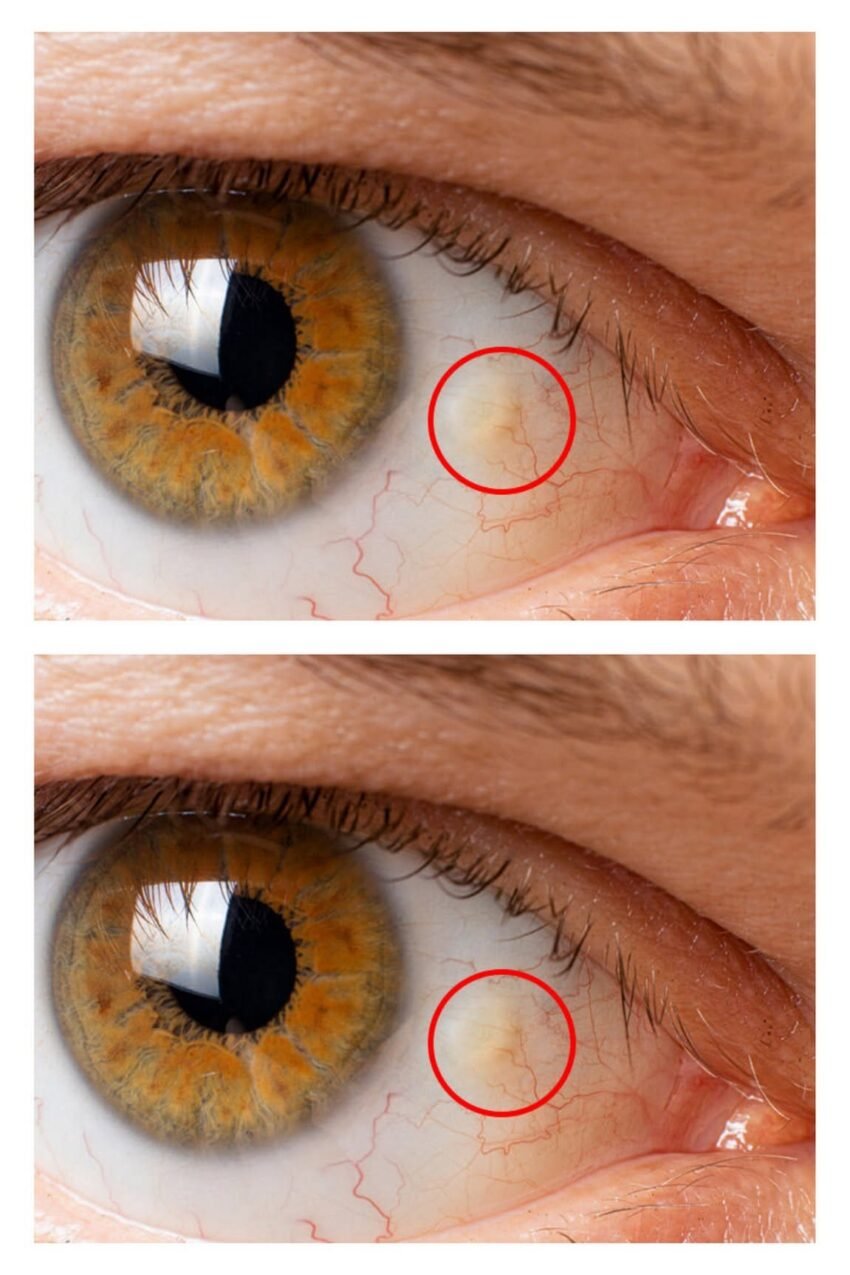
A pinguecula (pin-GWEK-yoo-lah) is a very common, non-cancerous growth that develops on the conjunctiva—the clear, thin tissue that covers the white part of your eye. It typically appears as a small, yellowish or white bump on the side of the eye closest to your nose, though it can also appear on the outer side.
Unlike a pterygium (often called “surfer’s eye,” which grows over the cornea), a pinguecula does not grow over your pupil.
Here are the first symptoms and warning signs that you are developing a pinguecula:
1. A Small, Yellowish Bump or Patch
This is usually the very first sign. You may look in the mirror and notice a small, slightly raised, yellowish spot or patch on the white of your eye. It may look like a tiny blob of fat or a callus. It usually appears on the side of the eye closest to the nose. At first, it might be so small that you only notice it when you pull your eyelid to the side.
2. A Feeling Like Something is “Stuck” in Your Eye
Many people describe the early stages of a pinguecula as a “foreign body sensation.” It feels like there is a grain of sand, an eyelash, or dust trapped under your eyelid that you cannot blink away. You might find yourself rubbing your eye frequently to try to dislodge the imaginary object.
3. Persistent Dryness or Grittiness
Because the pinguecula creates a tiny bump on the otherwise smooth surface of the eye, your tear film (the natural moisture layer of the eye) can’t spread evenly across the eyeball. This leads to localized dryness, a scratchy or gritty sensation, and a feeling that your eyes are tired.
4. Redness and Irritation
The tissue surrounding the pinguecula contains tiny blood vessels. When the growth is irritated, these blood vessels dilate, making the pinguecula look much redder and more noticeable than usual. Your eye may look generally “bloodshot” in that one specific area.
5. Intermittent Blurred Vision (Usually from Tearing)
A pinguecula doesn’t physically block your vision, but the irritation it causes can make your eyes water excessively. That excess tearing can temporarily make your vision look blurry or filmy until you blink away the extra moisture.
6. Itching or a Mild Burning Sensation
Especially when exposed to wind, dust, or dry air, the raised bump can become inflamed. You may feel a persistent urge to rub your eye to relieve an itch or a mild stinging/burning sensation.
What Causes It?
Pingueculae are almost always caused by environmental exposure. The primary culprits are:
-
Chronic UV exposure: Years of spending time outdoors in the sun without sunglasses.
-
Dust and Wind: Living in dry, dusty, or windy climates.
-
Age: They are most common in middle-aged and older adults, as the tissue of the eye changes over time.
How is it Treated?
For most people, a pinguecula is harmless and doesn’t need to be removed. If it becomes annoying, an eye doctor will usually recommend:
-
Artificial tears (lubricating eye drops): To soothe dryness and grittiness.
-
Wearing wraparound sunglasses: To protect the eyes from UV light, wind, and dust.
-
Short-term steroid eye drops: If the pinguecula becomes severely inflamed and red.
In rare cases where a pinguecula becomes extremely large, constantly inflamed, or causes severe discomfort, it can be surgically removed.