
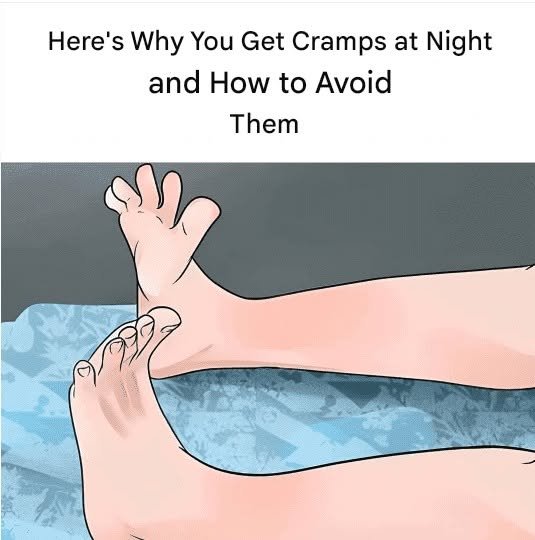
Nocturnal leg cramps — those sudden, painful muscle spasms that usually strike the calf or foot while you’re sleeping.
The exact reason isn’t always clear, but the leading theories point to a few key causes:
1. Your Muscles Are Already Shortened
The classic sleeping position is a major trigger. When you lie on your back, gravity pulls your toes down, and your calf muscles sit in a shortened, relaxed state. When they then randomly contract, they’re more likely to spasm violently because they’re starting from an already tight position. This is why pointing your toe can instantly set one off.
2. Nerve Miscommunication (The “Misfire” Theory)
Muscles are controlled by electrical signals from nerves. One strong hypothesis suggests cramps happen when a nerve gets “twitchy” and sends an endless barrage of signals to the muscle to contract. It never gets the signal to relax. This is more likely to happen when you’re asleep, not consciously moving, and the nervous system’s reflex control mechanisms aren’t fully engaged.
3. Dehydration & Electrolyte Imbalance
This is the classic explanation, though the science isn’t completely settled. Nerves and muscles rely on a delicate balance of minerals to turn “on” and “off.” If you’re low on:
-
Potassium: The “off switch” mineral.
-
Magnesium: Helps muscles relax by blocking calcium, which triggers contraction.
-
Calcium: Too little can make nerves hyper-excitable.
-
Sodium: Crucial for fluid balance and nerve signals.
Dehydration concentrates these imbalances, making the nervous system irritable.
4. Fatigue and Inactivity
Two opposite states can trigger them:
-
Overexertion: Muscles that are overworked and exhausted are more prone to cramping during the repair and recovery phase at night.
-
Prolonged Sitting/Standing: Being sedentary shortens tendons and muscles, while standing all day fatigues them without full contraction, both setting the stage for a nocturnal spasm.
5. Other Triggers
-
Age: Tendons naturally shorten with age, increasing risk.
-
Pregnancy: Weight gain, circulatory changes, and mineral demands play a role.
-
Medications: Statins (cholesterol), diuretics (blood pressure), and some asthma drugs list muscle cramps as a side effect.
-
Underlying Conditions: Diabetes, thyroid issues, or peripheral artery disease can be culprits if cramps are frequent.
Instant Relief If One Strikes:
Flex your foot upward toward your shin (dorsiflexion). This forcefully stretches the shortened calf muscle and breaks the spasm. Grabbing your toes and pulling them toward you, while pushing your heel away, works too.
Do these cramps happen to you frequently, or does a certain position seem to trigger them? I can offer more specific prevention tips if you’d like.