
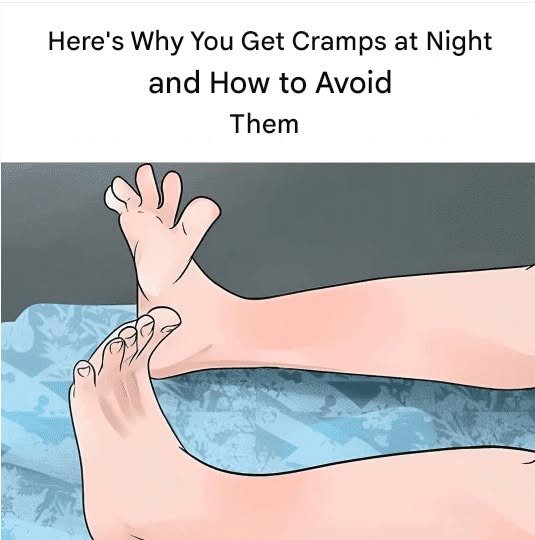
Nighttime leg cramps are a common but frustrating issue! There are several reasons why they happen, and understanding the cause can help prevent them. Let’s break down the most common culprits:
1. Dehydration and Electrolyte Imbalances
Your muscles rely on a balance of minerals—especially potassium, magnesium, and calcium—to contract and relax properly. If you’re low on these, your muscles can spasm.
-
Why it happens at night: You might be slightly dehydrated from the day, or you’ve sweated out minerals during exercise or heat.
-
Fix: Drink plenty of water throughout the day. Eat potassium-rich foods (bananas, sweet potatoes, avocados) and magnesium-rich foods (nuts, seeds, leafy greens, dark chocolate).
2. Poor Circulation or Sitting for Long Periods
If you sit at a desk all day, wear tight clothing, or cross your legs often, blood flow to your legs can be restricted.
-
Why it happens at night: When you finally lie down and relax, blood rushes back into the area, which can trigger nerve misfires or spasms.
-
Fix: Stretch your legs before bed, avoid crossing your legs, and try to move around every hour during the day.
3. Overexertion or Muscle Fatigue
Did you do a hard workout, walk a lot, or stand for hours today? Overworked muscles can become irritated and more prone to cramping as they recover.
-
Why it happens at night: While you sleep, your body is trying to repair the micro-tears in the muscle fibers; the healing process can sometimes cause involuntary contractions.
-
Fix: Gently stretch after exercise, use a foam roller, and consider a warm bath with Epsom salts (magnesium sulfate) before bed to relax the muscles.
4. Nerve Compression (Sciatica or Spinal Issues)
Sometimes the problem isn’t in the muscle itself, but in the nerves that run from your spine down to your legs.
-
Why it happens at night: Conditions like spinal stenosis (narrowing of the spinal canal) or a herniated disc can pinch nerves. Lying flat may increase pressure on the nerve, triggering cramps or tingling.
-
Fix: Try sleeping with a pillow under your knees (if you sleep on your back) or between your knees (if you sleep on your side). If cramps are accompanied by numbness, burning, or shooting pain, see a doctor or physical therapist.
5. Medications or Underlying Conditions
Certain health issues and medications can make you more prone to cramping.
-
Medications: Diuretics (water pills for blood pressure), statins (for cholesterol), and some asthma medications can deplete potassium or magnesium.
-
Conditions: Diabetes, thyroid disorders, kidney disease, and peripheral artery disease (PAD) can all cause nighttime cramps.
-
Fix: Do not stop taking prescribed medications, but talk to your doctor. They may adjust your dose or recommend a specific supplement.
What to Do the Moment a Cramp Strikes
Instead of pointing your toes (which makes the muscle shorten and tighten more), do this:
-
Flex your foot upward—pull your toes toward your shin.
-
Stand up and put weight on the leg if you can. The pressure and stretch often break the spasm instantly.
-
Apply heat afterward with a warm towel or heating pad to help the muscle fully relax.
Bottom line: The occasional cramp is usually just a sign of dehydration or a long day on your feet. But if you get them several times a week, or if the leg is red, hot, or swollen (which can indicate a blood clot), it’s worth checking with your doctor to rule out an underlying issue.