
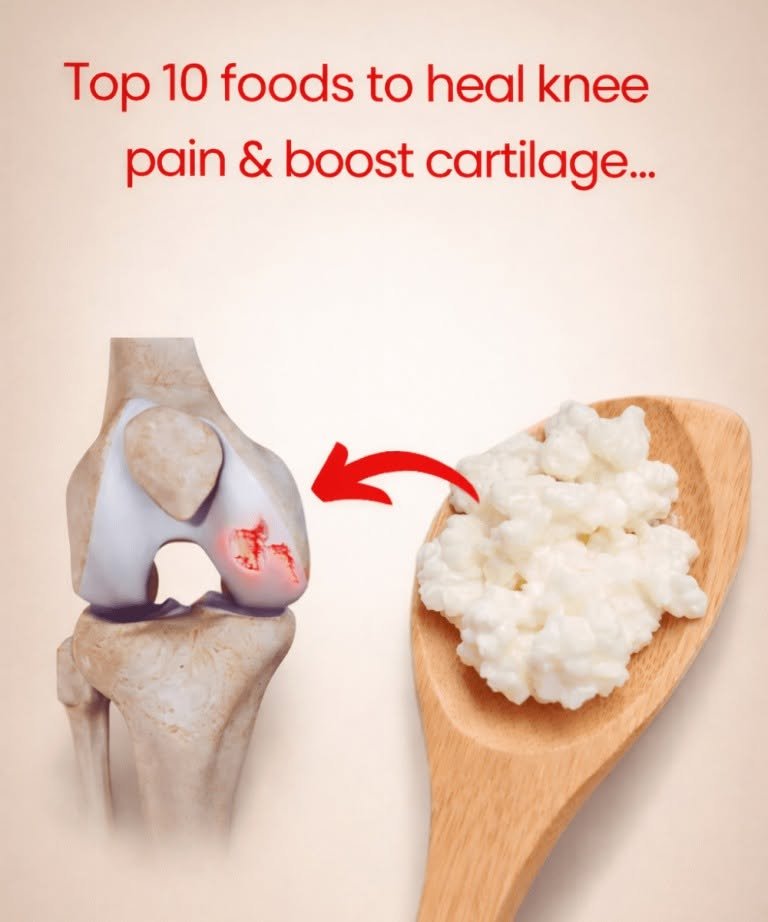
Chronic knee pain—especially from osteoarthritis—is driven by inflammation and the gradual breakdown of cartilage. While no food can magically regrow lost cartilage overnight, a strategic diet can powerfully reduce the inflammatory chemicals that break it down and supply the raw materials needed for repair and lubrication.
Think of this less as “eating to cure” and more as “eating to create an internal environment where healing is possible.”
Disclaimer: This information is for educational purposes only and is not a substitute for professional medical advice.
The Three-Pronged Nutritional Strategy for Knees
-
Quench Inflammation: Turn off the cytokines and enzymes (like MMPs) that actively destroy cartilage.
-
Supply Building Blocks: Provide the collagen, amino acids, and minerals that cartilage is made of.
-
Lubricate & Protect: Nourish the synovial fluid to reduce friction.
Here are the top 10 foods that achieve these goals, ranked by the specific role they play.
1. Fatty Fish (Salmon, Mackerel, Sardines)
-
Why it’s #1: Cold-water fatty fish are the richest food source of long-chain Omega-3 fatty acids (EPA and DHA). These are the body’s most potent natural anti-inflammatories, directly blocking the inflammatory pathways that erode cartilage.
-
How to use: Aim for at least two 3.5-ounce servings per week. Wild-caught salmon is ideal. For a powerful one-two punch, eat it with a turmeric-based sauce (see #5).
2. Bone Broth
-
Why it’s crucial: This is the ultimate “like supports like” food. Slowly simmered bones and connective tissue release collagen, gelatin, glucosamine, chondroitin, and hyaluronic acid into the broth—the exact compounds that make up joint cartilage and synovial fluid.
-
How to use: Sip a warm mug daily. The gelatin is what makes good bone broth turn to jelly when cold. Look for this quality, or make it yourself by simmering chicken feet, oxtails, or marrow bones in water with a splash of vinegar (to leach minerals) for 12-24 hours.
3. Pomegranates
-
Why it’s a powerhouse: There’s compelling research specifically on pomegranates and knee OA. Pomegranate extract blocks the overproduction of MMP (matrix metalloproteinase) enzymes, which literally chew up cartilage. It’s one of the few foods with clinical data showing it can slow structural damage to the joint.
-
How to use: Eat the fresh arils (seeds) when in season, or drink pure, unsweetened pomegranate juice. Even a small shot daily is beneficial.
4. Extra Virgin Olive Oil (EVOO)
-
Why it’s a medicine: High-quality EVOO contains oleocanthal, a natural phenolic compound that acts like ibuprofen. It inhibits the same COX enzymes that NSAIDs do, but gently and without damaging the gut lining. A daily dose can measurably lower systemic inflammation.
-
How to use: Choose fresh, peppery EVOO (a burning sensation in the throat is the sign of high oleocanthal). Use it cold, drizzled generously over cooked vegetables and salads, as high heat can destroy some of its delicate compounds. Aim for 2 tablespoons a day.
5. Turmeric (Curcumin)
-
Why it’s an ally: Curcumin is a highly researched anti-inflammatory that blocks NF-kB, a master switch for inflammation. For knee pain, it’s as much about reducing morning stiffness as it is about reducing pain. It’s poorly absorbed on its own, so it must be consumed correctly.
-
How to use: The traditional Indian method is a golden milk: simmer turmeric paste with milk (dairy or plant-based) and a pinch of black pepper (piperine), which increases absorption by 2000%, and a fat source like coconut oil. The classic combination of fatty fish cooked with turmeric and pepper is a super-remedy for joints.
6. Leafy Greens & Cruciferous Vegetables (Spinach, Kale, Broccoli)
-
Why they’re essential: Broccoli, cauliflower, and kale contain sulforaphane, a compound that, like pomegranate, blocks the destructive MMP enzymes in cartilage. They are also loaded with vitamin K and calcium, which are necessary for the underlying bone, not just the cartilage.
-
How to use: Lightly steam broccoli to maximize sulforaphane content. The goal is vibrant, still slightly crunchy. Overcooking destroys the enzyme (myrosinase) needed to activate it.
7. Vitamin C-Rich Fruits (Oranges, Kiwi, Strawberries, Red Bell Peppers)
-
Why it’s the building block: Vitamin C is not just for immunity; it is the absolute essential cofactor for your body to manufacture its own collagen. Without adequate vitamin C, any attempt to build cartilage is biologically futile. It also neutralizes free radicals in the joint fluid.
-
How to use: Prioritize whole-food sources over supplements. A yellow kiwi, a bowl of sliced strawberries, or thinly sliced raw red bell pepper in a salad provide a massive dose of intact, bioavailable vitamin C complexed with its natural phytonutrients.
8. Nuts & Seeds (Walnuts, Chia Seeds, Flaxseeds)
-
Why they’re the plant-based backup: Walnuts are the king of nuts for ALA, a plant-based Omega-3. Chia and flax seeds, when ground, provide a massive boost of ALA and fiber, which feeds a healthy gut microbiome—a critical but often overlooked link in controlling systemic inflammation.
-
How to use: A small handful of walnuts daily, or a tablespoon of freshly ground flaxseed added to oatmeal or smoothies. Pairing these with fatty fish gives you a complete, diverse spectrum of anti-inflammatory fatty acids.
9. Garlic, Onions, and Leeks (The Allium Family)
-
Why they’re a hidden gem: These pungent bulbs are rich in diallyl disulfide and quercetin, compounds with strong anti-inflammatory effects. Research in populations with high allium consumption suggests a protective effect against the development of osteoarthritis.
-
How to use: Let crushed or chopped garlic rest for 10 minutes before cooking to allow its active compounds to fully develop. Use generously in cooking as a base for almost every savory dish.
10. Dark Cherries & Berries (Especially Tart Cherries)
-
Why they’re pain fighters: Deeply colored berries and tart cherries are packed with anthocyanins, the pigments that give them their deep red-blue color. These powerfully reduce uric acid levels and inflammatory markers, with tart cherry juice concentrate famously studied for its ability to reduce joint pain and accelerate recovery in athletes.
-
How to use: Drink 8 ounces of unsweetened tart cherry juice concentrate daily, or eat a serving of fresh or frozen mixed berries. Frozen, slightly thawed wild blueberries over yogurt is a therapeutic dessert.
A Daily “Joint-Building” Menu (Sample)
-
Morning: Oatmeal made with ground flaxseed and blueberries, topped with a dollop of yogurt.
-
Lunch: A large salad of spinach, kale, and shredded raw red cabbage, with sliced orange, walnuts, and a generous pour of peppery extra virgin olive oil.
-
Afternoon Drink: A warm mug of bone broth or a turmeric golden milk latte.
-
Dinner: A piece of wild salmon marinated in garlic, ginger, and olive oil, served with lightly steamed broccoli.
What to Absolutely Reduce
Equally important is stopping the active demolition of your joints. For any chance of healing, ruthlessly minimize:
-
Refined Sugar and High-Fructose Corn Syrup: They spike insulin and inflammatory cytokines.
-
Industrial Seed Oils (Soy, Corn, Canola): They are high in pro-inflammatory Omega-6 fats.
-
Excess Alcohol: It is a direct systemic inflammatory and dehydrates the disc and cartilage cells.