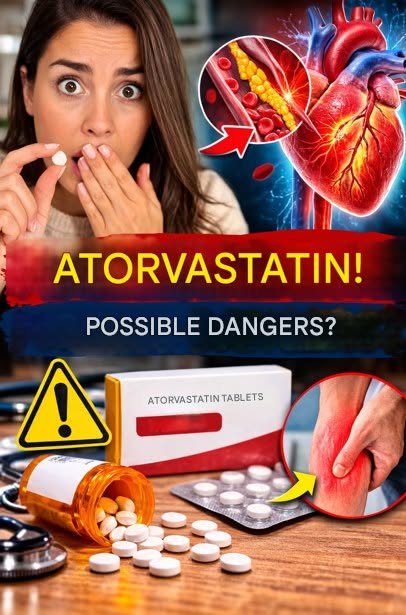
Managing heart health is crucial, and understanding your medication is a powerful step. Atorvastatin (brand name Lipitor) is one of the most prescribed medications globally, and while it’s highly effective, the conversation around its side effects is vital.
Let’s break down what you need to know in a clear, balanced way, focusing on facts, not fear.
First, What Atorvastatin Does
At its core, Atorvastatin is a statin. It works in your liver by blocking an enzyme called HMG-CoA reductase, which your body needs to produce cholesterol. This action:
-
Lowers “bad” LDL cholesterol significantly.
-
Reduces triglycerides (another type of blood fat).
-
Slightly raises “good” HDL cholesterol.
More importantly, by lowering cholesterol, it stabilizes the plaque in your arteries, making it less likely to rupture and cause a heart attack or stroke. This is its primary benefit.
Common vs. Rare: A Realistic View of Side Effects
The list of potential side effects on the package insert is long and scary, but it’s crucial to distinguish between what’s common and manageable and what’s rare but serious.
1. Common and Often Manageable
These affect roughly 1 in 10 to 1 in 100 people. They can often be managed with your doctor’s help.
-
Muscle Aches and Pain (Myalgia): This is the most discussed side effect. It’s often a dull, symmetrical ache in large muscle groups (shoulders, thighs, back), not a sharp, localized pain. It usually starts within weeks to months of starting the medication.
-
What to do: Never ignore it. Report it to your doctor. They may check a blood test (Creatine Kinase or CK) to ensure it’s not a more serious muscle breakdown. A dose reduction, switching to a different statin (like rosuvastatin or pravastatin), or even alternate-day dosing often resolves this completely.
-
-
Digestive Issues: Nausea, diarrhea, constipation, or gas.
-
What to do: Often temporary. Taking the dose with your evening meal (if appropriate—check with your pharmacist, as Atorvastatin can be taken any time of day unlike some other statins) may help.
-
-
Headache: A mild, transient headache can occur when first starting.
2. Less Common but Important
-
Increased Liver Enzymes: A statin can cause a clinically silent, mild rise in liver enzymes (transaminases) in a small percentage of people. This is usually temporary and not a sign of liver damage. Your doctor will do a baseline liver test and may recheck it later. Severe liver injury is exceedingly rare.
-
Slight Increase in Blood Sugar (HbA1c): There is a known, small increased risk of developing new-onset type 2 diabetes, almost always in people who already have pre-diabetes or metabolic syndrome.
-
Critical Perspective: The cardiovascular benefit of preventing a heart attack or stroke in these high-risk individuals dramatically outweighs the small risk of a slight blood sugar rise.
-
3. Rare but Serious (Require Immediate Medical Attention)
These affect fewer than 1 in 1,000 people.
-
Rhabdomyolysis: This is the severe muscle breakdown that people fear. It’s characterized by severe, widespread muscle pain, profound weakness, and dark, cola-colored urine. This is a medical emergency. The risk is higher in people on very high doses or those with drug interactions (e.g., with certain antifungals or antibiotics).
-
Severe Liver Damage: Extremely rare. Symptoms would include unusual fatigue, loss of appetite, right upper abdominal pain, dark urine, and yellowing of the skin or eyes (jaundice).
Debunking the “Nocebo” Effect
Groundbreaking research, like the SAMSON trial, revealed a powerful psychological aspect. In this study, patients took statin and placebo pills in random order without knowing which was which.
-
90% of the symptoms patients experienced while on the statin were exactly the same when they took the placebo pill.
-
The act of expecting side effects because you’re taking a pill can genuinely produce them. This is called the nocebo effect, and it’s real.
This doesn’t mean your pain is “all in your head.” It means the cause might not be the chemical action of the drug. It’s a crucial discussion point with your doctor if you think you’re having side effects.
A Practical Checklist for Managing Your Heart Health
If you are prescribed Atorvastatin, or are currently taking it and are concerned, here is a proactive path forward.
-
Document Your Normal Before Starting: Your doctor should establish a baseline. Know your pre-statin muscle and liver function.
-
The 3-Week Rule: If you experience mild, tolerable aches, wait 3-4 weeks. For many, these aches diminish as the body acclimates.
-
Communicate, Don’t Stop: Never stop your statin abruptly without your doctor’s approval. Stopping a statin can cause a “rebound” effect, significantly increasing your risk of a cardiovascular event. Say to your doctor: “I’m experiencing this specific pain. Can we investigate and find a solution together?”
-
Review Drug Interactions: Grapefruit juice (in large quantities) can increase the drug level and side effect risk. Certain antibiotics and antifungals also interact. Always tell your pharmacist about all your medications and supplements, including over-the-counter ones like CoQ10.
-
Consider CoQ10: Statins can lower your body’s natural Coenzyme Q10 levels, which are important for muscle cell energy. The scientific evidence is mixed, but many clinicians suggest a trial of a CoQ10 supplement (e.g., 100-200 mg daily) to see if it helps muscle aches, as it has a low risk of harm.
The Bottom Line: Atorvastatin is a cornerstone of modern cardiovascular prevention, not because it’s risk-free, but because for those who need it, the magnitude of its benefit in preventing death and disability is immense. Your role is to be an informed, observant, and communicative partner in your own care, not a passive recipient of a prescription.