
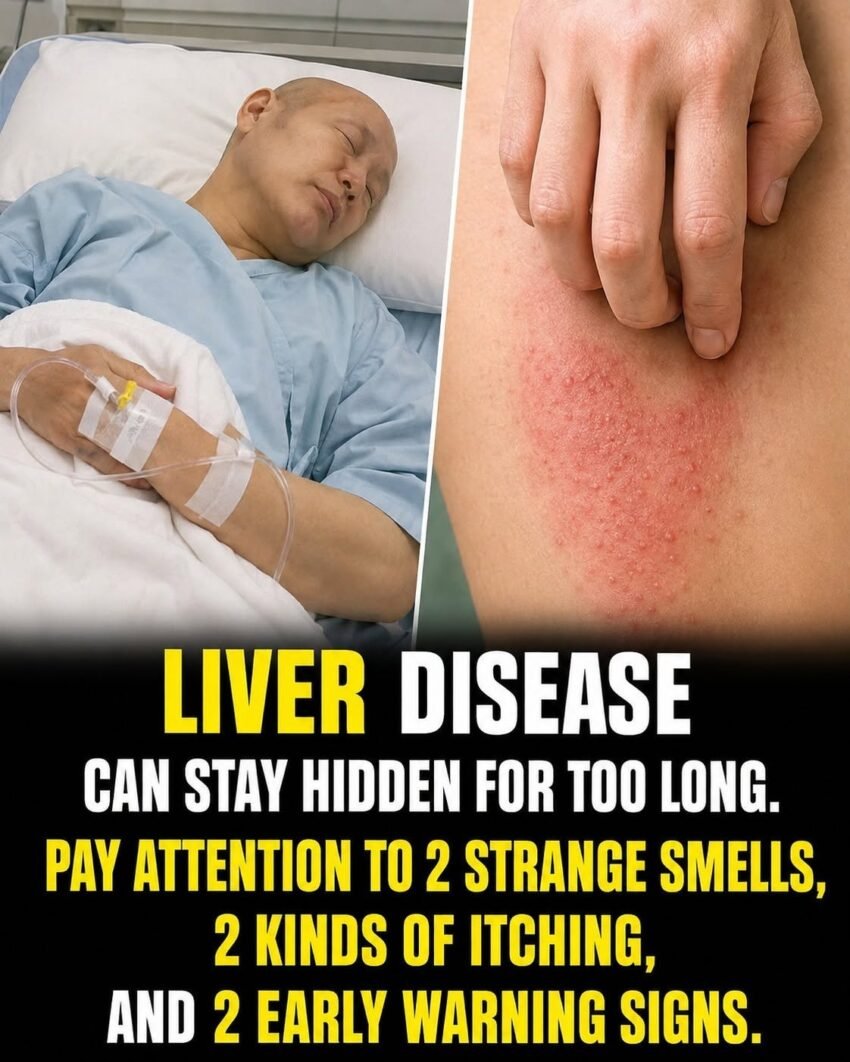
When our internal organs or metabolic systems are struggling, the body often sends out “SOS” signals through our skin, our sweat, and our nerves. Here is what doctors say you should never ignore when it comes to 2 unusual odors, 2 types of itching, and 2 early warning signs.
Part 1: The 2 Unusual Odors
Our bodies naturally have a scent, but a sudden, persistent change in how you smell—especially if washing doesn’t fix it—can indicate an underlying metabolic or organ issue.
1. A Fruity or “Nail Polish Remover” Breath Odor (Diabetes / Ketoacidosis)
-
What it is: If your breath suddenly smells sweet, fruity, or like acetone (nail polish remover), this is a major red flag.
-
Why it happens: When your body cannot get sugar into its cells for energy (due to a lack of insulin in diabetes), it starts burning fat for fuel. This process creates acidic byproducts called ketones. One of these ketones (acetone) is released on your breath.
-
The danger: This is often a sign of Diabetic Ketoacidosis (DKA), a life-threatening medical emergency, especially for undiagnosed Type 1 diabetics.
2. A Strong Ammonia or “Fishy” Body Odor (Kidney or Liver Issues)
-
What it is: If your sweat or breath smells like bleach, ammonia, or strongly of urine, or if you have a pungent “fishy” odor, it should be checked out.
-
Why it happens: The kidneys and liver are your body’s filtration systems. If they are failing (Chronic Kidney Disease or liver failure), they stop filtering out toxins (like urea and nitrogen) from your blood. Those toxins then build up and are pushed out through your sweat and breath, creating a chemical, ammonia-like, or musty/fishy smell.
Part 2: The 2 Types of Itching
Itching (medically known as pruritus) is not just a skin problem. Sometimes, itching has nothing to do with bugs or allergies—it is caused by internal nerves reacting to toxins in the blood, or blocked bile ducts.
1. Itching Without a Rash (Liver, Kidney, or Blood Disorders)
-
What it is: A deep, relentless, all-over itch that is not accompanied by any visible hives, redness, or dry skin. It often gets worse at night.
-
Why it happens:
-
Liver disease: Conditions like hepatitis or cirrhosis cause bile salts to build up under the skin, which triggers severe itching.
-
Kidney failure: Uremic toxins accumulate in the skin.
-
Blood cancers (like Lymphoma or Polycythemia vera): The body releases histamines or creates too many blood cells, leading to a prickly, burning itch often felt after a hot shower.
-
2. Itching on the Palms of Hands or Soles of Feet (Liver Cholestasis)
-
What it is: This is an oddly specific itch that most people dismiss as dry skin. It is localized exclusively to the palms and soles.
-
Why it happens: This is a classic symptom of Cholestasis, a condition where bile flow from the liver is slowed or blocked (this is particularly dangerous during pregnancy). It can also be an early sign of pancreatic or liver cancer pressing on the bile duct. The itching is caused by bilirubin accumulating in the skin’s nerve endings.
Part 3: The 2 Early Warning Signs
When pairing “odors” and “itching” together, the two early warning signs that often accompany them are related to the pancreas, liver, or kidneys.
1. Unexplained, Drastic Weight Loss
-
What it is: Losing 10 pounds or more (or 5% of your body weight) without changing your diet or exercise routine.
-
Why it matters: If you have an unusual odor (like fruity breath) and unexplained weight loss, it points heavily toward undiagnosed diabetes (you are losing sugar and calories through your urine). If paired with the itch without a rash, it points toward an overactive metabolism caused by an underlying cancer or organ dysfunction.
2. Changes in Urine or Stool Color
-
What it is: This is the most visual “early warning” sign that ties these symptoms together.
-
Why it matters:
-
Dark, tea-colored urine or pale, clay-colored stools indicate that the liver is not processing bile properly (which explains the itching).
-
Foamy or bubbly urine indicates protein is leaking out of the kidneys (which explains the ammonia smell).
-
Oily or greasy stools that float indicate the pancreas is failing to digest fats properly.
-
The Takeaway
The human body rarely whispers; it usually leaves clues. If you, or someone you know, are experiencing a sudden change in body odor, persistent itching without a rash, sudden weight loss, or strange changes in urine/stool color, do not try to cover it up with deodorant or anti-itch cream.
See a doctor for a simple blood test (Comprehensive Metabolic Panel and A1C). A simple blood draw can instantly rule out diabetes, liver failure, kidney disease, or blood disorders.