
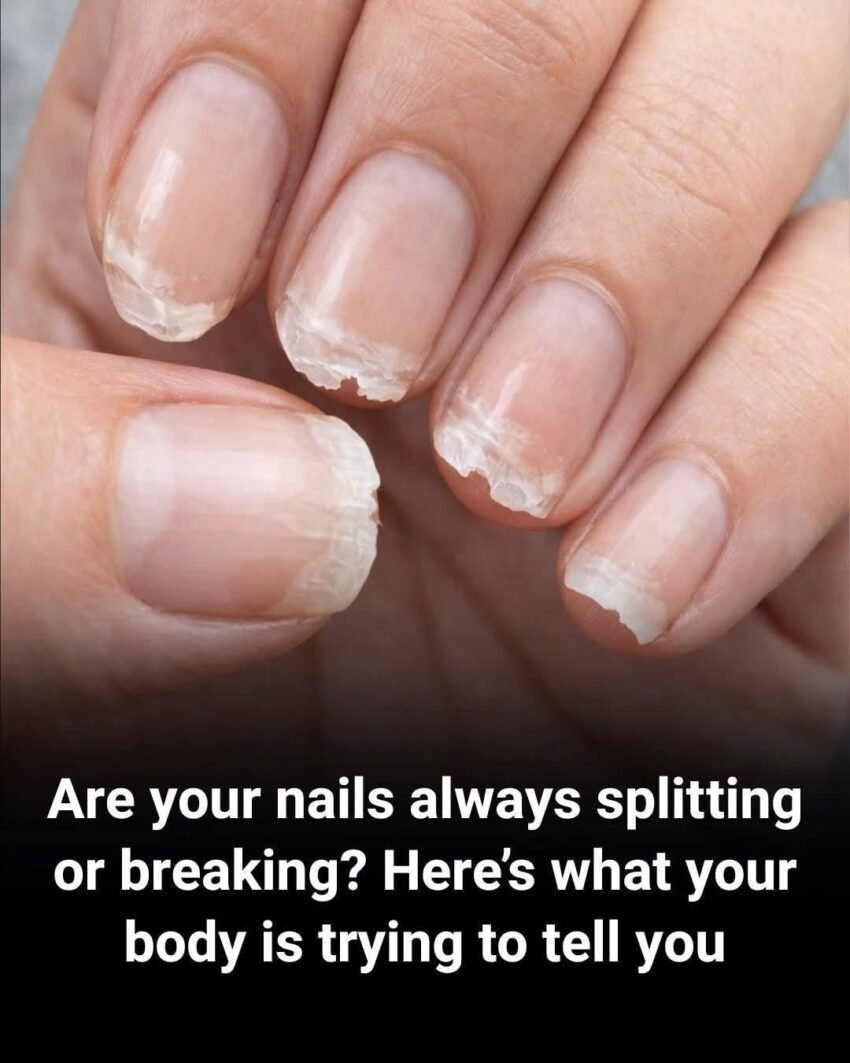
Weak, brittle, peeling, or ridged nails aren’t just a cosmetic problem or a sign that you need more biotin. They’re often your body’s first visible signal that something deeper is out of balance.
Here’s what your nails might be trying to tell you, grouped by the type of weakness and the underlying deficiency or disease.
The Two Types of Brittleness: Diagnose by Texture
First, identify which type of brittleness you have, as they point to completely different problems:
-
Dry and Brittle (Onychorrhexis): Nails are flaky, layered, peeling, and have longitudinal ridges. Think of a dry lakebed. This is almost always a problem of internal dehydration or nutritional deficiency.
-
Soft and Brittle (Hapalonychia): Nails bend, tear like paper, and won’t hold a shape. They feel thin and flexible. This points to a lack of structure-building proteins or sulfur, or an external chemical insult.
The Usual Suspect: It’s Often Not Biotin Deficiency
The internet loves biotin for nails, but true isolated biotin deficiency is incredibly rare. Before you buy that expensive supplement, consider the far more common causes:
1. Iron Deficiency (The Number One Culprit)
This is the single most overlooked cause of brittle nails, especially in women of childbearing age or vegetarians.
-
The Sign: Koilonychia (spoon-shaped nails) is the classic, advanced sign, but long before that, nails just become flat, thin, and break easily.
-
Why: Iron is a critical co-factor in the enzyme that produces the keratin nail matrix. No iron = flimsy, cracked building material.
-
The Link to Our Prior Discussions: If you’re also feeling the deep fatigue we discussed in the kidney signs (anemia), cold hands and feet (metoprolol side effect), or pica (craving ice), this is highly likely.
2. Hypothyroidism (The Silent Metabolism Brake)
Brittle, slow-growing nails that crumble at the tip are a classic sign of an underactive thyroid.
-
The Sign: Beyond brittleness, the nails are often dull, thick, and grow painfully slowly. You might also notice the outer third of your eyebrow thinning. The nails look lifeless.
-
Why: Thyroid hormone T3 directly stimulates the nail matrix cells to multiply. A low thyroid means the nail factory is running at half-speed, producing poor-quality, aged keratin.
3. Protein and Sulfur Deficiency (The Keratin Collapse)
Keratin is a protein. Cysteine is a sulfur-rich amino acid that cross-links the protein strands to give nails their rock-hard strength, like the rebar in concrete.
-
The Sign: Soft, peeling nails that tear horizontally. They feel like wet paper.
-
Why: Low-protein diets, vegan diets without methionine (an essential amino acid), or poor stomach acid (which fails to break down protein in the elderly) mean you simply lack the bricks to build the wall.
-
The Gallbladder Link (From Our Last Chat): If you’ve had your gallbladder removed and suffer from fat malabsorption, you might not be absorbing fat-soluble vitamins (A, D, E, K) or the essential fatty acids needed for a healthy nail bed’s oil matrix, leading to permanent dryness.
The “Hidden Hunger” Micronutrients
If protein and iron are fine, look at the supporting cast:
-
Zinc: Zinc deficiency leaves nails looking like they have a battlefield of white spots (leukonychia) and a rough, sandpaper-like texture with peeling ends. Zinc is needed for cell division; without it, the nail plate grows out damaged.
-
Vitamin B12 and Folate: These are needed for DNA synthesis in the rapidly dividing nail matrix. A deficiency causes the nail bed to produce pigment-less, structurally weak cells, leading to bluish or dark-streaked, fragile nails.
-
Magnesium: Crucial for the parathyroid hormone cycle that regulates calcium. A mag deficiency leads to calcification problems, making nails rigid but brittle, like glass—they snap cleanly under pressure rather than bending.
Systemic Diseases Written on Your Nails
Brittleness accompanied by other visual changes is a red flag for internal disease:
-
Psoriatic Nail Disease: This isn’t just brittle; it’s a wreck. Look for pitting (tiny ice-pick holes), oil spots (salmon-colored patches under the nail), and separation of the nail from the bed (onycholysis). This is an autoimmune attack on the nail matrix and often exists even without major skin psoriasis.
-
Fungal Infections (Onychomycosis): If one nail is “brittle” and it’s thick, yellow, and crumbling like cheese, while others are fine, it’s not a deficiency; it’s a dermatophyte eating your keratin. Treating this with biotin is like giving fertilizer to weeds.
-
Peripheral Vascular Disease: As we discussed with metoprolol and cold feet, poor circulation (common in smokers, diabetics, and heart patients) starves the nail matrix of oxygen and nutrients. The nails grow slow, are dull, thick, and brittle simply because the blood supply is choked off.
The External Assault (Fix This First)
Before chasing systemic diseases, eliminate the most common cause: water and chemicals.
-
Repeated Wetting and Drying: Nails are 1000x more absorbent than skin. They swell when wet and shrink when dry. Constant cycles (e.g., nursing, dishwashing, cleaning) cause the cells to delaminate (peel). The cure isn’t a pill; it’s wearing gloves and using a heavy, oil-based moisturizer.
-
Acetone and Gel Manicures: Acetone violently strips lipids from the nail plate, leaving it dehydrated and brittle. Gel and acrylic prep involves filing the nail plate thin. “Brittle nails” in a person with a perfect diet and beautiful gel manicures is almost always an iatrogenic (procedure-caused) injury.
A Quick Diagnostic Checklist
| If Your Nail Looks/Feels… | Primary Suspect |
|---|---|
| Thin, concave, brittle with fatigue | Iron deficiency |
| Thick, slow-growing, crumbling | Hypothyroidism |
| Soft, bendy, peeling in sheets | Protein/Sulfur deficiency |
| White spots, rough, “sandpaper” | Zinc deficiency |
| Pitted, with oil spots, separating | Psoriasis |
| Yellow, chalky, crumbly (one nail) | Fungus |
| Dry, peeling, but you wash dishes often | Environmental (Water damage) |
If your nails are uniformly weak, look at your plate first: prioritize animal protein or legumes, heme iron (red meat) or chelated iron supplements, and zinc. If the problem is confined to one or two nails, think fungus or trauma. If the brittleness accompanies profound fatigue, cold sensitivity, or the digestive issues we discussed previously, look at the thyroid and gut. Your nails are speaking; they just speak slowly.