
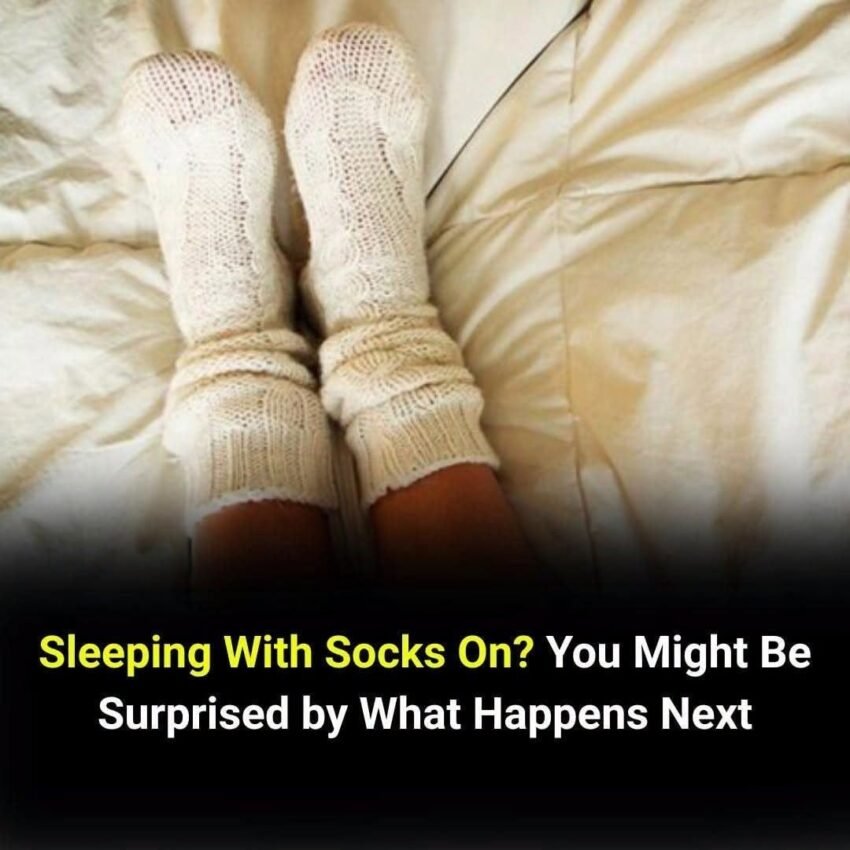
Here is an article exploring the science, benefits, and potential drawbacks of wearing socks to bed, written in an engaging and accessible health-lifestyle tone.
Wearing Socks to Bed? You’ll Be Surprised What Happens
For decades, wearing socks to bed was considered a fashion faux pas, a habit reserved for grandmothers, campers in freezing tents, or those who simply “run cold.” But as it turns out, those who bundle up their feet before hitting the hay might have been onto something.
Sleep science has recently turned its attention to a simple, inexpensive biohack: warming your feet. It turns out that the temperature of your extremities plays a massive role in how fast you fall asleep, how deeply you sleep, and even your overall cardiovascular health.
If you’ve ever wondered whether you should slip on a pair of cozy socks before climbing under the duvet, here is exactly what happens to your body when you do.
1. You Fall Asleep Faster (The Vasodilation Trick)
The single most significant benefit of wearing socks to bed is the speed at which you lose consciousness.
Your body’s sleep-wake cycle (the circadian rhythm) is heavily tied to core body temperature. To initiate sleep, your body needs to drop its internal temperature slightly. The fastest way for the body to shed heat is through the skin, specifically the hands and feet, which are the body’s “radiators.”
When your feet are cold, your blood vessels constrict, trapping heat in your core and signaling to your brain that it’s time to be awake. However, when you put on socks, you warm the skin of your feet. This causes the blood vessels to dilate (a process called vasodilation). As blood rushes to the surface of your skin, heat dissipates rapidly, your core temperature drops, and your brain gets the signal: “We are cooling down. It is time to sleep.”
Studies have shown that warming the feet can reduce the time it takes to fall asleep by up to 15 minutes.
2. You Stop Waking Up in the Middle of the Night
It’s not just about falling asleep; it’s about staying asleep.
If your feet are freezing under the covers, your body will spend the night fighting to regulate its temperature. Eventually, the cold signal will override your sleep cycle, and you’ll wake up at 3 a.m. to tuck your feet into the folds of the blanket or curl into a fetal position to warm them.
By starting the night with warm feet, you stabilize your thermal comfort. You are less likely to experience the “cold shock” that jolts you out of REM sleep, leading to a more consolidated, uninterrupted night of rest.
3. You Might Reduce Hot Flashes and Night Sweats
This sounds counterintuitive. Why would adding heat help with overheating?
For women going through menopause, the body’s thermostat is erratic. However, the principles of vasodilation still apply. By keeping the peripheral blood vessels open and stable via warm feet, the body is better able to regulate sudden shifts in core temperature. When the core gets too hot, the pathways to release that heat are already open. Some sleep experts suggest that maintaining a stable, warm environment for the extremities can actually reduce the severity of sudden heat surges.
4. It Can Help Prevent a Raynaud’s Attack
Raynaud’s phenomenon is a condition where blood vessels in the hands and feet overreact to cold or stress, causing the fingers and toes to turn white or blue and go numb.
For people who suffer from this condition, nighttime can be a struggle. If the bedroom air is slightly chilly, the toes can lose circulation quickly. Wearing socks to bed—especially ones made of natural fibers like merino wool or cashmere—provides the insulation needed to keep the blood flowing and prevent painful spasms during the night.
5. It Heals Cracked Heels (The Skincare Hack)
This is a benefit few people think about. If you suffer from dry, cracked heels, bedtime is the prime time to fix it.
When you wear socks to bed, you trap the moisture from a lotion or balm against the skin. Instead of the moisturizer rubbing off on your sheets, it is forced to absorb deeply into the skin. By applying a heavy-duty foot cream and then sealing it with a pair of clean cotton socks, you create an “occlusive” barrier. After a week of doing this, even the most stubborn winter heels will become noticeably softer.
6. Your Immune System Gets a Boost
The old wives’ tale says, “Don’t go to bed with cold feet, or you’ll catch a cold.” There is actually a kernel of truth to this.
Researchers at the Common Cold Centre at Cardiff University found that chilling the feet causes blood vessels in the nose to constrict reflexively. This reduces the blood supply to the nasal passages, which weakens the first line of immune defense against inhaled viruses. By keeping your feet warm, you maintain better circulation throughout your mucous membranes, potentially helping your body fight off bugs.
The Catch: Are There Downsides?
Before you pull on your thickest pair of ski socks, sleep experts have a few caveats.
The “Dirty Sock” Problem
You should never wear the same socks to bed that you wore in your shoes all day. Socks harbor bacteria, fungus, and sweat. If you climb into a warm, moist bed with dirty socks, you are creating a petri dish for athlete’s foot. Always put on a fresh, clean pair right before bed.
The Circulation Constriction
If you have diabetes, peripheral artery disease, or edema (swelling in the feet), wearing compression socks or very tight elastic socks to bed can cut off circulation. You want loose-fitting, breathable socks. If the elastic band leaves a deep indent in your ankle, they are too tight for sleeping.
The Overheating Trap
If you wear synthetic fibers (like polyester or nylon), you may trap too much heat. Your feet will sweat, and the moisture will have nowhere to go. This makes you colder in the long run and extremely uncomfortable. Stick to natural fibers: cotton, bamboo, or merino wool. These materials wick moisture away while retaining heat.
The Verdict
If you struggle with insomnia, poor circulation, or simply can’t stand the feeling of cold sheets against your toes, science says: Put on the socks.
It is the cheapest, lowest-effort sleep aid on the market. Just make sure they are clean, loose, and natural-fiber. You might be surprised at how much of a difference a few inches of fabric can make to your overall health.