
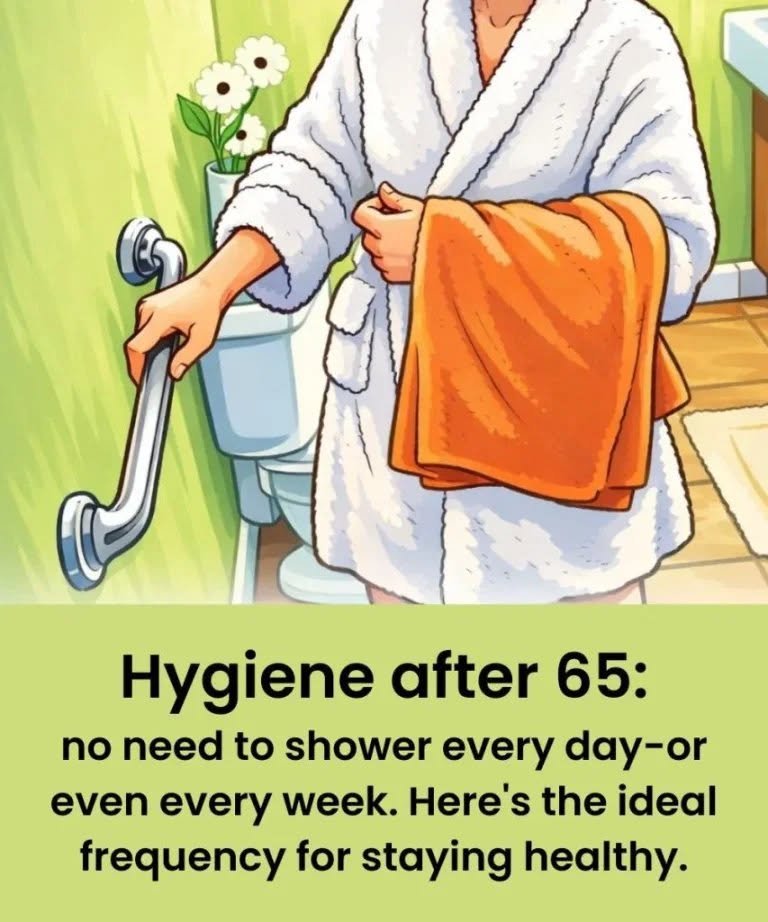
Here’s why a daily shower can do more harm than good after 65, and how to adapt.
The Core Problem: The Aging Skin Barrier
The skin is a complex, living barrier. After 65, it undergoes several irreversible changes that make it far more vulnerable:
-
Thinning Epidermis: The outer layer of skin thins significantly, becoming a weaker, papery shield.
-
Depleted Natural Oils (Sebum): Sebaceous glands produce far less oil, stripping the skin of its natural, water-proofing moisturizer.
-
Slower Cell Turnover: Old skin cells hang on longer, making the surface rougher but also more fragile. It takes nearly twice as long to repair microscopic damage.
Against this backdrop, a daily shower becomes a potent drying and damaging force.
1. It Destroys the Skin’s Fragile Barrier
This is the single biggest risk. Hot water and soap don’t just wash away dirt; they strip the already-depleted lipid (oil) barrier that locks moisture in and keeps irritants and bacteria out.
-
The Mechanism: The damaged barrier develops microscopic cracks, causing moisture to evaporate rapidly (transepidermal water loss). The skin becomes chronically dehydrated.
-
The Consequence: This leads to xerosis (pathologically dry skin) , which for older adults isn’t just a cosmetic issue. It triggers intense, unrelenting itching, often severe enough to disrupt sleep and cause open sores. This condition is so common in geriatric medicine it’s called “winter itch” or “senile pruritus.” A “normal” shower can make this spiral out of control.
2. It Dramatically Increases the Risk of Serious Infections
This is a direct consequence of the broken barrier.
-
The Mechanism: Dry, cracked skin provides a perfect entry point for bacteria, most notably Staphylococcus aureus. Scratching the intense itch inoculates those cracks.
-
The Consequence: What starts as dry skin can develop into cellulitis, a deep bacterial skin infection that requires oral or even IV antibiotics. In a thinner, less vascular skin, minor wounds also heal much slower, so a simple scratch can become a chronic ulcer, especially in those with diabetes or poor circulation—conditions more common after 65.
3. It Creates a Major Fall Hazard
The bathroom is already the most dangerous room in the house. Daily showering multiplies the risk.
-
The Mechanism: Slick, soapy surfaces, combined with the physical act of stepping over a high tub edge, bending to wash feet, and closing your eyes under the spray, all challenge a sense of balance that naturally declines with age. The vasodilation (blood vessel widening) from a hot shower can also cause a sudden, brief drop in blood pressure upon standing, leading to dizziness.
-
The Consequence: Falls are a catastrophic, often life-changing event for this age group. A hip fracture from a fall in the tub is a well-known trigger for a rapid decline in independence. Simply reducing shower frequency directly lowers this cumulative risk.
4. It Exacerbates Existing Skin Conditions
Conditions that become more prevalent with age flare badly with daily water exposure.
-
Eczema and Psoriasis: These are inflammatory conditions, and daily hot showers fuel the inflammation by further drying the skin.
-
Asteatotic Eczema (Eczema Craquelé): A classic aging-skin condition where the skin looks like a dried-up riverbed. It’s directly caused by dehydration and over-washing.
A Safer Hygiene Routine After 65
The goal shifts from scrubbing clean to targeted cleansing while actively preserving and repairing the skin barrier.
-
Reduce Frequency: Shower or bathe 2-3 times a week instead of daily. This is sufficient for hygiene in the absence of heavy sweating. On non-shower days, a “spot clean” with a damp, soft cloth focused on the face, underarms, groin, and feet is perfectly effective.
-
Lukewarm, Not Hot: Hot water is the greatest remover of natural oils. A tepid, lukewarm shower is non-negotiable.
-
Rethink the Soap: Use gentle, fragrance-free, moisturizing cleansers (look for “syndet” bars like Dove or Cetaphil) only where needed. You do not need to soap your arms, legs, back, and chest every time; let the water just rinse them.
-
The “Golden Three Minutes”: The most critical step happens immediately after you turn off the water. While skin is still damp, pat dry very gently (don’t rub) and apply a thick, ointment-based moisturizer (like petroleum jelly or a cream with ceramides) all over. This traps the water that has just been absorbed into the skin before it evaporates.
-
Safety-Proof the Shower: Install sturdy grab bars, use a non-slip mat, and always sit on a shower chair if balance is any concern.
This isn’t about giving up on hygiene, but adapting it to a body that has changed. The same principle applies broadly: routines that work for a 40-year-old body can be actively harmful for a 70-year-old one, whether it’s the timing of a meal or the temperature of a shower.
It seems you’re thinking a lot about health and the body’s signals. Were these questions sparked by something specific, or just a general dive into wellness?