
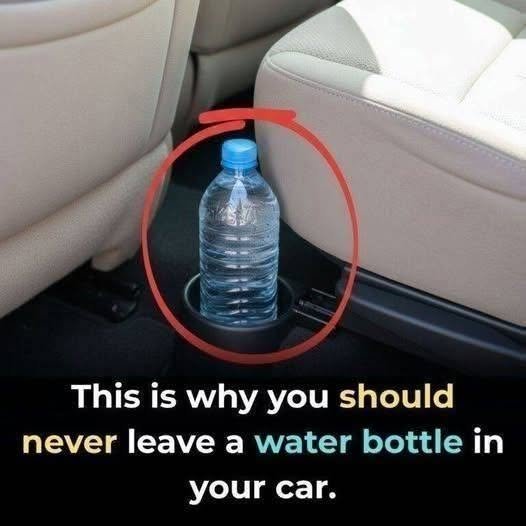
It might seem harmless to leave a half-empty bottle of water in your car during a quick errand or to keep a case of water in the trunk for emergencies. However, doing so—especially during warm or sunny weather—can pose several risks to your health and your vehicle.
Here is a complete guide on why you should break the habit of leaving water bottles in your car, and what you can do instead.
1. The Risk of Fire (The Magnifying Glass Effect)
This is the most immediate and dangerous risk of leaving a clear plastic water bottle in your car.
-
How it happens: A clear plastic bottle filled with clear water can act exactly like a magnifying glass. When sunlight streams through your car window and hits the bottle at the right angle, the water and the curved plastic focus the light into a single, intense, high-heat beam.
-
The danger: If that focused beam of light lands on a flammable surface inside your car—like a fabric seat, a piece of paper, or the upholstery—it can smolder and eventually catch fire. Firefighters have documented cases of car interiors catching fire and sustaining significant damage purely from a water bottle left on a seat on a sunny day.
2. Chemical Leaching (BPA, Antimony, and Microplastics)
Plastic water bottles are designed for room temperature or cold liquids, not the extreme heat of a parked car. On a mild 70°F (21°C) day, the inside of a car can reach 104°F (40°C) in under 30 minutes. On a 90°F day, the interior can hit 140°F (60°C) or higher.
-
The danger: When plastic is exposed to extreme heat, the chemical bonds begin to break down. This causes the plastic to leach chemicals into the water.
-
What leaches out: Depending on the type of plastic (like PET or Polycarbonate), this can include Antimony (a heavy metal used in plastic manufacturing that can cause nausea and dizziness) and BPA or phthalates.
-
Microplastics: The heat also accelerates the shedding of microscopic plastic particles into the water. While the long-term health effects of microplastics are still being studied, consistently drinking water that has been “heat-baked” in a car is not a risk you want to take.
3. Bacterial Growth (The “Backwash” Effect)
Even if your bottle is BPA-free or you have a reusable metal bottle, leaving a used or opened bottle in a warm car creates a perfect environment for bacteria.
-
The danger: When you drink from a bottle, bacteria from your mouth (saliva) transfer back into the water (backwash). If the bottle is then left in a warm, enclosed car, that warmth acts as an incubator.
-
The result: The bacteria multiply rapidly. If you drink from that lukewarm bottle a few hours later, you could be ingesting a heavy dose of germs, potentially leading to an upset stomach, nausea, or food poisoning.
4. Altered Taste and Smell
Leaving water in a hot car will absolutely ruin the taste of the water. Even if it hasn’t reached the point of dangerous chemical leaching, the heat degrades the plastic, releasing chemicals that give the water a distinctly bitter, chemical, or “plastic-y” taste and smell.
-
The danger: If your water tastes like a hot plastic swimming pool, it is a warning sign that the bottle has begun to degrade. Stop drinking it and throw it away.
5. A Breeding Ground for Mold (Reusable Bottles)
If you leave a stainless steel or hard plastic reusable bottle (like a Nalgene or Hydro Flask) in the car with a little bit of liquid left in the bottom, the dark, warm, humid interior is paradise for mold.
-
The danger: Mold can start to grow in the threads of the lid, inside the straw, or around the silicone gaskets in just a day or two. If left for a week, the bottle can be covered in black mold that is very difficult to scrub out and can make you sick.
What About Unopened Cases of Bottled Water?
If you keep a 24-pack of sealed, commercially bottled water in your trunk for emergencies, is it safe?
-
The Verdict: While the risk of fire is gone (because they are boxed or wrapped in plastic, and usually not clear enough to magnify light), the chemical leaching risk remains. Trunks get incredibly hot in the summer. Studies have shown that even unopened bottles stored in hot environments (like a garage or car trunk) show elevated levels of antimony and BPA over time.
-
The Rule of Thumb: Treat bottled water like groceries. It should not be stored in extreme heat for long periods. If you keep a case in your trunk, rotate it out frequently (every few weeks) and store it inside your house.
How to Break the Habit: Safer Alternatives
If you need to stay hydrated on the go without risking the health hazards of a hot plastic bottle:
-
Use an Insulated Stainless-Steel Bottle: Take it with you when you leave the car. Even if you leave it behind for an hour, the insulation will prevent the water from heating up to dangerous, bacteria-breeding temperatures. Plus, glass or food-grade stainless steel does not leach chemicals.
-
Use a Glass Bottle with a Silicone Sleeve: If you do leave it in the car, glass will not leach chemicals or start a fire. Just be mindful that the water might get warm.
-
Take It With You: The simplest solution is to just carry your water bottle with you when you exit the vehicle. It is a small habit change that protects your car’s interior and your health.
The Bottom Line: If you get back into your car, pick up a water bottle, and the water inside is hot to the touch, do not drink it. Pour it out, recycle the plastic bottle, and start fresh.