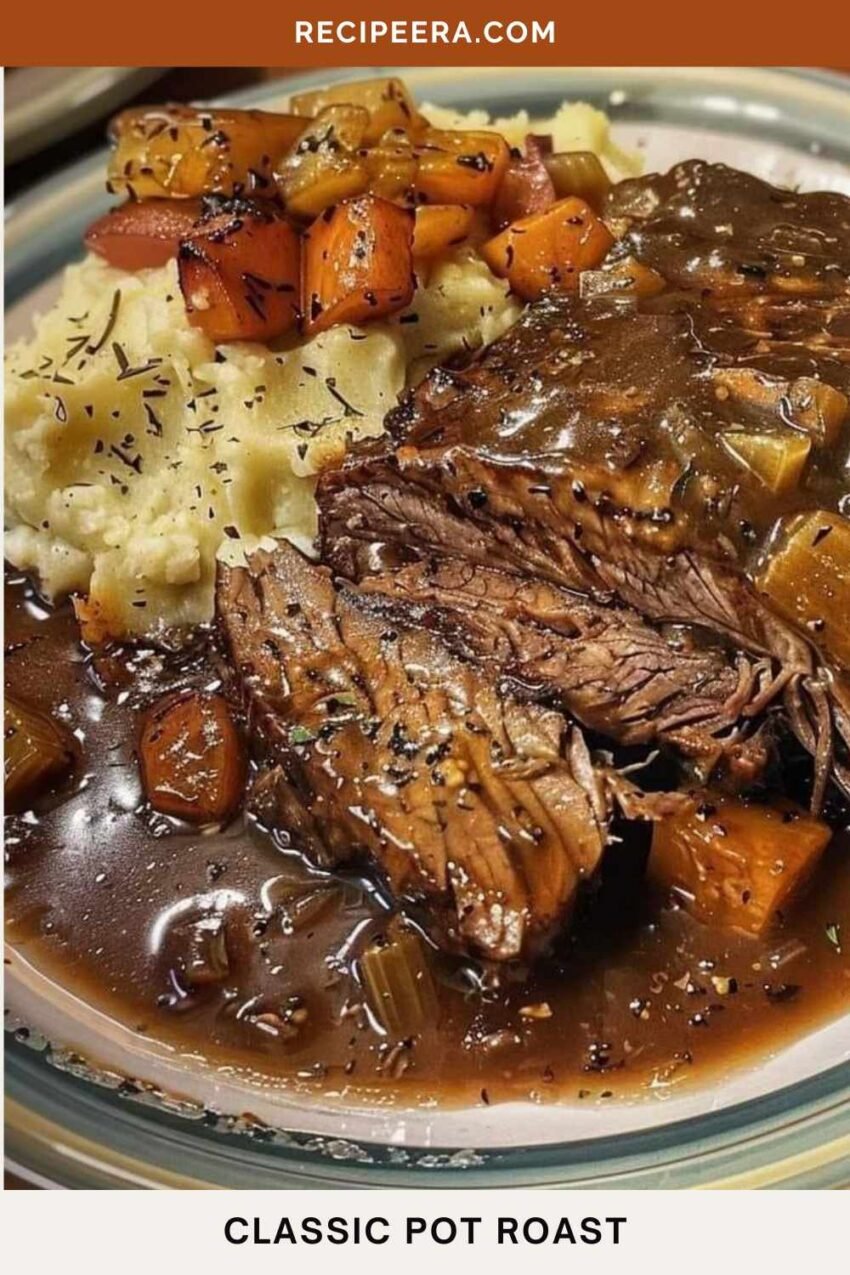
A classic pot roast is the ultimate comfort food—simple, hearty, and transforms a tough, affordable cut of beef into a tender, spoon-tender masterpiece after hours of slow cooking. Here’s a foundational recipe plus the science and variations to make it your own.
The Perfect Classic Pot Roast Recipe
This recipe is for a classic Yankee-style pot roast, braised in a rich gravy with root vegetables.
Yields: 6-8 servings
Total Time: 3.5 – 4 hours
Ingredients
For the Roast:
-
Beef: 1 (3-4 lb) boneless beef chuck roast
-
Salt: 2 teaspoons kosher salt, plus more to taste
-
Pepper: 1 teaspoon freshly ground black pepper
-
Oil: 2-3 tablespoons vegetable, canola, or avocado oil (for searing)
For the Braising Liquid:
-
Aromatics: 1 large yellow onion, chopped; 4 cloves garlic, minced
-
Deglazing: ½ cup dry red wine (like Cabernet or Merlot) or extra beef broth
-
Liquid: 2 cups low-sodium beef broth, plus more if needed
-
Umami Boosters (Optional but Recommended): 1 tablespoon tomato paste, 1 tablespoon Worcestershire sauce, 1 teaspoon soy sauce
-
Herbs: 2 sprigs fresh rosemary, 3 sprigs fresh thyme, 2 bay leaves
For the Vegetables:
-
4 large carrots, peeled and cut into 2-inch chunks
-
1 lb Yukon Gold or red potatoes, halved or quartered if large
-
2 stalks celery, cut into 2-inch chunks (optional)
-
1 large parsnip, peeled and cut into 2-inch chunks (optional)
For Finishing (Optional Gravy):
-
2 tablespoons cornstarch mixed with 2 tablespoons cold water (slurry)
-
Fresh parsley, chopped, for garnish
Step-by-Step Instructions
1. Prepare and Sear the Beef (The #1 Key to Flavor)
-
Dry the meat: Pat the chuck roast completely dry with paper towels. This is crucial for a good sear.
-
Season aggressively: Season all sides of the roast generously with the kosher salt and black pepper.
-
Preheat the oven: Set to 325°F (160°C).
-
Sear deeply: Heat the oil in a large Dutch oven over medium-high heat until shimmering. Carefully lay the roast in the hot pot. Sear, undisturbed, for 4-5 minutes per side, until a deep, mahogany-brown crust forms. Don’t forget to sear the edges too! This fond is your flavor base.
-
Remove the roast: Transfer the seared roast to a plate and set aside.
2. Build the Braising Liquid
-
Sauté aromatics: Reduce the heat to medium. Add the chopped onion to the pot and cook, stirring occasionally, until softened and beginning to brown, about 5-7 minutes.
-
Bloom the paste: Add the minced garlic and tomato paste, and cook, stirring constantly, for 1 minute until fragrant.
-
Deglaze: Pour in the red wine, scraping the bottom of the pot with a wooden spoon to lift all the browned bits (the fond). Let it simmer and reduce by half, about 2-3 minutes.
-
Assemble the liquid: Stir in the beef broth, Worcestershire sauce, and soy sauce. Return the beef roast to the pot, along with any accumulated juices from the plate. Nestle the rosemary, thyme, and bay leaves into the liquid around the meat. The liquid should come about 1/3 to 1/2 of the way up the side of the roast; do not submerge it.
3. Braise to Perfection
-
Bring to a simmer: Bring the liquid to a simmer on the stovetop.
-
Cover and transfer: Cover the Dutch oven with its tight-fitting lid. Transfer it to the preheated oven.
-
Cook: Braise for 2 hours. The meat will not yet be fork-tender. The key is patience—it’s breaking down collagen into gelatin.
4. Add the Vegetables
-
After 2 hours, remove the pot from the oven. Carefully arrange the carrot, potato, and celery/parsnip chunks around the roast, nudging them down into the braising liquid.
-
Return and finish: Cover the pot and return it to the oven. Continue braising for another 1 to 1.5 hours, or until the meat pulls apart effortlessly with a fork and the vegetables are tender.
5. Serve and Make Gravy (Optional)
-
Remove solids: Carefully transfer the pot roast and vegetables to a serving platter. Tent loosely with foil to keep warm. Discard the herb sprigs and bay leaves from the pot.
-
Skim fat: Spoon off as much excess fat as possible from the surface of the braising liquid.
-
Make the gravy: Place the pot on the stovetop over medium-high heat and bring the liquid to a simmer. Whisk in the cornstarch slurry and cook for 2-3 minutes, until the gravy is thickened to your liking. Taste and adjust seasoning with salt and pepper.
-
Finish and serve: Garnish the roast and vegetables with fresh parsley. Serve with the rich gravy on the side.
Key Principles for Pot Roast Success
-
The Right Cut: Chuck roast is king. It comes from the cow’s shoulder, a hard-working muscle packed with connective tissue (collagen). Long, moist cooking transforms that collagen into unctuous gelatin, making the meat succulent. Avoid lean cuts like sirloin or eye of round; they will dry out and become tough.
-
Do Not Skip the Sear: It’s not just for color. The Maillard reaction creates hundreds of complex, savory flavor compounds that form the soul of your gravy.
-
Low and Slow is a Must: A gentle simmer in the oven provides the most even, consistent heat. Avoid boiling, which will squeeze the moisture out of the meat fibers. 325°F is the sweet spot.
-
Liquid Level is Key: You are braising, not boiling. The liquid should only come partway up the sides of the meat. The part above the liquid cooks by the gentle action of steam, keeping it moist but allowing the crust to stay flavorful.
-
Vegetable Timing: Root vegetables are sturdy, but if you add them at the very beginning, they’ll turn to mush. Adding them for the final 1-1.5 hours allows them to be perfectly tender while absorbing flavor.
Variations
-
Crock-Pot / Slow Cooker Method: Sear the roast and sauté the aromatics as instructed. Transfer everything to a slow cooker. Cook on LOW for 8-10 hours or on HIGH for 5-6 hours. Add the vegetables for the last 2 hours on LOW (or 1 hour on HIGH).
-
Instant Pot Method: Use the Sauté function to sear the meat and aromatics as directed. Cook on HIGH pressure for 60 minutes with a 20-minute natural release. Quick-release any remaining pressure, add vegetables, and pressure cook for another 3-5 minutes. This is fast but slightly less nuanced in flavor than oven braising.
-
A Note on Mealiness: If your chuck roast has an odd, slightly mealy texture, it’s likely due to the specific muscle composition of your cut, not a cooking error. The chuck primal contains many muscles, and the connective tissue between them can vary. Some cooks soak the beef in a saltwater brine (1.5 tsp salt per cup of water) for an hour before cooking, which helps the muscle fibers retain moisture and can improve texture.
Enjoy the process—your kitchen will smell incredible! Let me know if you have any other questions.