
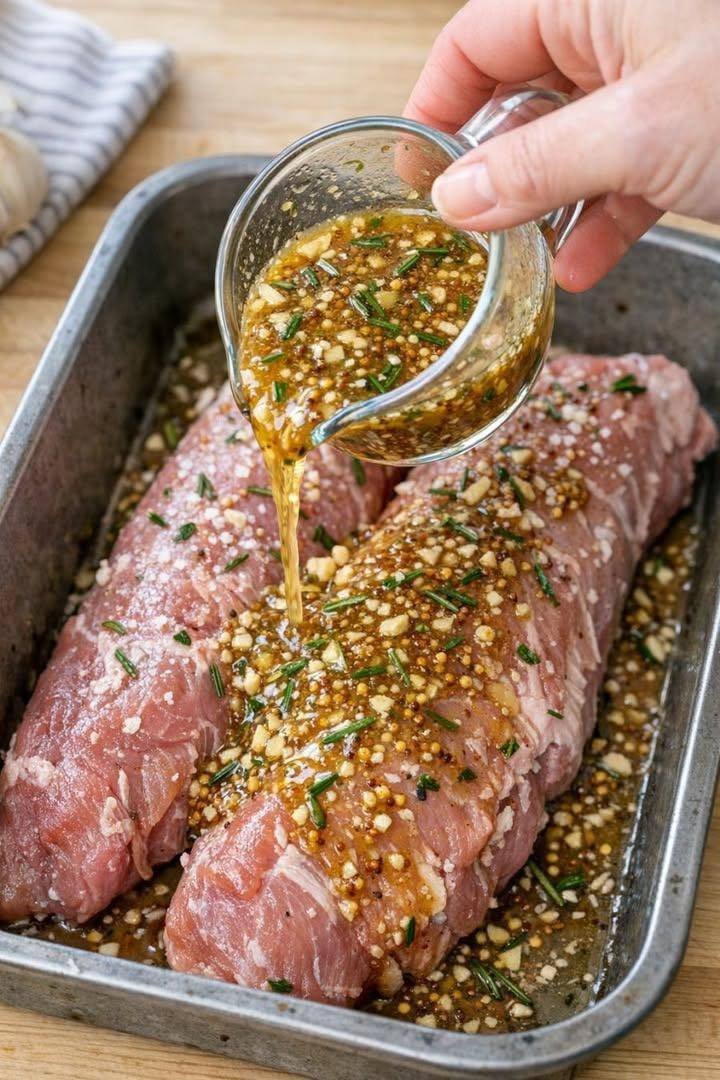
Honey Garlic Balsamic Pork Tenderloin. It hits all the right notes: sweet from honey, savory from garlic, and tangy from balsamic vinegar, which reduces into a glossy, sticky glaze that coats the lean, juicy pork. This is a quick-roast recipe, perfect for a weeknight dinner that feels like a special occasion.
The method is all about a high-heat sear, a quick roast, and letting the pan juices become the sauce—no fuss, maximum flavor.
Honey Garlic Balsamic Pork Tenderloin
Yields: 4 servings
Total Time: 35-40 minutes
Ingredients
For the Pork:
-
2 pork tenderloins (about 1 to 1.5 lbs each, typically sold in a pack of two)
-
1 teaspoon kosher salt
-
1/2 teaspoon freshly ground black pepper
-
1 teaspoon garlic powder
-
1 tablespoon olive oil
For the Honey Garlic Balsamic Glaze:
-
1/3 cup balsamic vinegar
-
1/4 cup honey
-
4 cloves garlic, minced (not jarred, fresh is essential here)
-
1 tablespoon soy sauce (or tamari/coconut aminos)
-
1 teaspoon Dijon mustard (acts as an emulsifier and adds a subtle tang)
-
1/2 teaspoon red pepper flakes (optional, for a whisper of heat)
For Finishing (Optional):
-
1 tablespoon cold butter (for a richer, silkier pan sauce)
-
Fresh rosemary or thyme sprigs, for aromatics (optional)
-
Fresh parsley, chopped, for garnish
Instructions
1. Prep the Oven and the Pork
-
Preheat your oven to 400°F (200°C).
-
Pat the pork tenderloins completely dry with paper towels. If there is any silver skin (the silvery-white connective tissue), trim it off with a sharp knife, as it will toughen when cooked.
-
Season the tenderloins all over with the kosher salt, black pepper, and garlic powder.
2. Make the Glaze
-
In a small bowl or a liquid measuring cup, whisk together the balsamic vinegar, honey, minced garlic, soy sauce, Dijon mustard, and red pepper flakes (if using). Set aside.
3. Sear the Pork
-
Heat the olive oil in a large oven-safe skillet (cast iron is ideal) over medium-high heat until shimmering.
-
Carefully place the seasoned tenderloins in the hot skillet. Sear, without moving them, for about 2 minutes per side (the tenderloins have 3-4 sides; you want a total of 6-8 minutes of searing time), until they develop a deep, golden-brown crust on all sides.
4. Glaze and Roast
-
Once seared, give the glaze a quick stir and pour it evenly over the pork tenderloins in the skillet. If using, toss a few rosemary or thyme sprigs into the pan.
-
Immediately transfer the skillet to the preheated oven.
-
Roast, uncovered, for 10-15 minutes, or until an instant-read thermometer inserted into the thickest part of the pork registers 140-145°F (60-63°C) . The exact time will depend on the thickness of your tenderloins. The glaze will be bubbling and reducing into a beautiful, dark syrup.
5. Rest and Make the Pan Sauce
-
Carefully remove the skillet from the oven (the handle is scorching hot!). Transfer the pork tenderloins to a clean cutting board, leaving the glaze in the pan. Tent the pork loosely with foil and let it rest for 8-10 minutes. This is non-negotiable for juicy meat.
-
While the pork rests, place the skillet with the remaining glaze over medium-low heat on the stovetop. The glaze should already be syrupy, but if it seems too thin, let it simmer for a minute or two to thicken. If it’s become too thick, you can loosen it with a tablespoon of water or chicken broth.
-
For a richer finish, remove the pan from the heat and whisk in the 1 tablespoon of cold butter until melted and emulsified. This creates a velvety, restaurant-quality pan sauce.
6. Slice and Serve
-
After resting, the internal temperature of the pork will have risen to a perfect 145°F. Slice the tenderloins into 1/2-inch thick medallions.
-
Drizzle the glossy balsamic pan sauce generously over the sliced pork. Garnish with fresh parsley.
Tips for Perfect Pork Tenderloin
-
Pork Tenderloin vs. Pork Loin: Make sure you’re buying pork tenderloin. It’s a small, thin, very lean cut, usually 1-1.5 lbs each and sold in pairs. A pork loin is a much wider, thicker roast that requires different cooking times. Using a pork loin here would result in raw meat.
-
The 145°F Rule: Pork today is very lean and safe to eat at 145°F with a rest. It will be perfectly cooked, with just a blush of pink, and will be incredibly juicy. Overcooking it to the old 160°F standard will result in dry, tough meat.
-
Stovetop to Oven: The reason we sear on the stovetop and transfer directly to the oven is that it gives the most even heat, browning the outside while gently bringing the center to temperature without a burnt, sticky glaze. If your skillet isn’t oven-safe, sear the pork, transfer it to a preheated baking dish, pour the glaze over, and roast as directed.
-
The Glaze Warning: Balsamic-honey glazes can burn quickly because of the high sugar content. The 400°F temperature is perfect for a quick roast, but check the pork’s temperature at the 10-minute mark to be safe. If the glaze on the pan edges looks like it’s burning, add a splash of water to the pan.
Serving Suggestions
This pork pairs beautifully with almost anything:
-
Carbs: Creamy mashed potatoes, garlic parmesan polenta, or a simple wild rice pilaf are perfect for soaking up the extra glaze.
-
Veggies: Roasted asparagus, steamed green beans with almonds, or a shaved Brussels sprout salad balance the sweet-tangy glaze.
-
The Instant Classic: Slice it over a salad of arugula with crumbled goat cheese, toasted pecans, and dried cranberries.
Variations
-
Honey Garlic Balsamic Pork Chops: This exact glaze method works brilliantly on 1-inch thick bone-in or boneless pork chops. Sear them for 3-4 minutes per side, then roast until 140-145°F internal temp.
-
Slow Cooker Version: Sear the tenderloins as directed. Place them in a slow cooker, pour the glaze over, and cook on LOW for 2-3 hours. This will produce a very tender, “shreddable” pork with a thinner, braising-liquid style sauce. Note: you lose the crisp crust and the pork will be well-done, not medium.
Enjoy this perfect balance of savory, sweet, and tangy! Let me know if you need a specific side dish recipe to go with it.