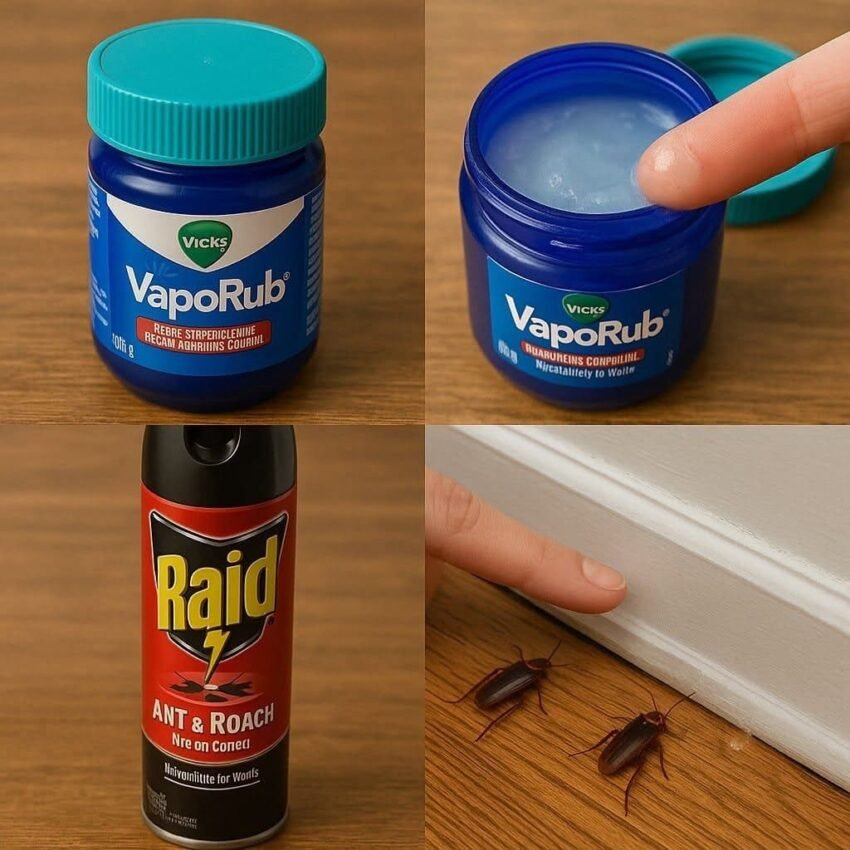
Vicks VapoRub isn’t just for chest congestion—its intense, medicinal smell (camphor, eucalyptus oil, and menthol) acts as a powerful sensory repellent for many pests. While it won’t solve a full-blown infestation, it’s a surprisingly effective, inexpensive, and accessible deterrent.
Here’s how to use it, pest by pest, along with an honest look at what it can and can’t do.
Vicks VapoRub Pest Hacks: A Complete Guide
Using the power of camphor, menthol, and eucalyptus oil to repel common household pests.
Why It Works
Pests navigate and find food by scent. The three active ingredients in Vicks create an overwhelming, irritating vapor barrier they instinctively avoid:
-
Camphor: A strong-smelling terpenoid that is a known insect repellent. It’s particularly effective at masking the human scent (CO2, sweat) that attracts mosquitoes.
-
Menthol: The cooling, minty compound. Ants, roaches, and many crawling insects hate the sharp, peppermint-like smell. It disrupts their pheromone trails.
-
Eucalyptus Oil: A well-documented repellent for mosquitoes, flies, and even some rodents.
Pest-by-Pest Guide: How to Apply
1. Mosquitoes
The Hack: Use it as a personal spatial repellent, not a skin cream.
-
How: Open a jar of Vicks and place it on your outdoor table. The vapors create a small deterrent zone. For a stronger effect, dab a small amount on a piece of ribbon, a wristband, or the cuffs of your pants and collar. The scent rising around you disrupts their ability to lock onto your CO2 trail.
-
Important: Do not slather it all over exposed skin like a lotion. It’s thick, greasy, can clog pores, and the strong menthol can cause a burning sensation, especially in the sun or for sensitive skin. A small dab on ankles and elbows is usually the limit for skin contact.
2. Ants
The Hack: Erase their trail and create a scent barrier.
-
How: Wipe a thin smear of Vicks along the ant trail, across door thresholds, windowsills, and around the foundation cracks where they enter. The greasy, strong-smelling paste obliterates their pheromone trail and creates a line they won’t cross. Reapply after it dries out or is cleaned away.
3. Flies
The Hack: An open-air repellent.
-
How: Fill a small, decorative jar lid with a dollop of Vicks and set it on a sunny windowsill. The sun’s warmth helps volatilize the oils, creating a continuous fly-repelling vapor. This works well in a kitchen corner near a fruit bowl or trash can.
4. Spiders
The Hack: Make corners and crevices uninhabitable.
-
How: Spiders taste and smell with their legs. Dab a cotton ball with Vicks and wipe it along baseboards, the corners of ceilings, behind furniture, and inside window tracks. The long-lasting, intense smell disrupts their sensory system and makes those areas extremely unappealing nesting spots.
5. Cockroaches
The Hack: A strong-smelling barrier, not a killer.
-
How: Smear a thick line of Vicks across the threshold of a known entry point, like the gap under a door, a pipe access hole under the sink, or the back of a dark cabinet. Roaches breathe through spiracles on their bodies; the intense menthol fumes can be irritating to them, creating a powerful avoidance zone. This is a temporary repellent barrier, ideal for keeping them out of a specific cabinet until you can get bait traps in place.
6. Gnats and Fruit Flies
The Hack: Fumigate their breeding ground.
-
How: For gnats in houseplant soil, smear a very thin layer of Vicks on the outside rim of the plant pot (not on the soil itself or the plant leaves, as it can burn). For fruit flies around the kitchen sink drain, plug the drain at night and place an open jar of Vicks next to the sink, or cover the drain opening with a small piece of plastic wrap smeared with a bit of Vicks on the underside. The goal is to fill the sink basin with the vapors.
7. Rodents (Mice & Rats)
The Hack: An irritating scent masker.
-
How: Rodents have a powerful sense of smell and are neophobic (afraid of new things, including strong new smells). Soak cotton balls in melted Vicks (warm the jar in a bowl of hot water until slightly liquid) and stuff them into small gaps, holes, and cracks where you suspect mice are entering. Replace them weekly as the scent fades. The smell disorients them and masks the scent paths they use to navigate. This is a short-term deterrent, not a substitute for sealing holes with steel wool and caulk.
DIY VapoRub Pest Repellent Pouches
Combine the hacks for a multi-pest deterrent:
-
Soak cotton balls in a mixture of Vicks VapoRub and a few extra drops of peppermint or tea tree essential oil.
-
Place them in small, breathable mesh sachets or old tea infusers.
-
Tuck them into problem areas: the back of the pantry, under the bathroom sink, in the garage, in window tracks, and near pet food bowls.
-
Refresh every 2 weeks or when the scent fades.
Honest Limitations: What Vicks Won’t Do
| Situation | Why Vicks Is Not the Solution |
|---|---|
| A full-blown infestation | It does not kill pests, destroy nests, or sterilize eggs. It’s a repellent only. You’ll still need bait, traps, or professional help for a serious problem. |
| Bed bugs | Bed bugs are attracted to body heat and CO2, not deterred by strong smells. Vicks will do essentially nothing to stop them from biting. |
| Ticks | Ticks are highly resilient. Vicks may cause brief irritation but is not a reliable tick repellent. Stick with permethrin-treated clothing or EPA-approved repellents for ticks. |
| Pets | Never apply Vicks to cats or dogs. The camphor and essential oils are toxic to them if ingested or absorbed through the skin. Keep any smeared surfaces well out of their reach. |
Bottom Line: Vicks VapoRub is a legitimate, cheap, and fast-acting repellent for common flying and crawling household pests, thanks to the trifecta of camphor, menthol, and eucalyptus. It’s a fantastic first line of defense for seasonal annoyances like ants in the spring or mosquitoes on the porch, and pairs perfectly with the natural cleaning and prevention methods you’ve been exploring.
Let me know if you’re facing a specific pest battle right now and want a full strategy that combines natural deterrents, Vicks hacks, and long-term sealing techniques.