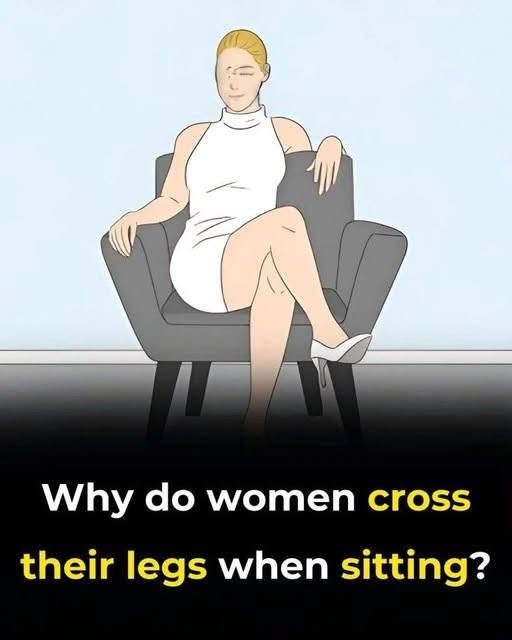
1. Biomechanics and Pelvic Structure
This is the most fundamental reason. Women typically have a wider pelvis and a different hip socket (acetabulum) angle than men. This anatomical difference means that for many women, crossing the legs at the knee actually feels like a more stable, comfortable resting position. The thigh bone angles inward more, making the crossed-knee posture a natural fit that requires less muscular effort to maintain.
2. Postural Support and Core Strength
Sitting upright without back support requires core muscle engagement. Crossing the legs narrows the body’s base and changes the center of gravity, providing additional postural stability by essentially “locking” the lower body into a stable triangle. For someone with less upper-body mass or who finds sitting with legs parallel for long periods fatiguing, this posture reduces the load on the back and core muscles.
3. Social Conditioning and Etiquette
From a very young age, girls in many cultures receive explicit and implicit instruction to keep their legs together or crossed. This is deeply tied to modesty norms, especially when wearing skirts or dresses. Crossing the legs accomplishes this in a way that sitting with knees pressed together and feet apart does not—it’s a socially ingrained “ladylike” posture that many women adopt automatically, even in pants.
4. Clothing and Modesty
Practically speaking, skirts and dresses make sitting with legs uncrossed a potential vulnerability. Crossing the legs is the simplest, most comfortable way to maintain privacy and avoid accidental exposure. It becomes such a habitual solution that it carries over regardless of what’s being worn.
5. Perceived Professionalism and Body Language
In many professional or formal settings, crossed legs signal composure, poise, and self-containment. Body language research often interprets it as a “closed” but controlled posture, appropriate for listening or formal interaction. Women often adopt it in workplaces to project a polished, attentive image.
6. Warmth and Comfort
Crossed legs trap body heat in the lower extremities. In air-conditioned offices or during cooler weather, this position acts as a built-in way to stay warm. For shorter women whose feet don’t rest flat on the floor in most chairs, crossing the legs can also relieve pressure on the underside of the thighs by providing a counterbalance that stops the feet from dangling.
A Quick Note on Health
While this position is natural for many, prolonged sitting with legs tightly crossed at the knee can temporarily raise blood pressure in that position, cause a slight asymmetrical strain on the pelvis, and may contribute to hip tightness over time. The advice isn’t “never cross your legs,” but to switch legs frequently, uncross periodically, and stand up and move regularly—which is good advice for all seated postures.
Let me know if you’re curious about the difference between crossing at the knee versus crossing at the ankle, or anything else.