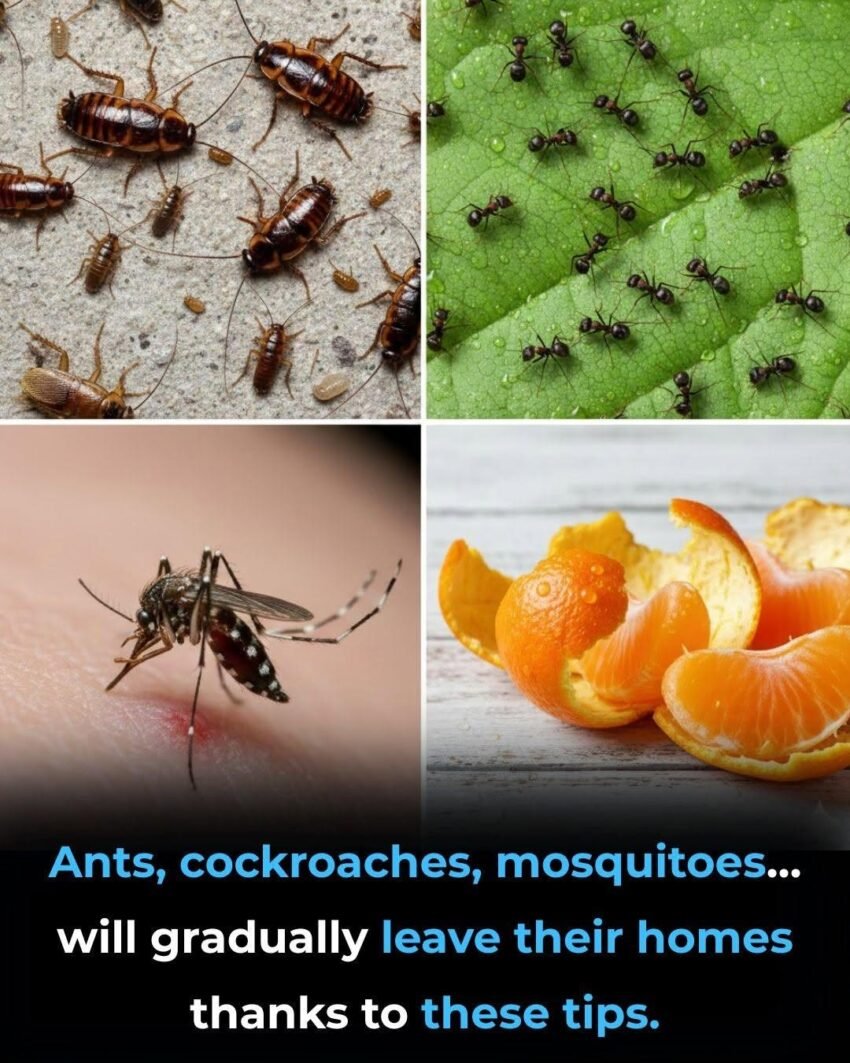
Keeping a home free of pests without relying on harsh chemicals. The key is understanding what attracts each pest and disrupting it with natural deterrents they can’t stand. Here’s a room-by-room, pest-specific guide.
Natural Ways to Keep Ants, Cockroaches & Mosquitoes Away
Part 1: The Golden Rules of Natural Pest Prevention
Before any remedy, you must eliminate the welcome mat. No natural spray will work long-term if pests have food, water, and a way in.
-
Seal Entry Points: Use caulk to seal cracks in baseboards, around pipes, and where walls meet. Install door sweeps and repair window screens. This is 80% of the battle.
-
Eliminate Moisture: Cockroaches and mosquitoes need water. Fix leaky pipes, faucets, and any standing water (plant saucers, pet bowls, clogged gutters).
-
Remove Food Sources: Store all food—including pet food—in airtight containers. Take out the trash daily. Wipe counters down every night. Crumbs are an open invitation.
Part 2: Ants
Ants leave an invisible pheromone trail for others to follow. The goal is to erase it and create a barrier they won’t cross.
| Natural Deterrent | How to Use It |
|---|---|
| White Vinegar | Mix 1:1 with water in a spray bottle. Wipe down counters and spray along ant trails. The strong scent erases the pheromone path and repels ants. Safe on most surfaces. |
| Essential Oils (Peppermint, Tea Tree, Lemon Eucalyptus) | Add 10–15 drops of peppermint or tea tree oil to 1 cup of water. Spray around doors, windows, and baseboards. Ants hate these strong smells. |
| Diatomaceous Earth (Food Grade) | A fine powder that’s microscopic razor-sharp to insects but harmless to people and pets. Puff a very thin line where ants enter (under sinks, along baseboards). It dries out and kills them physically, not chemically. |
| Cinnamon or Coffee Grounds | Sprinkle dry, ground cinnamon or used coffee grounds at entry points and along trails. Ants won’t walk across them. A great short-term kitchen-safe barrier. |
| Lemon Juice | Squeeze fresh lemon juice or rub a lemon peel along thresholds and windowsills. Disrupts trails and smells clean. |
Part 3: Cockroaches
Roaches are survivors, but they’re extremely sensitive to strong smells and certain natural powders.
| Natural Deterrent | How to Use It |
|---|---|
| Baking Soda & Sugar Trap | Mix equal parts baking soda and sugar. Place small dishes or jar lids of the mixture under sinks, behind appliances, and in cabinets. The sugar attracts; the baking soda reacts with their stomach acid and is lethal to them. Reapply weekly. |
| Bay Leaves | Roaches despise the scent of bay leaves. Place whole, crushed bay leaves in pantry corners, cabinet shelves, and under appliances. They’re a repellent, not a killer. |
| Catnip | The active compound in catnip, nepetalactone, is a potent natural cockroach repellent. Place small sachets of dried catnip or brew a strong catnip tea to spray in cracks and crevices. |
| Diatomaceous Earth | Same as for ants—dust a very fine layer in dark, dry places roaches travel (behind fridges, stoves, under sinks). It sticks to them and dehydrates them. Be patient; it takes a few days. |
| Fabric Softener Spray | A surprisingly effective instant repellent. Mix a tablespoon of fabric softener with water and spray directly on roaches or around entry points. The oily film clogs their pores and they suffocate. Use as a contact spray only. |
Part 4: Mosquitoes
Mosquitoes hunt by scent (carbon dioxide and body odor). You win by masking your scent and creating an environment where they can’t breed.
| Natural Deterrent | How to Use It |
|---|---|
| Eliminate Standing Water | This is non-negotiable. Even a bottle cap of water can breed dozens of mosquitoes. Dump, drain, or cover anything that holds water: clogged gutters, plant saucers, kids’ toys, tarps, birdbaths (change water weekly). |
| Outdoor Fans | A simple, powerful physical deterrent. Mosquitoes are weak fliers. A strong fan on your porch or patio creates enough wind to blow them away and disperses the CO2 you exhale. |
| Lemon Eucalyptus Oil | The only plant-based repellent recommended by the CDC to be as effective as DEET. Mix 1 part oil with 10 parts witch hazel or vodka in a spray bottle. Apply to skin and clothing. |
| Citronella & Lemongrass Plants | The plants themselves are only mildly effective, but crushing a leaf and rubbing it on your skin or using the concentrated essential oil in diffusers and candles around seating areas works much better. |
| Coffee Grounds in Standing Water | If you absolutely cannot dump out some standing water, sprinkle used coffee grounds in it. They form a film on the surface and prevent larvae from breathing. The eggs won’t survive. |
| Garlic Barrier Spray | Boil a few crushed garlic cloves in water, let it steep, strain, and spray the garlic water around your garden and patio plants. It won’t replace a body repellent but can help reduce numbers in a treated area for a short time. |
Quick-Reference Summary by Pest
| Pest | Top 3 Natural Solutions |
|---|---|
| Ants | 1. Vinegar spray (erase trails) 2. Peppermint oil barrier 3. Diatomaceous earth line |
| Cockroaches | 1. Baking soda & sugar bait 2. Bay leaves 3. Diatomaceous earth in dark corners |
| Mosquitoes | 1. Eliminate all standing water 2. Outdoor fan 3. Lemon eucalyptus spray on skin |
A Critical Safety Note
-
Essential Oils & Pets: Peppermint and tea tree oil can be toxic to cats and dogs if ingested or absorbed in high concentrations. Use sparingly and in areas pets can’t access, especially if you’re spraying surfaces they walk on or lick. Avoid tea tree oil entirely around cats.
-
Diatomaceous Earth: Always use food-grade DE. The pool-grade version is chemically treated and dangerous to inhale. Even with food-grade, wear a mask when applying to avoid irritating your lungs.
A clean, dry, well-sealed home is the ultimate natural pest control. These remedies are the reinforcements. Let me know if you’re dealing with a specific infestation and need a more targeted battle plan.