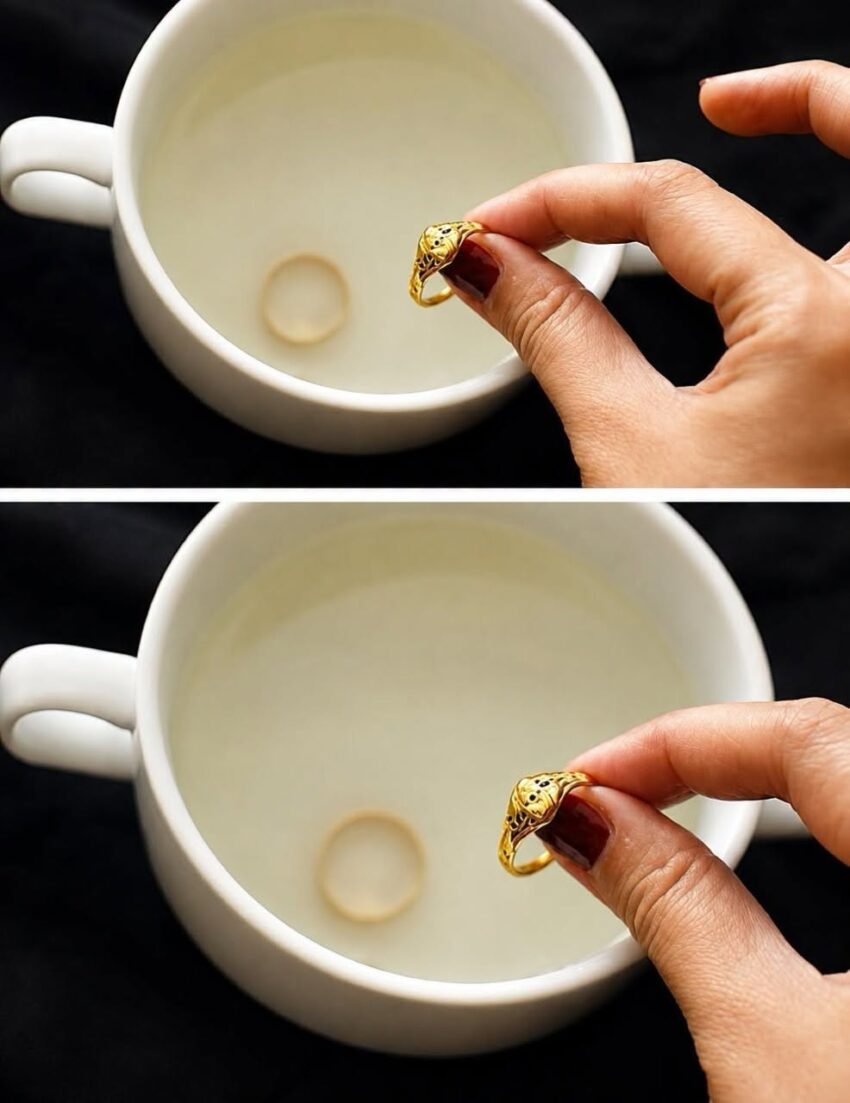
The hidden secret isn’t a fancy ultrasonic machine or expensive dip. It’s a simple reaction that safely dissolves the tarnish, dirt, and body oils that dull your jewelry, without removing a single atom of the precious metal itself.
The Simple, Universal Cleaning “Elixir”
This method is the master recipe for gold, platinum, diamonds, and hard gemstones (like sapphires, rubies, and moissanite). It’s so gentle you can use it daily.
What You Need:
-
A small bowl
-
Warm (not boiling) water
-
A few drops of mild, clear dish soap (the kind without harsh detergents or moisturizers)
-
A very soft-bristled baby toothbrush or a dedicated soft makeup brush
-
A lint-free microfiber cloth
The Step-by-Step Master Method:
-
Soak: Fill the bowl with warm water and a single drop of dish soap. Mix gently. Place your jewelry in the solution and let it soak for 10–20 minutes. This loosens the “glue” of body oils, lotion, and everyday grime.
-
Gently Agitate (The Hidden Function): Dip the soft brush into the soapy water and very gently scrub the piece, paying special attention to the back of the setting and the crevices underneath the stone. This is where light needs to enter, but dirt blocks it. Imagine you’re gently tickling the metal, not scrubbing it. For a diamond, the top table is easy to clean; it’s the pavilion (the underside) that needs your focus.
-
Rinse with a “Strainer”: This is a critical step most people learn too late. Never rinse jewelry over an open sink drain. Place the item in a mesh kitchen strainer or tea strainer and run it under a gentle stream of warm water. This catches the piece if it slips from your fingers.
-
The Instant Shine Dry: Do not air-dry, as this will leave water spots. Use the lint-free microfiber cloth to pat the piece completely dry. For an instant “wow” finish, use the cloth to give the metal a brisk, gentle buff. The friction creates a mirror-like shine.
The Critical “Do NOT” Warnings (Please Read)
This is where the hidden knowledge lives. Using the wrong method can permanently damage your jewelry.
Never use this method on:
-
Soft, Porous Gemstones: Pearls, opals, turquoise, emeralds (often oil-treated), amber, and coral. Water and soap can ruin them. Pearls must be wiped clean with a dry, soft cloth after each wear.
-
Silver: The above method removes oil but not tarnish (the black sulfidation). For silver, you need a different, equally simple tarnish-removal method using aluminum foil, baking soda, and hot water (a quick electro-chemical reaction). The dish soap soak won’t touch it.
-
Costume Jewelry: Water can seep behind glued-in rhinestones and cause the foil backing to dull or peel off permanently. A dry cloth buff is your only safe tool.
For Silver: The Tarnish-Removing Elixir
If your silver is dull and black, use this 30-second hidden chemistry trick:
-
Line a glass bowl with aluminum foil, shiny side up.
-
Place the silver jewelry on the foil.
-
Sprinkle a generous amount of baking soda over the pieces.
-
Pour boiling water over them, fully submerging the jewelry. You’ll see a tiny fizzing reaction and maybe smell a faint sulfur scent.
-
Wait 30–60 seconds. The tarnish chemically transfers from your silver back to the aluminum foil. Remove, rinse in a strainer, and pat dry. It’s like magic, but it’s simple chemistry.
The Diamond’s Hidden Key: The Underside
Here’s a pro-tip that connects to your theme of overlooked functions. A diamond’s sparkle isn’t just about the top; it’s about light entering, bouncing off the internal mirrored facets, and returning to your eye. If the back of the stone is coated in a film of soap, lotion, and skin cells, no light gets in. Cleaning the underside is the single most effective way to restore a diamond’s fire.
This gentle soak and tickle-brush method is the “high-spin cycle” of jewelry care: a thorough, mechanical removal of grime that leaves your pieces feeling as refreshed as they look.
Shall I decode the hidden care language for a specific piece, like pearl strands or soft emerald rings?